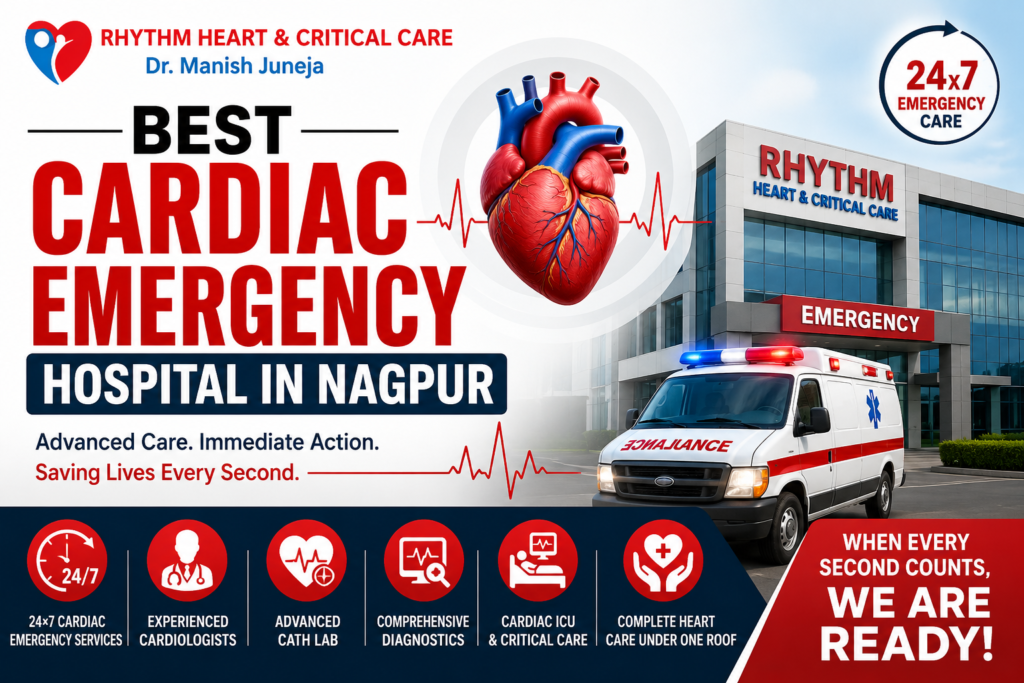
Heart emergencies can happen without warning. A sudden heart attack, severe chest pain, irregular heartbeat, or cardiac arrest requires immediate medical attention.
In such situations, choosing the best cardiac emergency hospital in Nagpur can make a significant difference in saving a patient’s life and preventing long-term complications.
A hospital with experienced cardiologists, advanced diagnostic facilities, a modern Cath Lab, and 24×7 emergency services ensures that patients receive prompt and effective treatment when every minute counts.
What Is a Cardiac Emergency?
A cardiac emergency is any condition that affects the heart and requires immediate medical care. Delaying treatment can lead to permanent heart damage or even become life-threatening.
Some common cardiac emergencies include:
- Heart attack (Myocardial Infarction)
- Cardiac arrest
- Severe chest pain
- Uncontrolled high blood pressure with symptoms
- Dangerous irregular heartbeat (Arrhythmia)
- Acute heart failure
If you or someone around you experiences these symptoms, seek emergency medical care immediately instead of waiting for them to improve on their own.
Warning Signs You Should Never Ignore
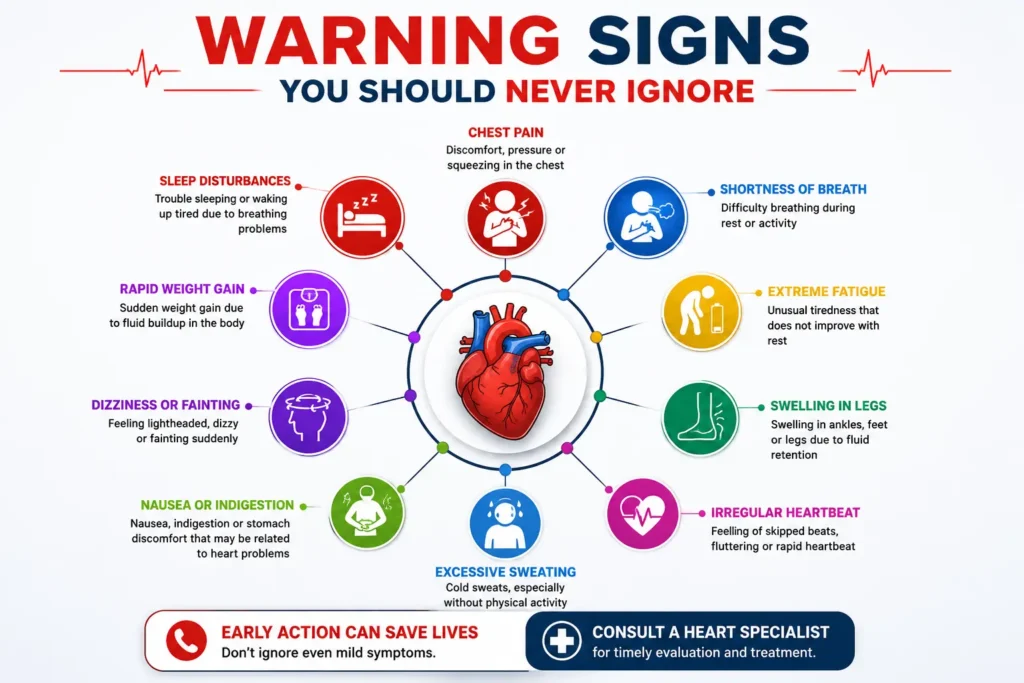
Recognizing the early warning signs of a heart emergency can make the difference between life and death. Many people ignore mild symptoms, assuming they are caused by acidity, indigestion, fatigue, or stress. However, heart-related symptoms can worsen quickly if left untreated.
Knowing the early signs of a heart emergency can help you act quickly.
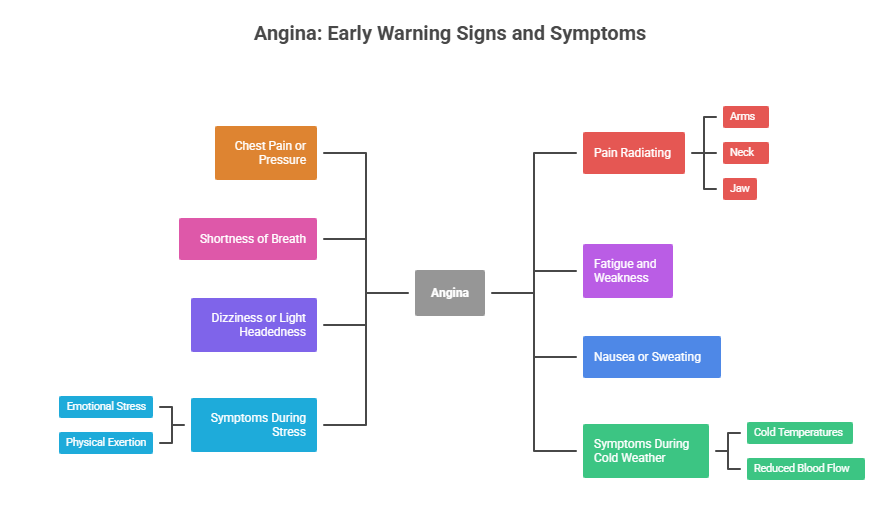
Common symptoms include:
- Persistent chest pain or pressure
- Pain spreading to the left arm, shoulder, neck, jaw, or back
- Shortness of breath
- Excessive sweating
- Nausea or vomiting
- Sudden dizziness or fainting
- Rapid or irregular heartbeat
- Extreme weakness or unexplained fatigue
Even mild symptoms should be evaluated by a heart specialist, especially if you have diabetes, high blood pressure, high cholesterol, or a family history of heart disease.
Why Immediate Treatment Is So Important
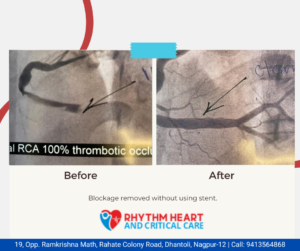
During a heart attack, blood flow to the heart muscle is blocked. Every passing minute increases the amount of heart muscle that may be permanently damaged.
Early diagnosis and treatment can:
- Restore blood flow quickly
- Reduce heart muscle damage
- Improve survival rates
- Lower the risk of complications
- Shorten recovery time
- Improve long-term heart function
This is why emergency cardiac care should never be delayed.
What Makes a Reliable Cardiac Emergency Hospital in Nagpur?
Choosing the reliable cardiac emergency hospital in Nagpur is one of the most important decisions during a heart emergency.
When every second matters, the quality of medical care, the availability of advanced technology, and the expertise of the healthcare team can significantly impact a patient’s recovery and survival.
A well-equipped cardiac hospital not only provides immediate treatment but also ensures continuous monitoring, accurate diagnosis, and comprehensive follow-up care.
When choosing a hospital for emergency heart care, look for these important features.
1. 24×7 Cardiac Emergency Services
Heart emergencies do not follow a schedule. A hospital should be prepared to provide expert care day and night with emergency doctors, cardiologists, nurses, and support staff available around the clock.
2. Experienced Cardiologists
The expertise of cardiologists plays a crucial role in the successful diagnosis and treatment of heart conditions.
During a cardiac emergency, every minute is valuable, and experienced cardiologists can quickly assess the patient’s condition, interpret diagnostic tests, and make timely decisions about the most appropriate treatment.
3. Advanced Cath Lab
A modern Cardiac Catheterization Laboratory (Cath Lab) is one of the most important facilities in a cardiac emergency hospital.
It is equipped with advanced imaging technology that allows cardiologists to accurately diagnose blocked or narrowed coronary arteries and perform minimally invasive heart procedures with greater precision.
4. Comprehensive Diagnostic Facilities
Immediate access to diagnostic tests helps doctors make quick and accurate decisions.
These may include:
- ECG
- 2D Echo
- TMT
- Holter Monitoring
- Blood investigations
- Cardiac biomarkers
5. Critical Care and Cardiac ICU
Patients experiencing severe heart conditions often require continuous monitoring and specialized medical support after emergency treatment.
A dedicated Cardiac Intensive Care Unit (Cardiac ICU) is designed to provide advanced care for critically ill patients, ensuring they receive immediate attention if their condition changes.
Cardiac Services You Should Expect
A trusted cardiac hospital should offer a wide range of heart care services under one roof to ensure patients receive timely diagnosis, effective treatment, and continuous follow-up care.
From emergency interventions to preventive screenings, comprehensive cardiac services help manage every stage of heart health.
A leading cardiac hospital should offer comprehensive heart care under one roof, including:
- Emergency Heart Attack Treatment
- Coronary Angiography
- Coronary Angioplasty
- Pacemaker Implantation
- Heart Failure Management
- Arrhythmia Treatment
- Preventive Heart Checkups
- Cardiac Rehabilitation
- Critical Care Services
Having all these services available in one hospital reduces treatment delays and improves patient outcomes.
Why Preventive Heart Checkups Matter
Many heart diseases develop silently without causing noticeable symptoms in their early stages. By the time warning signs appear, the condition may have already progressed, making treatment more complex.
Preventive heart checkups help detect risk factors early, allowing doctors to recommend lifestyle changes or treatment before serious complications occur.
A preventive heart checkup is especially recommended if you:
- Are above 40 years of age
- Have diabetes
- Have high blood pressure
- Have high cholesterol
- Smoke or consume tobacco
- Are overweight
- Have a family history of heart disease
Early detection often means simpler treatment and better long-term heart health.
How to Reduce Your Risk of Heart Emergencies
While not all heart emergencies can be prevented, adopting a healthy lifestyle and managing your risk factors can significantly lower your chances of developing serious heart conditions. Small, consistent changes in your daily routine can have a lasting impact on your heart health.
Although not every heart emergency can be prevented, healthy lifestyle habits significantly reduce your risk.
- Eat a balanced, heart-friendly diet.
- Exercise regularly.
- Maintain a healthy weight.
- Keep blood pressure and cholesterol under control.
- Manage diabetes effectively.
- Avoid smoking and tobacco.
- Limit alcohol consumption.
- Get adequate sleep.
- Manage stress through relaxation techniques.
- Schedule regular heart checkups.
Why Choose Rhythm Heart & Critical Care?
When it comes to emergency cardiac care, patients need a hospital that combines medical expertise with advanced technology and compassionate care.
Rhythm Heart & Critical Care offers comprehensive cardiac services with experienced specialists, modern diagnostic facilities, advanced Cath Lab technology, critical care support, and a patient-focused approach.
The hospital is committed to providing timely diagnosis and treatment so patients receive the care they need during every stage of their heart health journey.
Conclusion
A heart emergency demands immediate action. Recognizing the warning signs and reaching the reliable cardiac emergency hospital in Nagpur without delay can save lives and improve recovery.
Choosing a hospital equipped with experienced cardiologists, advanced technology, emergency services, and comprehensive cardiac care ensures the good possible treatment when every second matters.
If you or your loved one experiences symptoms of a heart emergency, seek immediate medical attention. Acting quickly could make all the difference.
FAQs
1. What is considered a cardiac emergency?
Heart attack, cardiac arrest, severe chest pain, dangerous irregular heartbeat, and sudden heart failure are all cardiac emergencies that require immediate medical care.
2. How quickly should I reach the hospital during a heart attack?
You should reach the nearest cardiac emergency hospital as quickly as possible. Early treatment greatly improves survival and recovery.
3. What tests are performed during a cardiac emergency?
Doctors may perform ECG, blood tests, 2D Echo, cardiac enzyme tests, and coronary angiography depending on the patient’s condition.
4. What is emergency angioplasty?
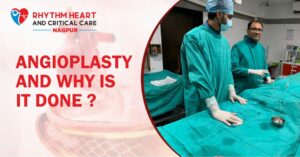
Emergency angioplasty is a procedure used to open blocked heart arteries and restore blood flow during a heart attack.
5. Can young adults have heart attacks?
Yes. Factors such as stress, smoking, obesity, diabetes, and unhealthy lifestyles have increased the risk of heart disease among younger adults.
6. Who should undergo preventive heart checkups?
Adults over 40 and individuals with diabetes, high blood pressure, high cholesterol, obesity, smoking habits, or a family history of heart disease should undergo regular heart screenings.
7. What should I do if someone suddenly develops chest pain?
Call emergency medical services immediately and take the patient to the nearest cardiac emergency hospital without delay. Do not ignore persistent chest pain.
8. Can heart disease be prevented?
Many heart conditions can be prevented or managed through healthy eating, regular exercise, controlling blood pressure and diabetes, avoiding tobacco, and regular health checkups.
9. Does Rhythm Heart & Critical Care provide emergency cardiac services?
Yes. Rhythm Heart & Critical Care provides comprehensive cardiac care, advanced diagnostics, emergency heart treatment, and critical care services for patients requiring immediate medical attention.
10. Why should I choose Rhythm Heart & Critical Care Hospital for cardiac emergencies?
Rhythm Heart & Critical Care Hospital offers 24×7 cardiac emergency services, experienced cardiologists, an advanced Cath Lab, modern diagnostic facilities, and a dedicated Cardiac ICU.