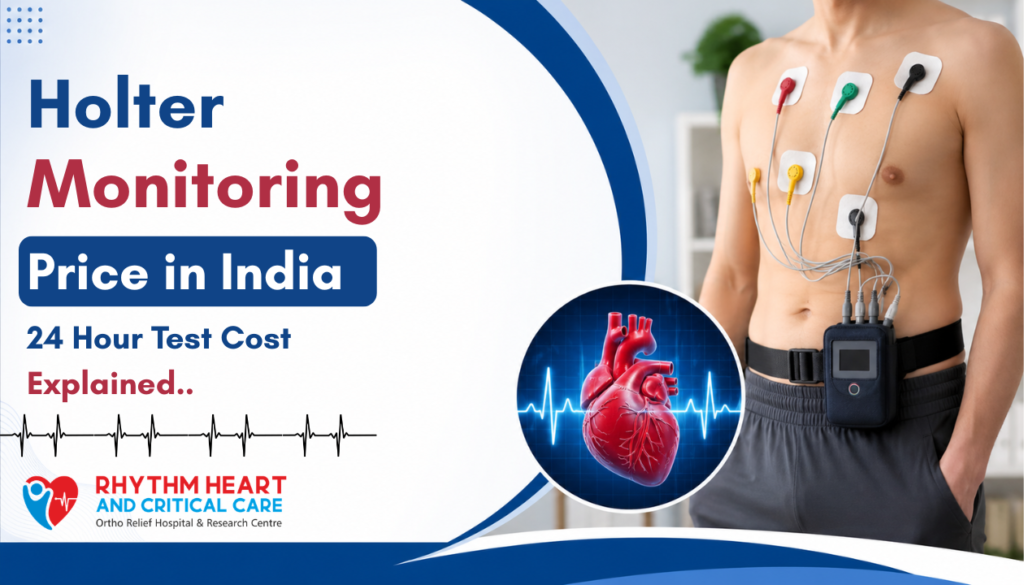
Holter monitoring costs ₹2,000 – ₹5,000 in India and helps diagnose arrhythmias, palpitations, dizziness, and hidden heart rhythm disorders.
Holter monitoring is a common test used to check the heart’s electrical activity over a period of 24 hours or longer. It helps doctors see how the heart is working during everyday activities. It helps doctors find irregular heartbeats, sudden fast or slow heartbeats, and other heart problems that might not show up in a regular ECG test.
In India, the Holter monitoring price varies depending on hospital type, city, machine quality, and duration of monitoring. On average, the 24-hour Holter monitoring test cost in India ranges from ₹2,000 to ₹5,000 in 2026.
At advanced cardiac centers like Rhythm Heart and Critical Care Hospital, patients receive accurate and reliable heart rhythm analysis with expert cardiologist interpretation.
What is Holter Monitoring?
Holter monitoring is a test that checks the heart’s electrical activity over 24 to 48 hours. It uses a small, portable machine that the patient wears. Unlike a regular ECG that only records a short period of heart activity, Holter monitoring gives a longer, continuous record of the heart while you go about your usual day, such as walking, sleeping, or working.
It is mainly used to detect irregular heartbeat (arrhythmia), palpitations, unexplained dizziness, chest discomfort, and silent heart rhythm abnormalities that may not appear in routine tests.
At Rhythm Heart And Critical Care Hospital, this test is recommended when ECG results are normal but symptoms still persist, ensuring accurate diagnosis and better heart care.
24 Hour Holter Monitoring Test Cost in India 2026
The 24-hour Holter monitoring price in India depends on several factors:
💰 Average Cost Range:
- Government hospitals: ₹1,500 – ₹2,500
- Private clinics: ₹2,500 – ₹4,500
- Advanced cardiac hospitals: ₹3,000 – ₹5,000
📊 Key Cost Factors:
- Hospital or diagnostic center charges
- Type of Holter machine used
- Cardiologist report interpretation fee
- City and location (metro cities are higher)
- Emergency or home-based monitoring services
In metro cities like Mumbai, Delhi, and Bangalore, the cost is usually higher due to advanced infrastructure.
Holter Monitoring Machine and How It Works
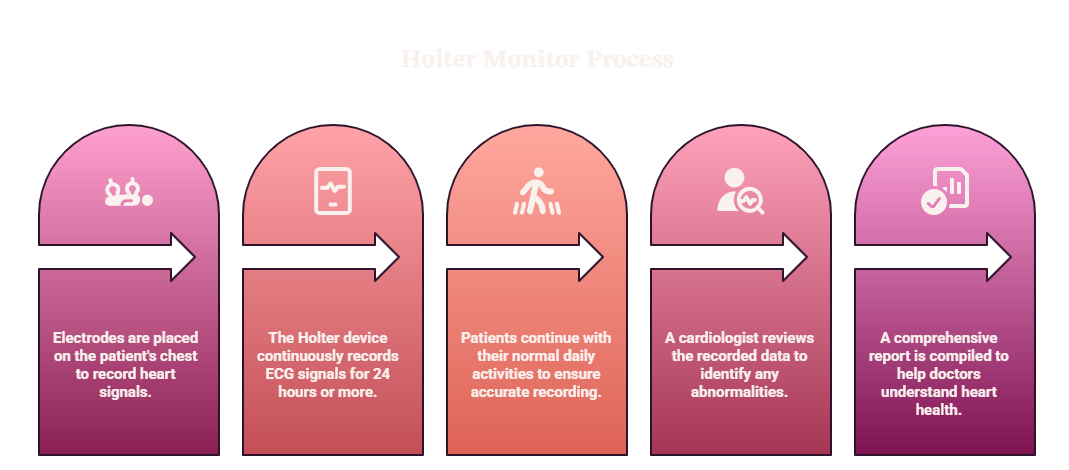
1. Electrodes Attached to Chest
Small electrodes are put on the patient’s chest to get the heart’s electrical signals. They are comfortable and help make sure the heart activity is recorded correctly throughout the whole monitoring time.
2. Device Records ECG Signals
The portable Holter device continuously records ECG signals for 24 hours or more. It captures every heartbeat to detect irregular rhythms that may not appear in a normal ECG test.
3. Normal Daily Routine Continued
Patients are encouraged to continue with normal daily activities such as walking, sleeping, and working so that actual heart activity can be properly recorded.
4. Data Analyzed by Cardiologist
After completion, the recorded data is carefully reviewed by a cardiologist. This helps identify any abnormal heart rhythms, skipped beats, or hidden cardiac issues.
5. Detailed Report Generated
Based on the analysis, a complete diagnostic report is compiled. This helps doctors clearly understand heart health and plan precise treatment when necessary.
Holter Monitoring Lead Placement Procedure
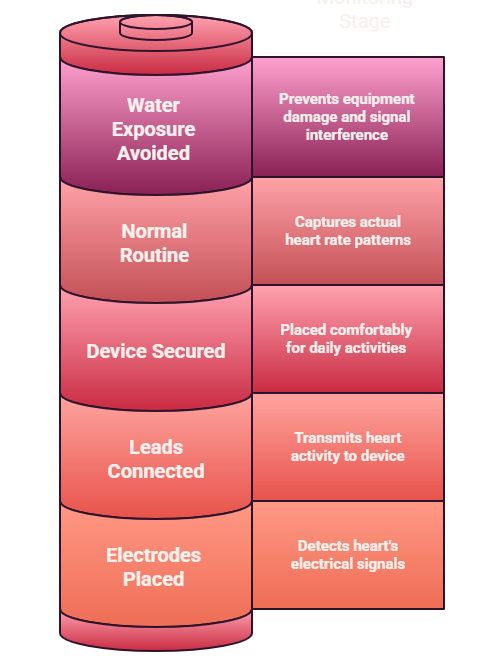
1. Electrodes Placed on Chest
Small adhesive patches (electrodes) are placed on specific points of the chest. These sensors detect the heart’s electrical signals and ensure accurate recording throughout the monitoring period.
2. Leads Connected to Device
Wires (leads) are connected from the electrodes to the Holter monitoring device. This setup allows continuous transmission of heart activity for detailed ECG recording.
3. Device Secured Properly
The Holter device is placed in a small pouch or belt and secured around the patient’s waist or shoulder for comfort and safety during daily activities.
4. Normal Routine Allowed
Patients are encouraged to continue their normal activities such as walking, working, and sleeping so that the device can accurately capture their actual heart rate patterns.
5. Water Exposure Avoided
Patients must avoid bathing, swimming, or getting the device wet, as moisture can damage the equipment and affect accurate heart signal recording.
Holter Monitoring – Key Information Table
| Heading | Key Points |
| Holter Monitoring ECG – Why It is Important | • Detecting hidden arrhythmias • Monitoring high-risk heart patients • Evaluating chest pain without clear ECG results • Checking pacemaker performance • Assessing treatment effectiveness • Expert cardiologist analysis at Rhythm Hospital ensures accurate diagnosis |
| Holter Monitoring Purpose – Why Doctors Recommend It | • Detect irregular heartbeat episodes • Identify unexplained fainting causes • Evaluate chronic palpitations • Check chest pain when ECG is normal • Post-heart attack monitoring • Early detection of serious heart conditions |
| Who Should Go for Holter Monitoring? | • Frequent heart palpitations • Dizziness or fainting episodes • Irregular heartbeat sensations • Chest discomfort with normal ECG results • Family history of heart disease • Helps in early prevention of cardiac complications |
Holter Monitoring Price in India vs Other Cardiac Tests
Compared to other heart tests:
- ECG test: ₹200 – ₹800
- Echocardiography: ₹1,500 – ₹3,500
- Holter monitoring: ₹2,000 – ₹5,000
Holter monitoring is slightly more expensive because it provides 24-hour continuous heart data, making it more detailed and reliable.
Why Choose Rhythm Heart and Critical Care Hospital?
At Rhythm Heart And Critical Care Hospital, patients receive advanced cardiac care using state-of-the-art Holter monitoring equipment that provides highly accurate heart rhythm analysis. Our experienced cardiologists carefully interpret each report to accurately diagnose arrhythmias and other hidden heart conditions.
We also offer affordable heart test packages so that quality cardiac care remains accessible to everyone. Along with this, we provide emergency cardiac care support for critical situations. Our main focus is early detection, accurate diagnosis, and complete heart health management for every patient
Conclusion
The Holter monitoring price in India (2026) is affordable, typically ranging between ₹2,000 to ₹5,000, making it an important and accessible test for detecting hidden heart rhythm disorders that a standard ECG may miss.
It provides valuable information about symptoms such as palpitations, dizziness, and arrhythmia, helping in early and accurate diagnosis. If these symptoms occur, 24-hour Holter monitoring can speed treatment and prevent serious complications.
Don’t ignore heart warning signs, book your test today at Rhythm Heart And Critical Care Hospital.
Visit https://rhythmhospitals.com/ or contact us for expert consultation and advanced cardiac care.
Reference:
https://my.clevelandclinic.org/health/diagnostics/21491-holter-monitor
https://www.ncbi.nlm.nih.gov/books/NBK538203
FAQ’s
1. What is Holter monitoring?
Holter monitoring is a portable ECG test that continuously records your heart’s electrical activity for 24 to 48 hours. It helps detect irregular heart rhythms and other cardiac issues that may not appear during a standard ECG.
2. What is the Holter monitoring price in India?
The Holter monitoring price in India generally ranges from ₹2,000 to ₹5,000, depending on the hospital, city, duration of monitoring, and cardiologist consultation charges.
3. Why is a 24-hour Holter monitoring test done?
A 24-hour Holter monitoring test is performed to identify irregular heartbeats, palpitations, dizziness, fainting episodes, chest discomfort, and other symptoms related to heart rhythm abnormalities.
4. Is Holter monitoring painful?
No, Holter monitoring is a completely painless and non-invasive procedure. Small electrodes are attached to the chest, and the device records heart activity while you continue your normal routine.
5. How does a Holter monitoring machine work?
A Holter monitoring machine records the heart’s electrical signals continuously through electrodes placed on the chest. The recorded data is later analyzed by a cardiologist for diagnosis.
6. Can I sleep while wearing a Holter monitor?
Yes, you can sleep normally while wearing a Holter monitor. In fact, recording heart activity during sleep helps doctors identify rhythm abnormalities that may occur at night.
7. What activities should I avoid during Holter monitoring?
You should avoid bathing, swimming, or any activity that may expose the Holter device to water. Apart from this, most daily activities can be performed as usual.
8. What is the difference between an ECG and Holter monitoring?
A standard ECG records heart activity for a few seconds, while Holter monitoring records continuously for 24 to 48 hours, making it more effective in detecting intermittent heart rhythm problems.
9. Who should undergo Holter monitoring?
People experiencing palpitations, dizziness, fainting, irregular heartbeat, chest discomfort, or those with a history of heart disease may be advised to undergo Holter monitoring.
10. How long does it take to get Holter monitoring results?
The Holter device is usually worn for 24 to 48 hours. After the device is returned, the recorded data is analyzed, and the final report is generally available within a few days.