A silent heart attack often occurs with mild or unnoticed symptoms like fatigue, breathlessness, dizziness, or chest discomfort. Early diagnosis and timely treatment can prevent serious heart complications and improve long-term cardiovascular health.
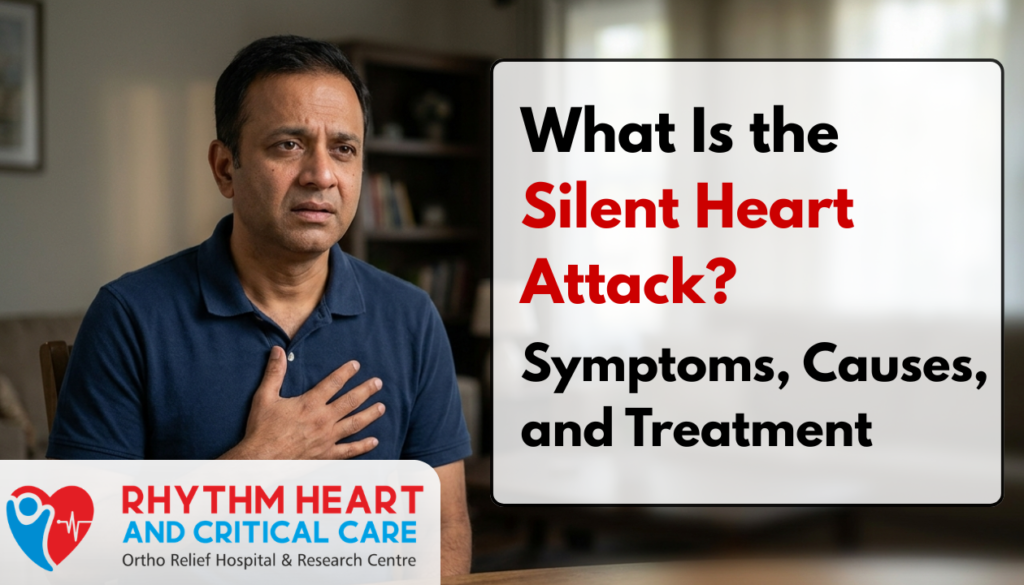
Heart attacks are accompanied by severe chest pain and often lead to a visit to the emergency department. However, not all heart attacks have obvious warning signs. A silent heart attack occurs when blood flow to the heart is reduced or blocked and the typical symptoms unexpectedly cause damage to the heart muscle.
Many individuals mistake the symptoms for fatigue, indigestion, or minor discomfort and do not seek medical attention. Knowing what is silent heart attack, recognizing silent heart attack symptoms, and seeking timely treatment can help prevent serious complications.
At Rhythm Heart & Critical Care Hospital, our expert cardiologists focus on early diagnosis and advanced heart care to protect patients from life-threatening cardiac conditions.
What Is the Silent Heart Attack and Why Is It Dangerous?
A silent heart attack is a heart attack that occurs with symptoms that are mild, unusual, or go unnoticed.
Unlike a traditional heart attack, the warning signs may not be severe enough to recognize the severity of the symptoms. Many people discover they have experienced a silent heart attack only during routine ECG, 2D Echo, TMT, or cardiac evaluations.
Knowing what is silent heart attack is important because untreated heart damage can increase the risk of future heart attacks, heart failure, and other cardiovascular complications. Early diagnosis and preventive cardiac screening can significantly improve long-term heart health.
Silent Heart Attack Symptoms You Should Never Ignore
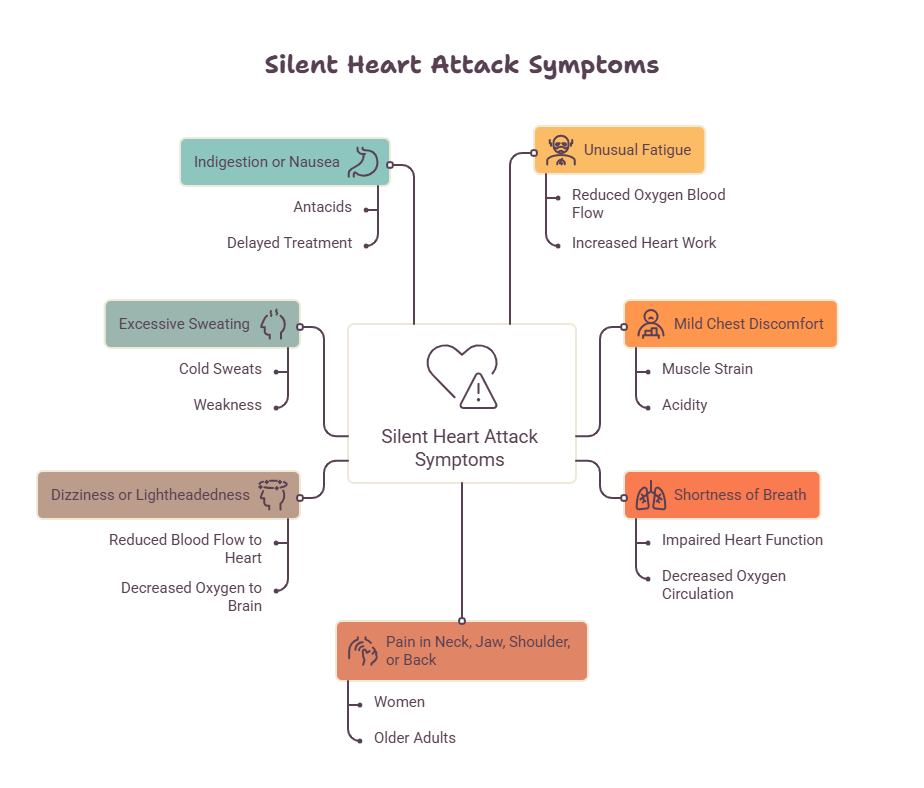
1. Unusual Fatigue
One of the most common symptoms of a silent heart attack is unexplained fatigue. Many people feel unusually tired even after getting enough rest, which can make it difficult to carry out normal daily activities. This symptom often develops gradually and is often ignored because it resembles normal fatigue.
When the heart receives less oxygen-rich blood, the body must work harder, resulting in persistent exhaustion. If fatigue continues without an obvious reason, it is important to consult a cardiologist for a complete heart evaluation.
2. Mild Chest Discomfort
Unlike severe chest pain seen during a typical heart attack, a silent heart attack may cause only mild pressure, tightness, or discomfort in the chest. Many individuals mistake this sensation for muscle strain, acidity, or indigestion.
Although the discomfort may come and go, it should not be ignored. Even mild chest symptoms can indicate reduced blood flow to the heart and may signal an underlying cardiac problem requiring immediate medical attention.
3. Shortness of Breath
Difficulty breathing during daily activities such as climbing stairs, walking, or doing housework may indicate a silent heart attack. When the heart’s function is impaired, the body’s ability to circulate oxygen efficiently decreases, causing shortness of breath.
Many patients assume this symptom is related to aging, lack of fitness, or respiratory problems. However, persistent shortness of breath should always be evaluated by a heart specialist, especially when accompanied by fatigue or chest discomfort.
4. Pain in the Neck, Jaw, Shoulder, or Back
Heart-related pain does not always remain in the chest. A silent heart attack may cause discomfort that spreads to the jaw, neck, shoulders, upper back, or arms. Because the pain occurs away from the chest, many individuals fail to associate it with heart disease.
This symptom is particularly common in women and older adults. Any unexplained pain in these areas, especially during physical activity, should be assessed by a cardiologist.
5. Dizziness or Lightheadedness
Feeling dizzy, weak, or lightheaded can be another warning sign of reduced blood flow to the heart. When the heart cannot pump blood effectively, oxygen delivery to the brain decreases, causing balance problems or faint-like sensations.
Although dizziness may have many causes, recurring episodes should not be ignored. A cardiac evaluation can help determine whether heart disease is contributing to these symptoms.
6. Excessive Sweating
If you suddenly start sweating even when you’re not exercising or in hot weather, it may indicate a heart problem. Many patients complain of sudden onset of cold sweats, accompanied by weakness and discomfort. This condition occurs because the body responds to decreased blood flow and the work of the heart.
Excessive sweating is often associated with anxiety and other symptoms, so some people may not be aware of its connection to heart disease. Persistent episodes should be investigated immediately.
7. Indigestion or Nausea
A silent heart attack may mimic digestive problems, causing nausea, stomach discomfort, bloating, or indigestion like symptoms. Many individuals take antacids and delay seeking treatment because they believe the problem is related to food.
However, when digestive symptoms occur alongside fatigue, sweating, or shortness of breath, they may actually indicate a cardiac issue requiring urgent medical attention.
Reasons of Silent Heart Attack: Hidden Risk Factors
1. High Blood Pressure – Constant pressure damages arteries and increases risk of heart blockage.
2. Diabetes – High blood sugar damages nerves and hides heart attack symptoms.
3. High Cholesterol – Plaque buildup narrows arteries and reduces blood flow significantly.
4. Smoking- Tobacco damages blood vessels and increases cardiovascular disease risk.
5. Obesity – Excess weight strains the heart and raises health complications.
6. Lack of Physical Activity – Inactive lifestyle weakens heart health and circulation over time.
7. Family History of Heart Disease – Genetics can increase susceptibility to heart disease and attacks.
Silent Heart Attack Treatment and Diagnosis
Timely diagnosis is essential for preventing further heart damage. Cardiologists may recommend ECG, 2D Echo, TMT Test, Holter Monitoring, CT Coronary Angiography, or Coronary Angiography to assess heart health.
Treatment depends on the severity of the artery blockage and may include medications, lifestyle changes, angioplasty, stenting, and bypass surgery.
Controlling blood pressure, cholesterol, diabetes, and stress are also essential to preventing future heart events. Early intervention significantly improves recovery and long-term outcomes.
Conclusion
A silent heart attack can occur without any significant warning signs, making it one of the most dangerous forms of cardiovascular disease. Recognizing the symptoms of a silent heart attack, knowing the causes of a silent heart attack, and seeking prompt medical attention can save lives.
If you experience unusual fatigue, breathlessness, chest discomfort, or unexplained weakness, do not ignore these signs.
At Rhythm Heart & Critical Care Hospital, our experienced cardiologists provide advanced cardiac diagnostics and comprehensive heart treatment to help patients detect and manage heart disease early.
Book your heart check-up today and take the first step toward better cardiovascular health.
Reference:
https://my.clevelandclinic.org/health/diseases/21630-silent-heart-attack
FAQ’s
1. What is a silent heart attack?
A silent heart attack is a heart attack that occurs with mild or unnoticed symptoms, making it difficult to recognize immediately.
2. What are the most common silent heart attack symptoms?
Common symptoms include fatigue, mild chest discomfort, shortness of breath, dizziness, sweating, and nausea.
3. Can a silent heart attack happen without chest pain?
Yes, many silent heart attacks occur without severe chest pain and may present with unusual symptoms.
4. Who is at higher risk of a silent heart attack?
People with diabetes, high blood pressure, obesity, high cholesterol, and a family history of heart disease are at higher risk.
5. How is a silent heart attack diagnosed?
Doctors may use ECG, 2D Echo, TMT, Holter monitoring, and angiography to diagnose silent heart damage.
6. Can women experience different symptoms?
Yes, women often experience fatigue, nausea, dizziness, and breathlessness rather than severe chest pain.
7. Is a silent heart attack dangerous?
Yes, untreated heart damage can increase the risk of future heart attacks, heart failure, and other complications.
8. Can a silent heart attack be prevented?
Maintaining a healthy lifestyle, controlling blood pressure, exercising regularly, and avoiding smoking can reduce risk.
9. What should I do if I suspect a silent heart attack?
Seek immediate medical evaluation, especially if symptoms persist or occur repeatedly.
10. Where can I get treatment for silent heart attack symptoms in Nagpur?
Rhythm Heart & Critical Care Hospital offers advanced cardiac diagnosis, treatment, and preventive heart care services.