- 19, Opp. Ramkrishna Math, Rahate Colony Road, Dhantoli, Nagpur -12, +91 9413564868

TMT Test
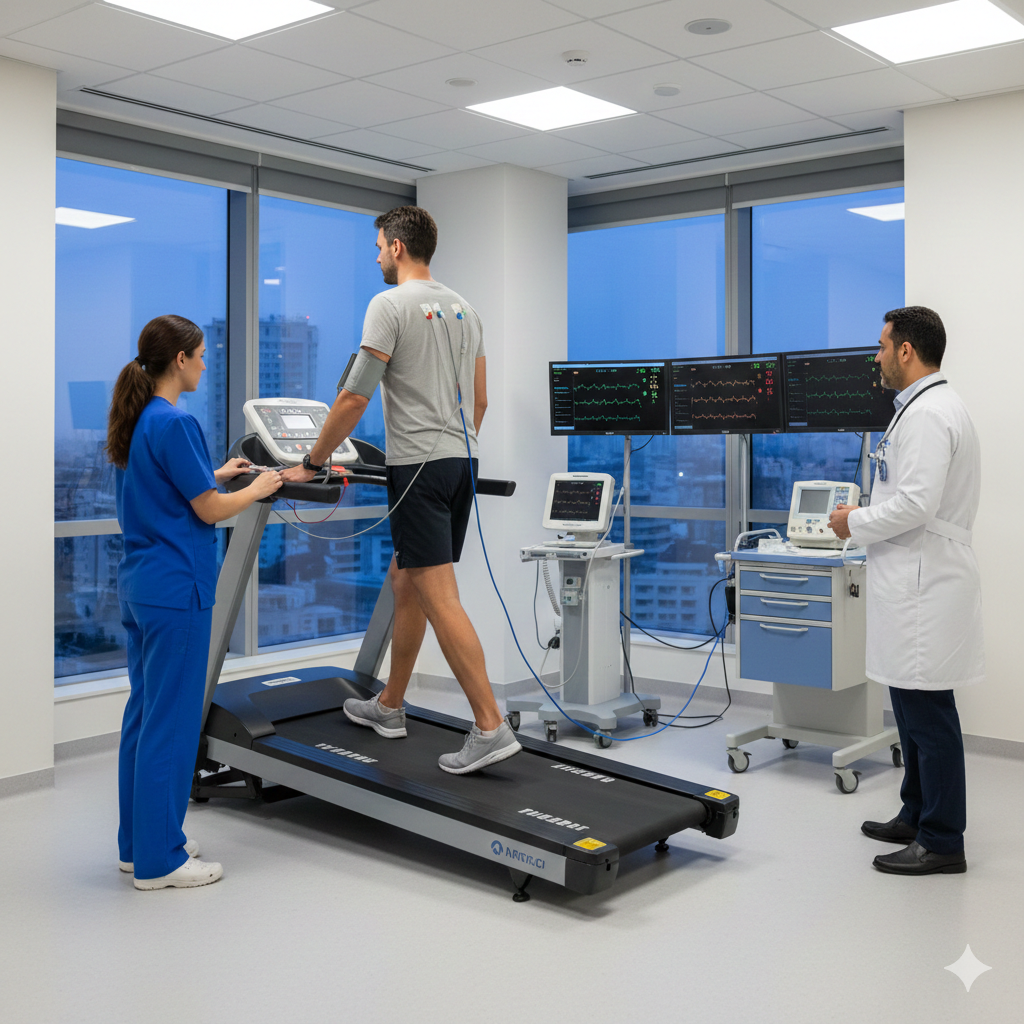
The TMT test, also called a Treadmill Test or Exercise Stress Test, is a non-invasive cardiac test that shows how the heart responds to physical activity. During the test, you walk on a treadmill while your heart rate, ECG, blood pressure, and symptoms are monitored.
The treadmill speed and incline are gradually increased to make the heart work harder. A TMT test may help doctors evaluate symptoms such as chest pain or breathlessness and assess how the heart responds to exercise. It can also provide information that helps guide further cardiac evaluation when needed.
TMT Test Duration
Total Duration: The TMT test typically lasts 15 to 30 minutes, including preparation, exercise, and recovery phases.
Breakdown:
- Preparation (5-10 minutes): ECG setup and baseline readings.
- Exercise (5-15 minutes): Treadmill speed and incline increase every 3 minutes until the target heart rate is reached or symptoms appear.
- Recovery (5-10 minutes): Monitoring heart rate and blood pressure until they return to normal.
Why TMT Test is Done?
The Treadmill Test (TMT) is performed for the following reasons:
- Detect Coronary Artery Disease (CAD): Identifies blockages or reduced blood flow in the heart arteries.
- Assess Heart Function During Exercise: Evaluates how well the heart handles physical stress.
- Monitor After Heart Attack or Surgery: Tracks recovery after bypass surgery, stent placement, or a heart attack.
- Detect Heart Rhythm Abnormalities: Identifies arrhythmias that may occur during exertion.
- Evaluate Exercise Tolerance: Helps determine fitness levels, especially for athletes or patients with heart conditions.
- Pre-Surgical Cardiac Assessment: Ensures heart stability before major surgeries, particularly for high-risk patients.
How the TMT Test is Performed
The TMT test is conducted in a clinical setting under the supervision of a trained cardiologist or technician. The procedure involves the following steps:
Preparation:
- The patient is advised to wear comfortable clothing and avoid heavy meals before the test.
- Electrodes are attached to the chest, arms, and legs to monitor the heart’s electrical activity.
- A baseline electrocardiogram (ECG) and blood pressure reading are recorded before starting the test.
Exercise on the Treadmill:
- The patient begins walking on a treadmill at a slow speed.
- Every few minutes, the speed and incline of the treadmill are increased to create a progressively challenging workload for the heart.
- The patient’s heart rate, blood pressure, and ECG are continuously monitored.
Monitoring Symptoms:
- The patient is instructed to report any discomfort, such as chest pain, dizziness, or breathlessness.
- The test is stopped if the patient experiences severe symptoms, abnormal ECG readings, or dangerously high blood pressure.
Post-Test Recovery:
- After the treadmill session, the patient is monitored for a few minutes as heart rate and blood pressure return to normal.
- The doctor analyzes the ECG results and blood pressure responses to interpret the findings.
Interpreting TMT Test Results
The results of the TMT test help in diagnosing and assessing heart conditions:
Normal TMT Test:
- No significant changes in ECG, heart rate, or blood pressure.
- The patient can complete the required exercise stages without symptoms.
- Indicates a healthy heart with no major blockages in the coronary arteries.
Abnormal TMT Test:
- ECG changes, such as ST-segment depression or elevation, suggest inadequate blood flow to the heart.
- Symptoms like chest pain, dizziness, or excessive fatigue indicate potential heart disease.
- The doctor may recommend further tests, such as an angiogram, to confirm coronary artery disease.
Preparation Tips for a TMT Test
Avoid Heavy Meals & Caffeine
Refrain from eating large meals, drinking coffee, or smoking at least 2-3 hours before the test to prevent discomfort and ensure accurate results.
Wear Comfortable Clothing & Shoes
Opt for loose-fitting clothes and sports shoes to ensure ease of movement during the treadmill test.
Medication Guidance
Inform your doctor about any medications you take, as some may need to be adjusted or stopped temporarily before the test.
Stay Hydrated
Drink water as needed, but avoid excessive fluid intake right before the test to prevent discomfort.
Get Proper Rest
Ensure a good night’s sleep before the test to avoid fatigue, which may affect your performance and test results.
Communicate Any Discomfort
Inform the technician immediately if you experience chest pain, dizziness, or breathlessness during the test to prevent complications.
Pharmacologic Stress Test
Advanced Cardiac Stress Testing Without Exercise
At Rhythm Heart & Critical Care Hospital, we also provide Pharmacologic Stress TMT Test services for patients who are unable to perform physical exercise on a treadmill due to age, joint problems, breathing difficulty, weakness, or other medical conditions. This specialized cardiac stress test uses medications to increase heart activity and simulate exercise conditions while monitoring the heart’s response through ECG, blood pressure, and imaging.
Pharmacologic stress testing helps cardiologists detect coronary artery disease, evaluate blood flow to the heart muscles, and identify hidden cardiac abnormalities safely and accurately. It is especially useful for elderly patients and individuals with limited mobility who cannot undergo a standard treadmill stress test.
The procedure is performed under expert supervision using advanced monitoring systems to ensure maximum patient safety and accurate diagnosis. This test plays an important role in early heart disease detection, treatment planning, and prevention of serious cardiac complications.
FAQ’s
1. What is a TMT test?
A TMT test, or treadmill test, is a cardiac test that checks how the heart responds to physical activity while monitoring ECG, heart rate, and blood pressure.
2. How is a TMT test done?
During a TMT test, you walk on a treadmill while the speed and incline gradually increase. Your ECG, heart rate, blood pressure, and symptoms are monitored throughout the test.
3. What does a TMT test report show?
A TMT test report provides information about your heart rate, ECG changes, blood pressure response, exercise capacity, and symptoms during exercise.
4. What is the target heart rate in TMT?
The target heart rate in TMT depends on factors such as age, health condition, medications, and the test protocol. The doctor determines the appropriate exercise level.
5. How long does a TMT test take?
A TMT test usually includes preparation, exercise, and recovery monitoring. The total time can vary depending on the patient’s condition and how the test progresses.
6. What does a normal TMT test mean?
A normal TMT generally means that no significant abnormalities were detected during exercise. The doctor interprets the result along with symptoms and medical history.
7. What does an abnormal TMT test mean?
An abnormal TMT may show changes in ECG, heart rate, blood pressure, or symptoms during exercise. The doctor may recommend further cardiac evaluation when required.
8. Can a TMT test detect heart blockage?
A TMT can help evaluate signs that may suggest reduced blood flow to the heart during exercise, but further tests may be needed to confirm coronary artery disease.
9. What is TMT test meaning in Marathi?
TMT Test म्हणजे ट्रेडमिल टेस्ट, ज्यामध्ये व्यायाम करताना हृदयाची गती, ECG आणि रक्तदाब तपासून हृदयाची कार्यक्षमता पाहिली जाते.
10. How should I prepare for a TMT test?
Wear comfortable clothes and suitable shoes, avoid heavy meals before the test, and inform your doctor about your medicines and any existing health conditions.