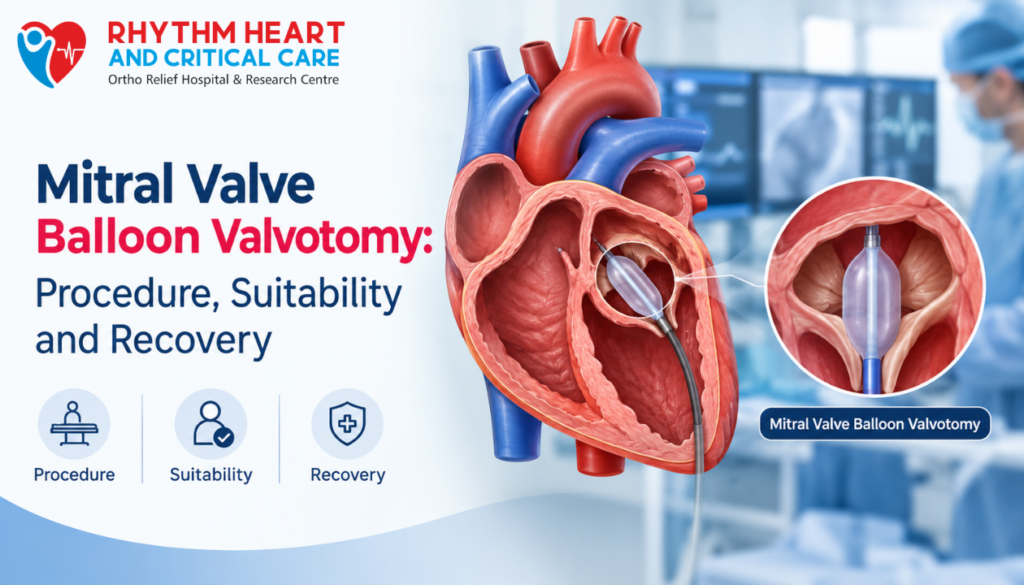
Mitral valve balloon valvotomy is a minimally invasive procedure used to widen a narrowed mitral valve. Learn about the procedure, patient suitability, benefits, risks, and recovery.
Balloon valvuloplasty, also known as balloon valvotomy, is a minimally invasive procedure used to widen a narrowed heart valve. Mitral valve balloon valvotomy is a specific type of treatment for selected patients with mitral valve stenosis, a condition in which the valve between the heart’s left atrium and left ventricle becomes narrowed.
During the procedure, a cardiologist guides a catheter with a deflated balloon through a blood vessel to the affected valve. The balloon is then inflated to help open the narrowed valve and improve blood flow. The procedure may reduce symptoms such as breathlessness and fatigue in suitable patients, but its benefits depend on valve structure and the severity of the condition.
In this guide, we explain how balloon valvuloplasty works, the types of heart valves it can treat, who may be suitable for the procedure, its benefits and risks, and what recovery may involve.
What Is Mitral Valve Balloon Valvotomy?

Mitral valve balloon valvotomy is a catheter-based procedure used to treat selected cases of mitral valve stenosis. In this condition, the mitral valve becomes narrowed and restricts blood flow from the left atrium to the left ventricle.
A doctor uses a balloon catheter to reach the mitral valve and blows it up to open the stuck parts of the valve. Doctors use tests like echocardiography to check the valve and decide if the procedure is right for the patient.
The choice depends on how bad the narrowing is, the structure of the valve, if there’s any leakage from the valve, and whether there’s a blood clot in the heart.
How Does Balloon Valvotomy Work?
Balloon valvuloplasty is performed in a hospital cardiac catheterisation laboratory. The exact technique depends on the valve being treated and the patient’s condition.
- Preparation: The medical team reviews the patient’s medical history, medications, and heart imaging results.
- Catheter insertion: A thin tube is inserted through a blood vessel, commonly in the groin.
- Balloon positioning: Using imaging guidance, the cardiologist moves the catheter to the narrowed valve.
- Balloon inflation: The balloon is briefly inflated to widen the valve opening.
- Final assessment: The balloon is deflated and removed. The team checks valve function, blood flow, heart rhythm, and the catheter insertion site.
The procedure duration and hospital stay vary depending on the valve treated, the patient’s health, and whether complications occur.
Benefits :
- Minimally Invasive: Unlike open-heart surgery, balloon valvotomy is less invasive, resulting in reduced recovery time and lower risk of complications.
- Shorter Hospital Stay: Patients typically experience a shorter hospital stay compared to traditional valve replacement surgery.
- Quick Recovery: The minimally invasive nature of the procedure allows for a quicker recovery, enabling patients to return to their normal activities sooner.
- Effective Symptom Relief: Balloon valvotomy can effectively relieve symptoms associated with valve stenosis, improving the patient’s quality of life.
Indications :
Balloon valvotomy is primarily indicated for patients with aortic stenosis or mitral stenosis, two common types of valve stenosis. It is especially beneficial for patients who are considered high-risk candidates for open-heart surgery due to age, underlying health conditions, or other factors.
The decision to perform balloon valvotomy is based on a thorough evaluation of the patient’s overall health, the severity of the valve stenosis, and the potential benefits of the procedure.
Types of Balloon Valvuloplasty
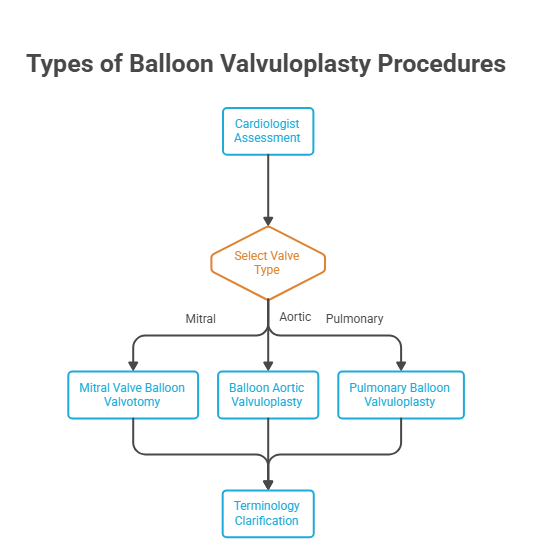
Balloon valvuloplasty can be used for selected types of heart valve stenosis. The appropriate procedure depends on which valve is narrowed and the patient’s clinical condition.
Mitral Valve Balloon Valvotomy
This procedure treats selected cases of mitral valve stenosis. It may be recommended when the valve anatomy is suitable and there is no left atrial clot or significant mitral valve leakage that would make the procedure unsuitable.
Balloon Aortic Valvuloplasty
Balloon aortic valvuloplasty widens a narrowed aortic valve. It may be used in selected patients, including certain children with congenital aortic stenosis. In adults with calcific aortic stenosis, it may provide temporary relief or serve as a bridge to another treatment rather than a permanent solution.
Pulmonary Balloon Valvuloplasty
Pulmonary balloon valvuloplasty treats selected cases of pulmonary valve stenosis, which restricts blood flow from the right ventricle to the lungs. It is commonly considered for suitable patients with congenital pulmonary valve narrowing.
A cardiologist must assess the valve and the patient’s overall health before recommending any of these procedures.
Balloon Valvotomy vs Balloon Valvuloplasty
The terms balloon valvotomy and balloon valvuloplasty are often used interchangeably for a catheter-based procedure that opens a narrowed heart valve.
The word valvotomy refers to opening a valve, while valvuloplasty is a broader term for a procedure that improves valve opening or function. The exact meaning can vary with the technique and clinical context. Both terms may be used when discussing balloon treatment for valve stenosis.
Risks and Possible Complications of Balloon Valvuloplasty
Balloon valvuloplasty is less invasive than conventional open-heart surgery, but it still carries risks. Possible complications include bleeding or bruising at the catheter insertion site, blood vessel injury, abnormal heart rhythms, blood clots, stroke, and damage to the treated valve. In some patients, the procedure may cause or worsen valve leakage.
The level of risk depends on the valve being treated, its structure, the patient’s age and overall health, and the experience of the treating team. Before the procedure, the cardiologist should explain the expected benefits, possible complications, and alternative treatment options.
Conclusion
Balloon valvuloplasty is a minimally invasive option for selected patients with narrowed heart valves. The procedure, expected benefits, and long-term results depend on whether the mitral, aortic, or pulmonary valve is affected and how severe the narrowing is.
A cardiologist can assess valve structure, explain the available treatment options, and determine whether balloon treatment is appropriate.
If you have been diagnosed with heart valve stenosis or are experiencing symptoms such as breathlessness, chest discomfort, or reduced exercise tolerance, consult a qualified cardiologist for an assessment. Contact Rhythm Heart and Critical Care Hospital to enquire about a cardiology consultation.
FAQ’s
1. What Is Mitral Valve Balloon Valvotomy?
Mitral valve balloon valvotomy is a minimally invasive procedure used to widen a narrowed mitral valve in selected patients with mitral valve stenosis. A balloon catheter is guided to the valve and inflated to improve its opening.
2. What Is Balloon Valvuloplasty?
Balloon valvuloplasty is a catheter-based procedure that uses a balloon to widen a narrowed heart valve. It may be used for selected cases of mitral, aortic, or pulmonary valve stenosis.
3. Is Balloon Valvuloplasty Open-Heart Surgery?
No. Balloon valvuloplasty is generally performed through a blood vessel using a catheter, without the large chest incision associated with conventional open-heart surgery. However, it is an invasive cardiac procedure and requires specialist care.
4. Who Is Suitable for Mitral Valve Balloon Valvotomy?
Suitability depends on the severity of mitral stenosis, valve structure, symptoms, and associated conditions. A cardiologist evaluates echocardiography results and checks for factors such as significant mitral valve leakage or a clot in the left atrium before recommending treatment.
5. What Is the Difference Between Valvotomy and Valvuloplasty?
Valvotomy refers to opening a narrowed valve, while valvuloplasty is a broader term for a procedure intended to improve valve opening or function. The terms are often used interchangeably for balloon treatment of valve stenosis.
6. What Is Balloon Aortic Valvuloplasty?
Balloon aortic valvuloplasty is a procedure that uses a balloon catheter to widen a narrowed aortic valve. Its role depends on the patient’s age, valve condition, and treatment goals. In adults with calcific aortic stenosis, the benefit may be temporary.
7. What Is Pulmonary Valvotomy?
Pulmonary valvotomy is a procedure to open a narrowed pulmonary valve, which controls blood flow from the right ventricle to the lungs. Balloon pulmonary valvuloplasty is a catheter-based option for selected patients with pulmonary valve stenosis.
8. What Are the Risks of Balloon Valvuloplasty?
Possible risks include bleeding, blood vessel injury, abnormal heart rhythms, blood clots, stroke, and valve leakage. The risks vary by patient and procedure, so the treating cardiologist should explain them before treatment.
9. How Long Does Recovery Take After Balloon Valvuloplasty?
Recovery varies according to the valve treated, the patient’s overall health, and whether complications occur. Some patients leave hospital relatively soon, but activity restrictions and follow-up instructions should be based on the treating team’s advice.
10. Is Balloon Valvuloplasty a Permanent Treatment?
Not always. The long-term result depends on the valve, the cause and severity of narrowing, and how the valve responds to treatment. Some patients may need continued monitoring or another intervention later.