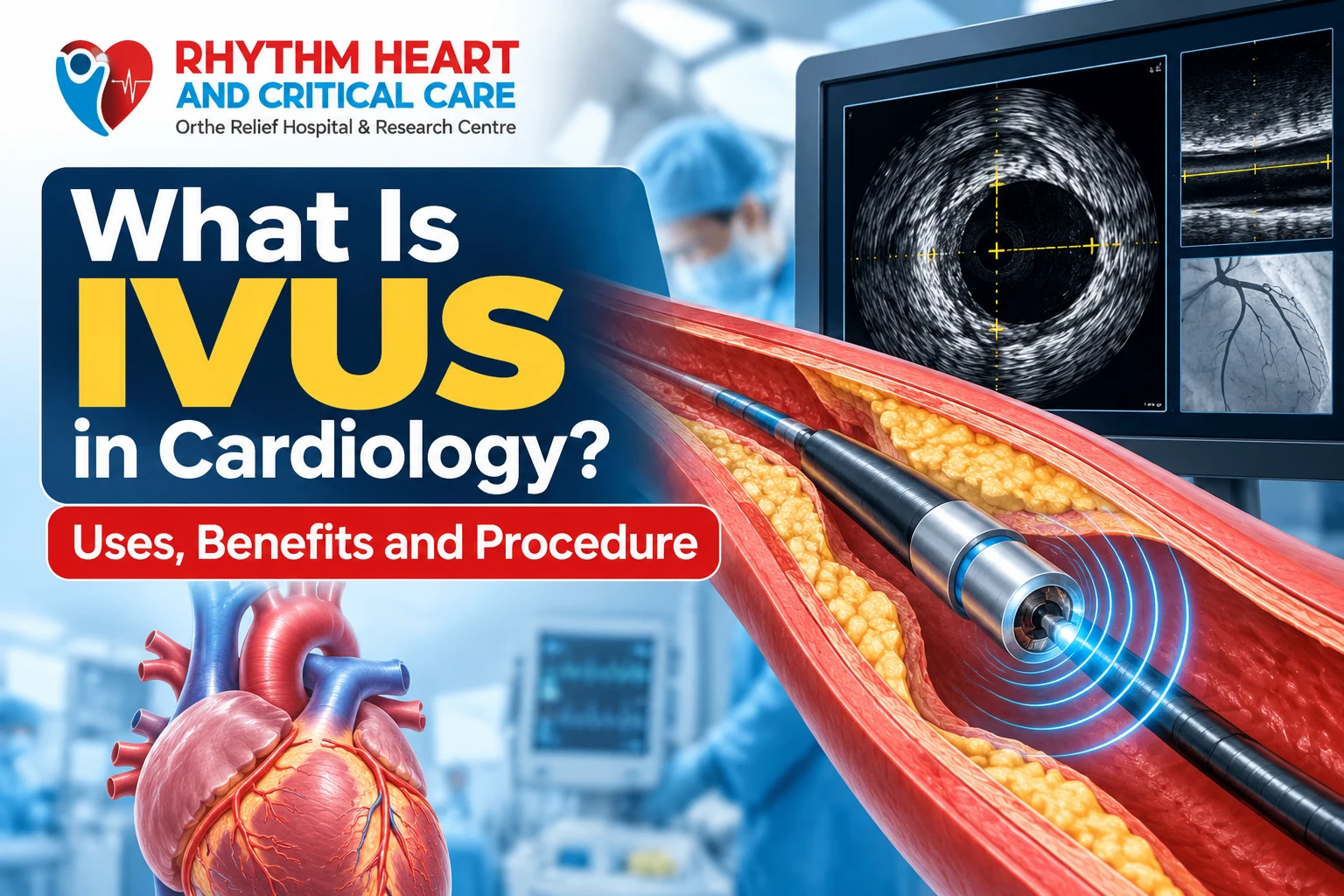
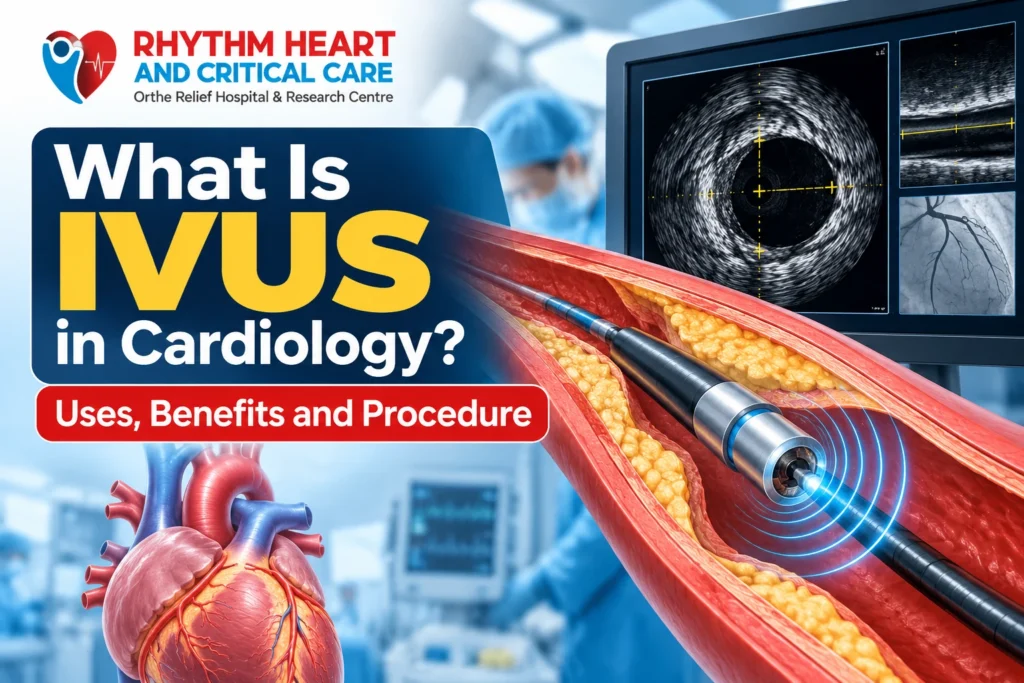
IVUS (Intravascular Ultrasound) is an advanced imaging technique that helps cardiologists examine the inside of coronary arteries.
It uses sound waves to create detailed images of blood vessel walls, helping doctors assess blockages and guide treatment during selected cardiac procedures.
Unlike conventional angiography, which shows the outline of blood vessels, IVUS provides additional information about artery walls and plaque buildup. This can be particularly useful when planning complex angioplasty procedures.
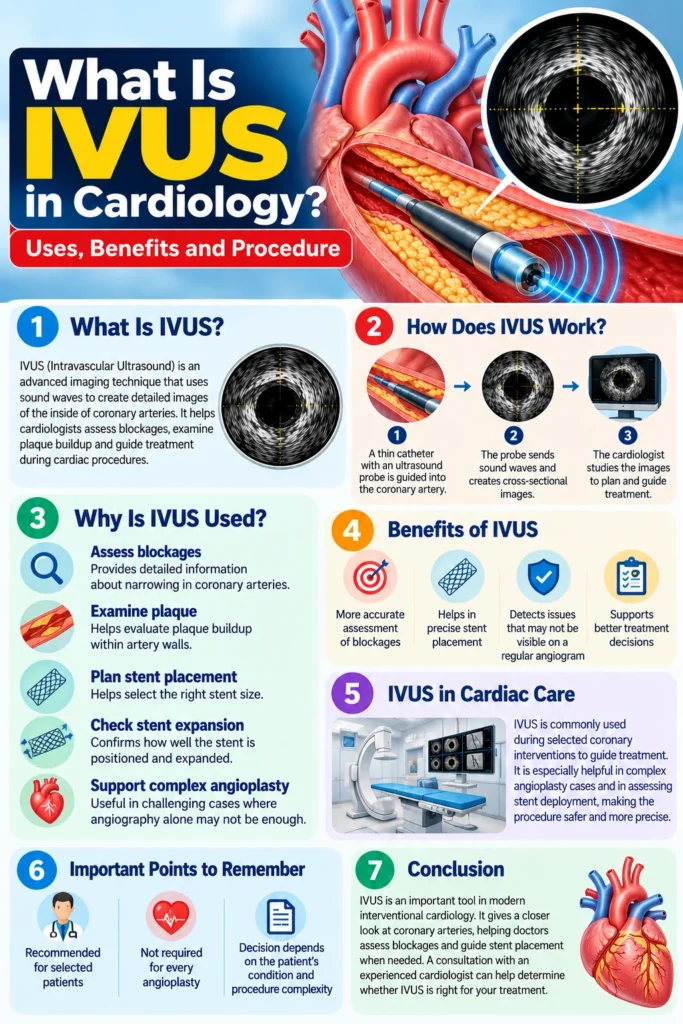
How Does IVUS Work?
During the procedure, a cardiologist guides a thin catheter with a miniature ultrasound probe into the coronary artery. The probe sends sound waves into the vessel and creates detailed cross-sectional images on a monitor.
The cardiologist studies these images to understand the location and extent of the blockage. IVUS may also help determine the appropriate stent size and check whether a stent has expanded properly after angioplasty.
Why Is IVUS Used in Cardiology?
Doctors may recommend IVUS during selected coronary interventions for several reasons:
- Assessing blockages: Provides detailed information about narrowing inside coronary arteries.
- Examining plaque: Helps evaluate plaque buildup within the artery walls.
- Planning stent placement: Helps the cardiologist select an appropriate stent size.
- Checking stent expansion: Helps assess how well the stent is positioned and expanded.
- Supporting complex angioplasty: Offers additional information when conventional angiography alone may not be sufficient.
IVUS is not necessary for every angioplasty. The cardiologist decides whether it is appropriate based on the patient’s condition and the complexity of the procedure.
What Are the Benefits of IVUS?
IVUS gives cardiologists a closer view of coronary arteries, supporting more informed decisions during treatment.
It can help identify vessel features that may not be fully visible on a standard angiogram and assist with accurate stent placement.
Like other catheter-based procedures, IVUS can carry risks, including bleeding or blood vessel injury. The overall risk depends on the procedure and the patient’s health.
IVUS at Rhythm Heart & Critical Care, Nagpur
Rhythm Heart & Critical Care, Nagpur, lists intravascular imaging, including IVUS and Optical Coherence Tomography (OCT), among its cardiac services.
These technologies help cardiologists examine coronary arteries in greater detail and support treatment planning during selected coronary interventions.
Patients advised to undergo angiography or angioplasty can consult the hospital’s cardiac team to understand whether IVUS may be suitable for their condition. The recommended approach depends on the patient’s diagnosis, coronary anatomy and clinical needs.
Conclusion
IVUS is an important imaging tool in modern interventional cardiology. By providing detailed images from inside coronary arteries, it helps cardiologists assess blockages and guide stent placement when needed.
A consultation with a qualified cardiologist can help determine whether IVUS is appropriate for an individual’s treatment.
FAQs
1. What is IVUS in cardiology?
IVUS stands for Intravascular Ultrasound. It uses sound waves to create detailed images of the inside of coronary arteries, helping cardiologists assess blockages and plaque buildup.
2. Why is IVUS performed during angioplasty?
Doctors may use IVUS during angioplasty to examine the artery, assess the blockage, select an appropriate stent size, and check whether the stent has expanded properly.
3. Is IVUS different from coronary angiography?
Yes. Coronary angiography shows the flow and outline of blood vessels using contrast dye and X-rays. IVUS provides cross-sectional images of the artery walls from inside the vessel.
4. Is the IVUS procedure painful?
IVUS is usually performed during a catheter-based cardiac procedure. Patients may experience some discomfort from the catheter insertion or related procedures, but the experience varies depending on the individual and the technique used.
5. How long does an IVUS procedure take?
The time depends on the complexity of the cardiac procedure and whether IVUS is performed alongside angioplasty or another intervention. The cardiologist can explain the expected duration for each patient.
6. Is IVUS safe?
IVUS is generally considered safe when performed by a trained cardiac team. However, because it involves a catheter inside a blood vessel, risks such as bleeding or vessel injury may occur.
7. Does every angioplasty patient need IVUS?
No. IVUS is not required for every angioplasty. A cardiologist may recommend it when additional information about the artery or stent placement could help guide treatment.
8. What is the difference between IVUS and OCT?
Both IVUS and Optical Coherence Tomography (OCT) provide detailed images from inside coronary arteries. IVUS uses ultrasound waves, while OCT uses light to produce high-resolution images. The choice depends on the clinical situation.
9. What is the cost of an IVUS procedure in Nagpur?
The cost depends on the hospital, equipment used, and whether IVUS is performed with angioplasty or another cardiac intervention. Contact the hospital for an estimate based on your treatment plan.
10. Where can I consult for IVUS-related cardiac care in Nagpur?
You can contact Rhythm Heart & Critical Care, Nagpur, to discuss your cardiac diagnosis and available treatment options. The cardiology team can determine whether IVUS is appropriate for your condition.