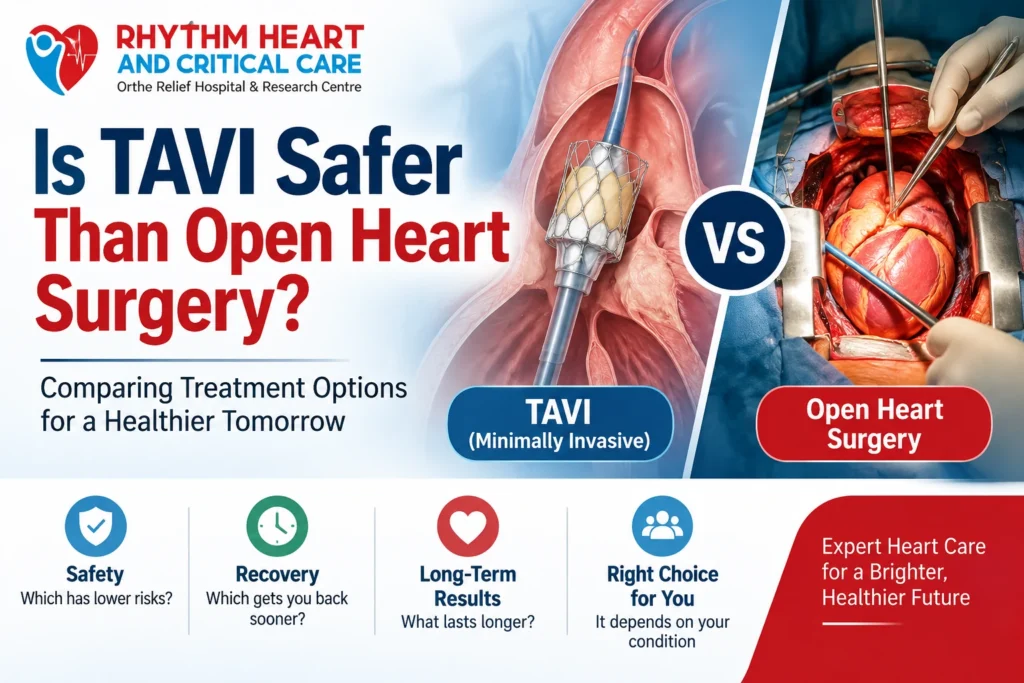
When someone is diagnosed with severe aortic valve stenosis, one of the biggest questions is how the damaged valve should be replaced.
Traditionally, surgical aortic valve replacement (SAVR) has been the standard treatment. Today, another option is available for many patients: TAVI, or Transcatheter Aortic Valve Implantation.
So, is TAVI safer than open heart surgery?
In many suitable patients, especially older adults and people who face a higher risk from major surgery, TAVI can offer important safety and recovery advantages.
It does not require opening the chest in the same way as conventional surgical valve replacement, and patients often experience less bleeding and a faster recovery.
However, TAVI is not automatically the better choice for every patient. The safest treatment depends on factors such as age, valve anatomy, other heart conditions, surgical risk, life expectancy, and the long-term plan for valve treatment.
Current guidelines emphasize assessment by a multidisciplinary Heart Team rather than choosing one procedure for everyone.
What Is TAVI?
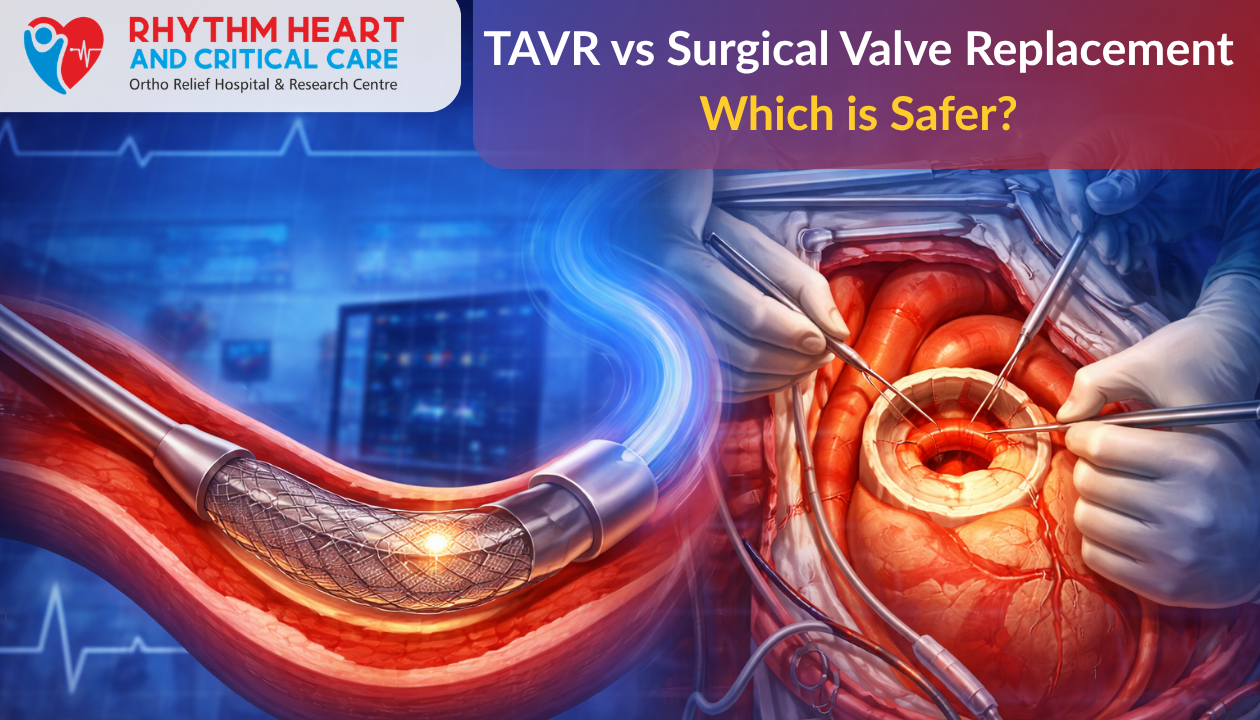
TAVI is a minimally invasive procedure used to replace a narrowed or diseased aortic valve.During TAVI, doctors guide a specially designed replacement valve through a catheter, commonly through an artery in the groin.
The new valve is positioned inside the existing aortic valve and expanded into place. Once implanted, it takes over the job of regulating blood flow from the heart to the rest of the body.
Unlike traditional surgical valve replacement, TAVI generally does not require a large chest incision or opening of the breastbone.
This less invasive approach can be particularly valuable for older patients or those who may not tolerate major surgery well.
What Is Open Heart Aortic Valve Surgery?
Surgical aortic valve replacement, or SAVR, involves removing the damaged aortic valve and replacing it with a surgical prosthetic valve.
The procedure usually requires opening the chest and temporarily supporting the heart and circulation during surgery.
Although it is a major operation, SAVR is a well-established treatment with decades of clinical experience and remains an excellent option for many patients.
Surgery may also be preferable when a patient needs additional cardiac procedures at the same time, such as treatment for certain types of coronary artery disease, an aortic aneurysm, or another valve problem.
Is TAVI Safer Than Open Heart Surgery?
For many appropriately selected patients, TAVI can have a lower risk of some short-term complications than surgical valve replacement. But saying that TAVI is always safer would be inaccurate.
Clinical trials have shown that TAVI can provide outcomes comparable to, and in some groups better than, SAVR for important measures such as death or stroke.
For example, the 2024 DEDICATE trial included patients aged 65 to 85 with symptomatic severe aortic stenosis and low-to-intermediate surgical risk.
At one year, death or stroke occurred in 5.4% of the TAVI group compared with 10.0% of the surgical group.
At the same time, longer-term evidence is important. Five-year follow-up from the Evolut Low Risk trial found similar rates of death or disabling stroke between TAVR and surgery in low-risk patients. This shows why the decision should not be based only on the first few weeks after treatment.
Why Can TAVI Be Safer for Some Patients?
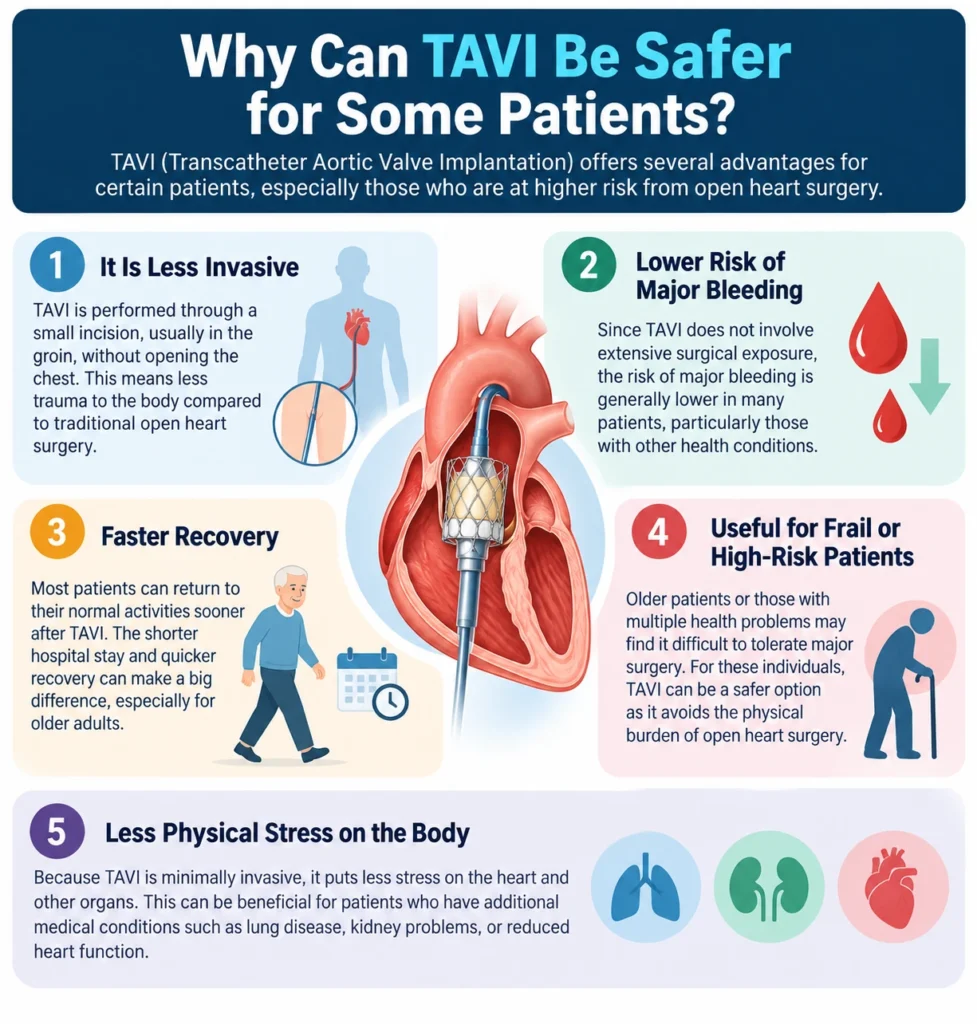
1. It Is Less Invasive
One of the biggest advantages of TAVI is that the procedure can usually be performed without conventional open-chest surgery.
For an older person or someone with several health conditions, avoiding major surgery can make a meaningful difference. Less surgical trauma may also help the patient begin normal activities sooner.
2. Lower Risk of Major Bleeding in Some Patients
Because TAVI does not involve the same type of extensive surgical exposure as SAVR, major bleeding can be less common in certain patient groups.
A randomized trial involving patients with severe aortic stenosis and small aortic annuli found significantly more major or life-threatening bleeding after SAVR than after TAVR at 30 days.
3. Faster Recovery
Recovery is another reason patients often consider TAVI.
After traditional valve surgery, the body needs time to recover from both the valve replacement and the chest surgery.
TAVI generally involves a smaller access site and less physical trauma, which can allow many patients to return to daily activities sooner.
The exact recovery period varies from person to person. Age, general fitness, kidney function, other medical conditions, and complications can all affect recovery.
4. It May Be Helpful for Frail or High-Risk Patients
Frailty can make recovery from major surgery more difficult. Current expert guidance identifies frailty and certain high-risk surgical situations as factors that may favor TAVI.
For these patients, avoiding a major surgical procedure may reduce the physical burden of treatment.
TAVI vs Open Heart Surgery: Key Differences
| Factor | TAVI | Open Heart Surgery (SAVR) |
| Procedure type | Minimally invasive | Major surgical procedure |
| Chest opening | Usually not required | Usually required |
| Recovery | Generally faster | Usually longer |
| Major bleeding | Often lower in selected patients | Can be higher |
| Pacemaker risk | Can be higher with some valves/patients | Generally lower |
| Additional heart procedures | Limited | Can be performed during the same operation |
| Long-term planning | Important | Important |
| Suitability | Depends on anatomy and patient factors | Depends on anatomy and surgical risk |
The table provides a general comparison. Individual outcomes can vary considerably, so patients should not use these differences alone to decide which procedure they need.
TAVI vs Open Heart Surgery: Which Has a Faster Recovery?
In general, TAVI allows a faster recovery than conventional surgical aortic valve replacement because it avoids the same level of surgical trauma.
Many patients can resume normal activities relatively quickly, although the exact timeline depends on their age, general health, procedure, and recovery.
Open heart surgery usually requires a longer recovery period because the patient is recovering from both the valve operation and the chest incision. Physical activity may need to be restricted for a longer period while the breastbone heals.
However, a faster recovery does not necessarily mean that TAVI is the right treatment. The procedure should still be selected based on the patient’s complete clinical picture.
TAVI Care at Rhythm Heart & Critical Care
Choosing the right hospital is an important part of planning TAVI treatment. Rhythm Heart & Critical Care in Nagpur provides comprehensive cardiac care with a focus on advanced cardiology and critical care services.
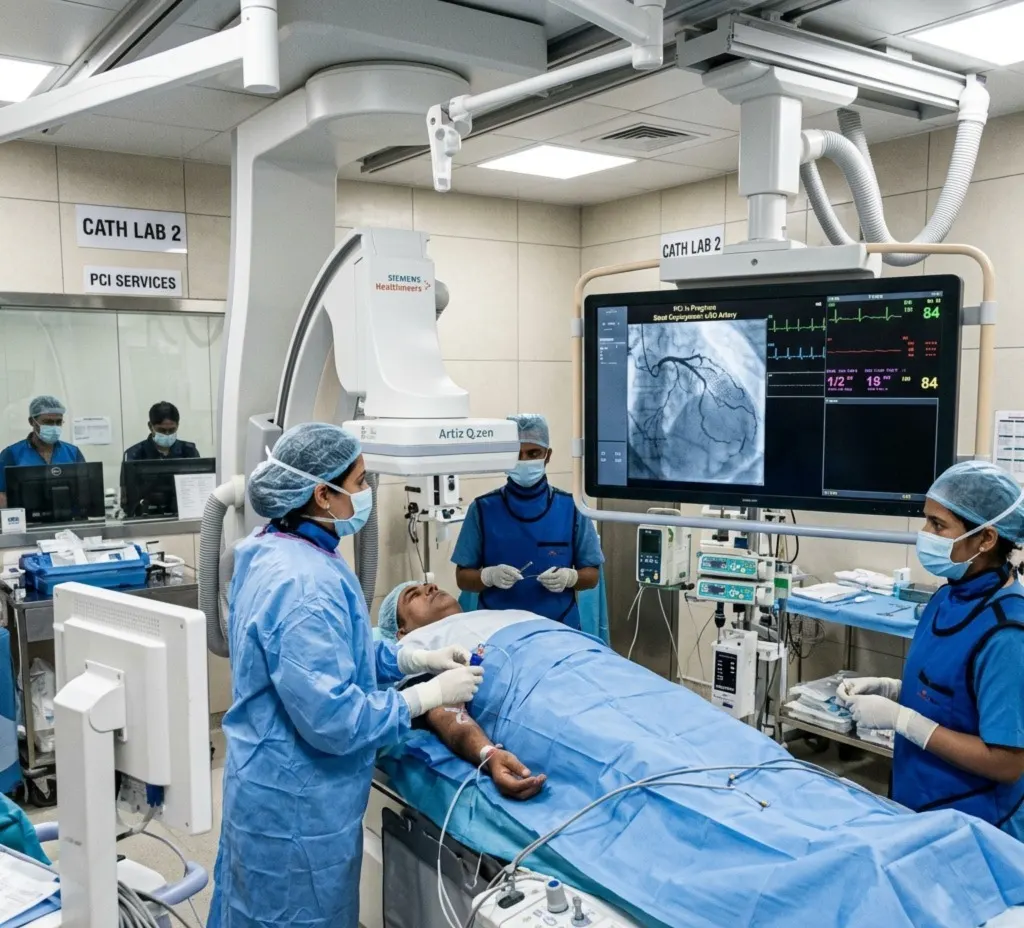
The hospital offers a range of cardiac treatments and diagnostic services, including TAVI, angioplasty, PCI, ECG, 2D Echo, TMT, Holter monitoring, pacemaker implantation, and other specialized heart-care procedures.
Final Thoughts
So, is TAVI safer than open heart surgery?
For many carefully selected patients, particularly older adults and those at increased risk from major surgery, TAVI can offer important advantages, including less invasive treatment, lower rates of certain early complications, and faster recovery.
But TAVI is not universally safer. Surgical valve replacement remains an important and highly effective treatment, especially for certain younger patients and those with anatomical or clinical features that favor surgery.
The good approach is to compare both options after a detailed evaluation by an experienced Heart Team. A personalized decision can help balance immediate safety, recovery, valve durability, and future treatment needs.
If you or a family member has been diagnosed with severe aortic stenosis, discussing TAVI and surgical valve replacement with an experienced cardiologist can help you understand which treatment is most appropriate for your individual condition.