Aortic valve disease, particularly severe aortic stenosis, can make everyday activities such as walking, climbing stairs, or even resting increasingly difficult.
When medication is no longer enough, valve replacement may be recommended. For selected patients, TAVI (Transcatheter Aortic Valve Implantation) offers a less invasive alternative to traditional open-heart valve replacement.
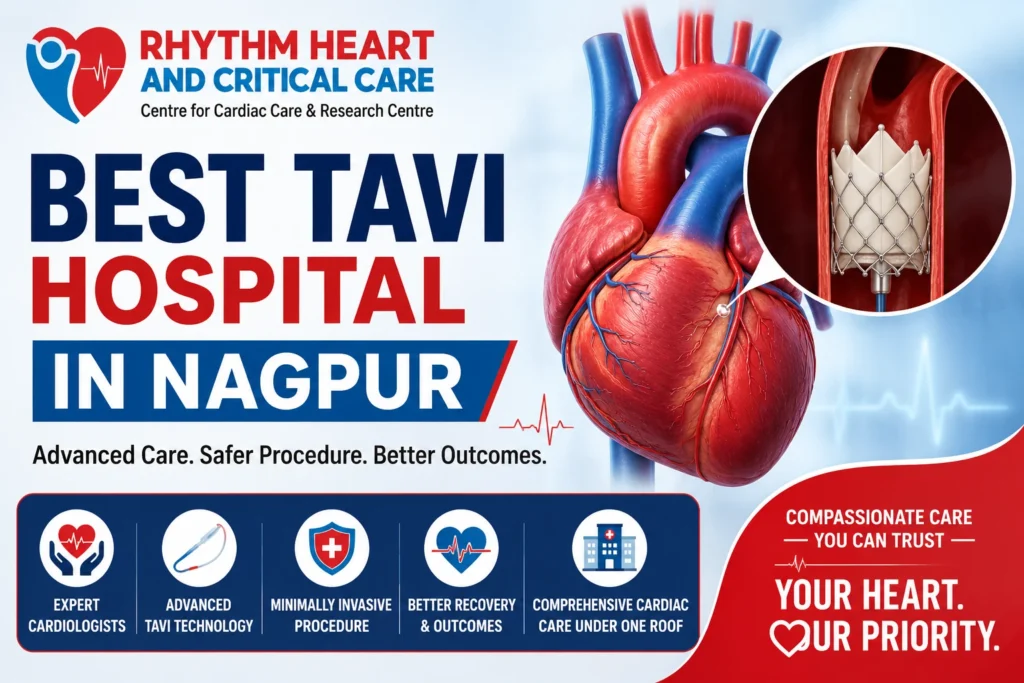
For patients searching for the Best TAVI Hospital in Nagpur, it is important to consider more than just the procedure itself.
Experienced cardiac specialists, advanced catheterization facilities, appropriate patient selection, intensive care support, and proper follow-up all play an important role in achieving a safe outcome.
What Is TAVI?
TAVI is a minimally invasive procedure used to replace a diseased aortic valve. Instead of opening the chest, doctors insert a replacement valve through a blood vessel, commonly through an artery in the groin.
The new valve is positioned inside the damaged native valve and helps improve blood flow from the heart to the body.
Because the procedure is performed through a catheter, recovery may be easier for appropriately selected patients than with conventional open-heart surgery.
Who May Need TAVI?
TAVI is mainly considered for patients with significant aortic valve narrowing, known as aortic stenosis. Your cardiologist evaluates several factors before recommending the procedure, including:
- Severity of valve disease
- Age and overall health
- Heart function
- Other medical conditions
- Surgical risk
- Anatomy of the heart and blood vessels
TAVI is not automatically the best option for every patient. A detailed cardiac assessment is essential before making a treatment decision.
Common Symptoms of Severe Aortic Stenosis
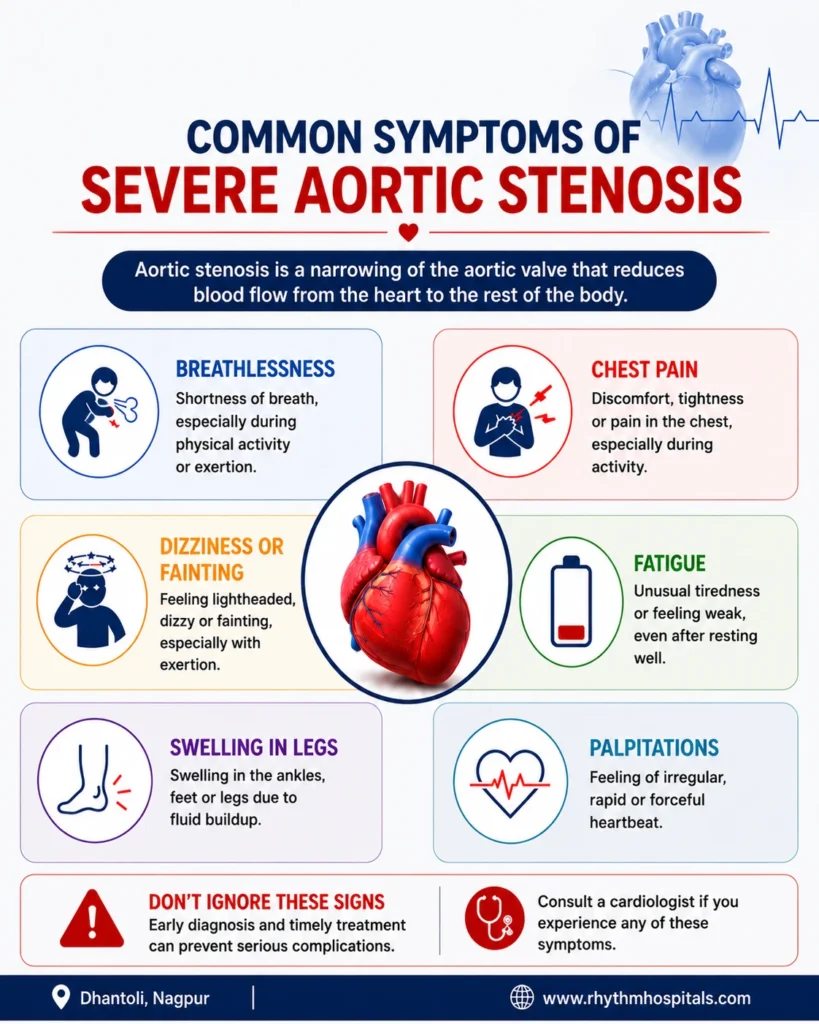
Severe aortic stenosis can make it harder for the heart to pump enough blood to the body. Common symptoms include shortness of breath, chest pain, dizziness or fainting, unusual fatigue, and reduced ability to perform everyday activities.
Aortic valve disease can develop gradually, so symptoms should not be ignored. Common warning signs include:
- Breathlessness, especially during activity
- Chest discomfort or pain
- Dizziness or fainting
- Unusual tiredness
- Reduced ability to exercise
- Swelling in the legs
- Palpitations
If these symptoms are becoming more frequent, consult a cardiologist for evaluation.
Choosing the Right TAVI Hospital in Nagpur
When choosing a TAVI hospital in Nagpur, consider the experience of the cardiac team, advanced diagnostic facilities, TAVI expertise, and availability of critical care support.
A well-equipped hospital with coordinated care can help ensure proper patient evaluation, safer treatment, and close monitoring before and after the procedure.
When comparing hospitals for TAVI, consider:
- Experience in structural heart procedures
- Availability of an advanced Cath Lab
- Experienced cardiologists and supporting specialists
- Echocardiography and diagnostic facilities
- ICU and critical-care support
- Emergency cardiac services
- Personalized treatment planning
- Post-procedure monitoring and follow-up
The right hospital should have the infrastructure and multidisciplinary expertise required to manage both routine and unexpected situations.
Why Choose Rhythm Heart & Critical Care for TAVI in Nagpur?
Rhythm Heart & Critical Care has experience with advanced interventional cardiac procedures and lists Transcatheter Aortic Valve Implantation (TAVI) among the newer technologies available at the hospital.
Its cardiac team includes Dr. Manish Juneja and other specialists, with facilities including a catheterization laboratory, echocardiography, diagnostics, and intensive care support.
The hospital is located in Dhantoli, Nagpur, and provides comprehensive cardiac and critical-care services. Its facilities include a fully equipped ICU and advanced cardiac diagnostic and treatment services.
For a TAVI evaluation, the cardiology team can assess the patient’s condition and determine whether a transcatheter valve procedure or another treatment approach is more appropriate.
Conclusion
TAVI has become an important treatment option for selected patients with severe aortic stenosis. It can provide an alternative to conventional valve replacement for appropriate candidates, but the decision should always be based on a detailed evaluation by an experienced cardiac team.
If you are looking for the Best TAVI Hospital in Nagpur, Rhythm Heart & Critical Care provides advanced cardiac facilities and has listed TAVI among its available advanced technologies. Patients should consult a qualified cardiologist to understand whether TAVI is suitable for their specific condition.
FAQs
1. What does TAVI stand for?
TAVI stands for Transcatheter Aortic Valve Implantation.
2. Who can undergo TAVI?
TAVI may be suitable for selected patients with severe aortic stenosis after detailed cardiac evaluation.
3. Is TAVI open-heart surgery?
No. TAVI is performed through a catheter and does not usually require traditional open-chest surgery.
4. What is the main benefit of TAVI?
For suitable patients, TAVI can replace a diseased aortic valve using a less invasive approach.
5. What symptoms may indicate aortic stenosis?
Breathlessness, chest pain, dizziness, fainting, and reduced exercise tolerance are common symptoms.
6. Is TAVI suitable for every heart patient?
No. Suitability depends on the valve condition, anatomy, overall health, and surgical risk.
7. How is TAVI planned?
Doctors evaluate the heart, aortic valve, blood vessels, medical history, and overall health before planning treatment.
8. Does Rhythm Heart & Critical Care offer TAVI?
The hospital’s published information lists TAVI among its advanced cardiac technologies.
9. Where is Rhythm Heart & Critical Care located?
The hospital is located at Dhantoli, Nagpur.
10. How can I know if TAVI is right for me?
Consult a cardiologist for a complete evaluation. The treatment choice should be individualized according to your heart condition and overall health.