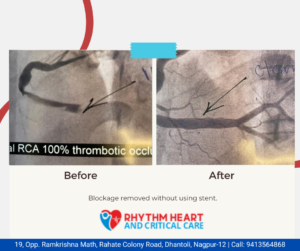
Heart disease is becoming increasingly common in India, especially among adults with high blood pressure, diabetes, stress, and unhealthy lifestyles. Coronary Angioplasty is a modern, minimally invasive heart procedure that helps restore normal blood flow in blocked coronary arteries without major open heart surgery.
At Rhythm Heart & Critical Care Hospital, skilled heart doctors use modern equipment to provide safe and proper care for patients with heart problems. Finding heart problems early and treating them with angioplasty on time can help reduce chest pain, stop heart attacks from happening, and make the heart work better.
This allows patients to live a healthier and more active life, and gives them better protection for their heart in the long run.
Why Coronary Angioplasty Is a Life Saving Heart Procedure
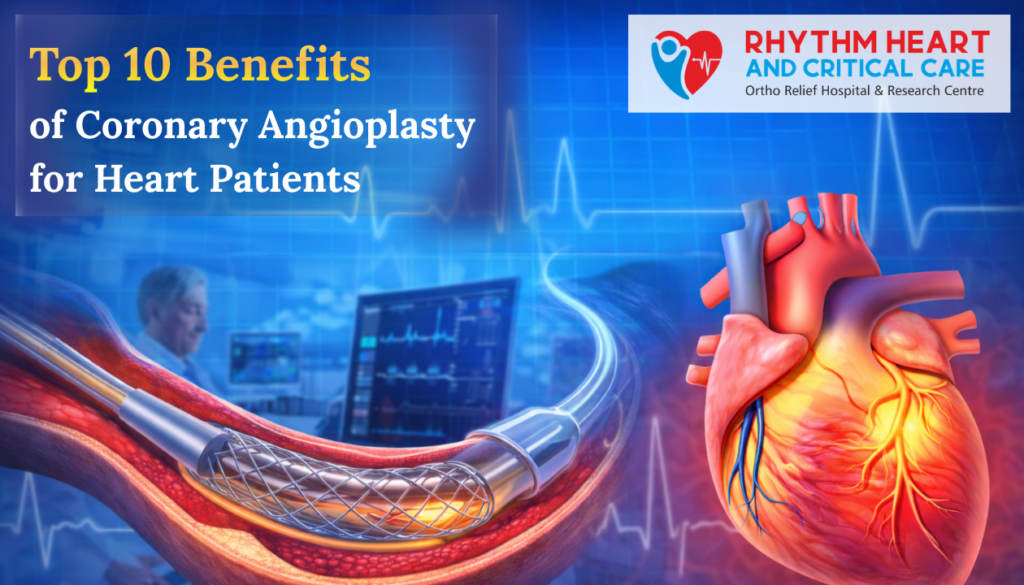
Coronary Angioplasty is important for treating heart arteries that have become narrow or blocked, which can lower the amount of oxygen reaching the heart muscle. The process uses a thin tube called a catheter to place a tiny balloon and a support tube, known as a stent, inside the blocked area to clear it and allow blood to flow easily again.
Angioplasty helps you feel better quicker, has less pain, and you don’t need to stay in the hospital as long as with regular surgery. At a reliable heart hospital in Nagpur, getting timely angioplasty treatment helps reduce the chance of a heart attack, makes life better for patients, and helps keep the heart healthy in the long run by following up with care, taking the right medicine, and making healthy lifestyle choices.
Top 10 Benefits for Heart Patients
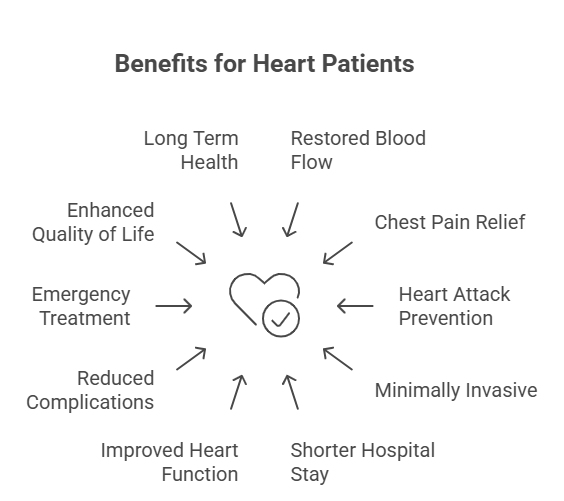
1. Restores Normal Blood Flow to the Heart
Coronary angioplasty quickly opens blocked or narrowed arteries, allowing oxygen rich blood to reach the heart muscle again. This immediate improvement reduces chest discomfort and prevents further damage to heart tissues.
Restoring blood flow is important for keeping the heart healthy and lowering the risk of future heart problems. When patients follow the right care and take the correct medicine after a procedure, they enjoy better heart health over time and feel more energetic during their everyday activities.
2. Provides Fast Relief from Chest Pain
Many heart patients suffer from recurring chest tightness or pressure due to reduced blood supply. Angioplasty directly removes the blockage responsible for angina symptoms, giving rapid and noticeable pain relief.
Patients often feel improvement within hours or days after the procedure. This relief not only improves comfort but also allows individuals to resume normal physical activities safely under medical guidance and cardiac rehabilitation support.
3. Prevents Major Heart Attacks
If an artery is blocked and not treated, it can cause a serious heart attack that could be deadly. Coronary angioplasty is a early treatment that helps get rid of harmful clots or fatty deposits before they fully block the arteries.
The procedure helps prevent lasting harm to the heart muscle by improving blood flow at the correct time. Doing preventive angioplasty helps high risk heart patients live longer and lowers the chance they’ll need to go to the hospital in a hurry.
4. Minimally Invasive Compared to Open-Heart Surgery
Unlike bypass surgery, angioplasty does not require large chest incisions or prolonged anesthesia. The catheter based technique is performed through a small puncture in the wrist or groin, making it safer and less painful.
Minimal invasion reduces complications, shortens recovery time, and allows patients to return home sooner. This makes angioplasty a preferred treatment option for many suitable heart patients.
5. Shorter Hospital Stay and Faster Recovery
Most people who have angioplasty go home either one or two days after the procedure, based on how they are feeling and their overall health. Because the body feels less stress from surgery, it recovers faster compared to regular heart surgery.
Patients can slowly start doing their usual jobs and everyday tasks again in a short amount of time. Getting better more quickly helps people feel better mentally and also lowers the cost and physical stress of staying in the hospital for a long time.
6. Improves Overall Heart Function
By restoring smooth blood circulation, coronary angioplasty helps the heart pump more efficiently. Improved oxygen supply strengthens heart muscles and enhances stamina during physical activity.
Better heart performance reduces fatigue, breathlessness, and exercise intolerance. Long-term follow-up care, medications, and healthy lifestyle habits further support sustained cardiac improvement after the procedure.
7. Reduces Risk of Future Cardiac Complications
Timely angioplasty lowers the chances of repeated chest pain episodes, heart failure, or sudden cardiac arrest. When combined with cholesterol control, blood pressure management, and diabetes care, the procedure provides strong long term protection.
Continuous cardiac monitoring and lifestyle changes play an important role in preventing recurrence of artery blockage and maintaining lifelong heart health.
8. Safe and Effective for Emergency Treatment
In emergency heart attack situations, primary angioplasty is one of the most effective life saving treatments available. Rapid reopening of the blocked artery within the golden hour dramatically increases survival and reduces permanent heart damage.
Availability of advanced cardiac care and experienced specialists ensures safe emergency management and better clinical outcomes for critical patients.
9. Enhances Quality of Life and Physical Activity
After the angioplasty goes well, patients usually feel more energetic, have less pain, and can exercise more easily. They can go back to walking, working, and being part of social activities feeling sure and confident.
Better heart health can make a person feel happier, work more efficiently, and stay more independent. This helps them live a more lively and satisfying life.
10. Supports Long Term Heart Health with Proper Care
Coronary angioplasty is more than just a medical procedure; it’s an important part of overall heart care. Regular check ins, eating in a way that’s good for your heart, taking medicine as prescribed, and managing stress help keep the benefits long term.
With proper care, many patients live long, healthy lives without major cardiac limitations. Preventive cardiology and early screening remain essential for sustained protection.
Recovery, Lifestyle Changes, and Long Term Heart Protection
After angioplasty, patients must follow medical advice carefully to maintain healthy arteries and prevent future blockage. A balanced diet, regular exercise, quitting smoking, stress control, and routine heart check ups are essential.
Cardiac rehabilitation programs help increase strength and boost confidence even more. With expert care at a specialized cardiac hospital, long term recovery becomes safer, easier, and more successful for every heart patient.
Conclusion
Early diagnosis and timely treatment can save lives in heart disease. Advanced treatments like angioplasty provide safe, fast, and highly effective recovery for blocked arteries.
If you or your loved one experiences chest pain, breathlessness, or heart related symptoms, seek immediate cardiac evaluation.
FAQs
1. What is coronary angioplasty?
It is a minimally invasive procedure used to open blocked heart arteries and restore normal blood flow.
2. When is angioplasty required?
Doctors recommend it for severe artery blockage, persistent angina, or during a heart attack emergency.
3. Is angioplasty painful?
The procedure is usually painless and performed under local anesthesia with mild discomfort only.
4. How long does recovery take?
Most patients recover within a few days and resume normal routine within a couple of weeks.
5. Are stents permanent?
Yes, stents remain inside the artery to keep it open and maintain smooth blood circulation.
6. Can blockage return after treatment?
Healthy lifestyle, medicines, and regular follow-ups greatly reduce recurrence risk.
7. Is angioplasty safer than bypass surgery?
For suitable patients, it is less invasive, safer, and offers faster recovery.
8. What lifestyle changes are needed after treatment?
Balanced diet, exercise, stress control, and quitting smoking are essential for long-term heart health.
9. How is this different from Angina vs Heart Attack: How to Tell the Difference?
Angioplasty treats blocked arteries, while that topic explains symptom differences between warning chest pain and emergency heart attack.
10. Where should patients seek treatment?
Always choose an experienced cardiac care hospital with emergency facilities and expert cardiologists.
Reference:
https://www.bhf.org.uk/informationsupport/treatments/coronary-angioplasty-and-stents