Heart valve diseases are becoming increasingly common, especially among elderly patients and those with long standing cardiac conditions. Choosing the right treatment is crucial for long term heart health and recovery.
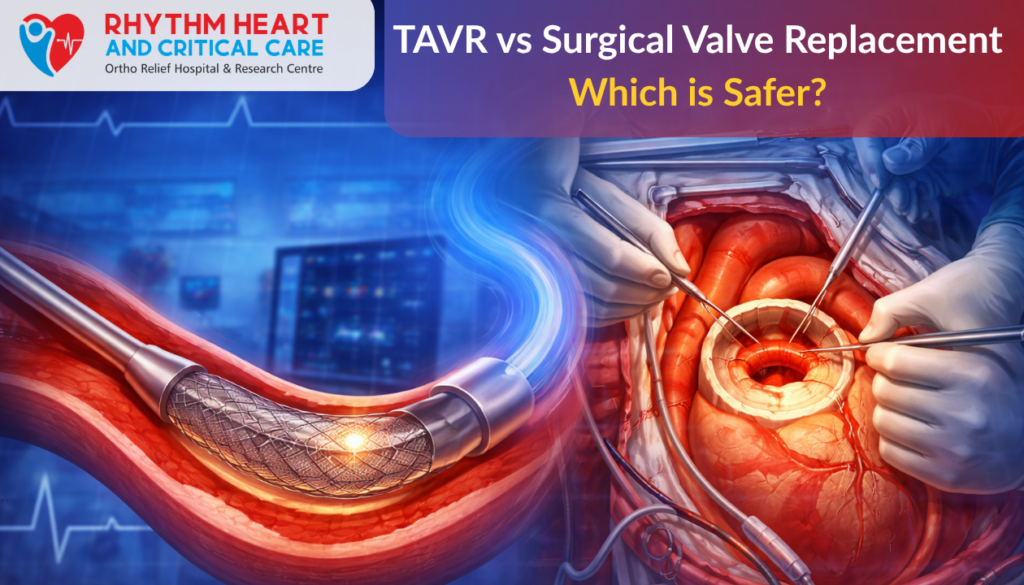
Choosing between TAVR and surgical valve replacement is one of the biggest decisions that cardiologists and patients have to make right now. For a long time, traditional open heart surgery has been the main way to treat certain heart problems. However, Transcatheter Aortic Valve Replacement (TAVR) provides a less invasive option that can be used instead.
At Rhythm Heart & Critical Care Hospital, we focus on advanced cardiac care, helping patients select the safest and most effective treatment based on their health condition, age, and risk factors.
TAVR vs Surgical Valve Replacement: Complete Overview
When comparing TAVR vs Surgical Valve Replacement, it is important to know how both procedures work and which option is most suitable for a patient’s condition. TAVR is a minimally invasive method performed through a catheter, avoiding major surgery and allowing quicker recovery in many cases, especially for elderly or high-risk patients.
In contrast, surgical valve replacement requires open-heart surgery and may be recommended for younger patients depending on their health, surgical risk, and long-term needs. Both treatments can be effective, and the most suitable option depends on a medical evaluation, overall health, and expert cardiology advice.
TAVR vs Surgical Valve Replacement – Key Differences & Safety Factors
| Factor | TAVR (Transcatheter Aortic Valve Replacement) | Surgical Valve Replacement |
|---|---|---|
| Procedure Type | Minimally invasive, catheter-based | Open-heart surgery |
| Incision | Small puncture (usually in groin) | Large chest incision (sternotomy) |
| Anesthesia | Local or mild sedation | General anesthesia required |
| Recovery Time | Faster (few days to 1–2 weeks) | Longer (4–8 weeks recovery) |
| Hospital Stay | 2–5 days | 5–10 days or more |
| Risk Level | Lower risk for elderly/high-risk patients | Suitable for low to moderate-risk patients |
| Pain & Discomfort | Minimal | Moderate to high post-surgery pain |
| Infection Risk | Lower due to smaller incision | Higher due to open surgery |
| Durability of Valve | Moderate (may need future replacement) | Long-lasting, especially mechanical valves |
| Suitability | Elderly or high-risk patients | Younger and healthier patients |
| Procedure Time | Shorter (1–2 hours) | Longer (3–5 hours) |
| Follow-up Care | Regular monitoring needed | Long-term follow-up and medications |
1. Procedure Type and Invasiveness
TAVR is a minimally invasive procedure performed through a small catheter inserted via the groin or artery. It does not require opening the chest or stopping the heart. Surgical valve replacement, however, is an open-heart surgery involving a larger incision and longer operation time.
Due to its less invasive nature, TAVR is considered safer for patients who are at high surgical risk or have multiple health conditions.
2. Recovery Time
Recovery after TAVR is significantly faster compared to surgical valve replacement. Most patients can walk within a day and return home within a few days. In contrast, open heart surgery requires weeks of recovery, including hospital stay and rehabilitation.
Faster recovery makes TAVR a safer and more comfortable option for elderly patients and those seeking minimal disruption to daily life.
3. Risk of Complications
When evaluating safety in TAVR vs Surgical Valve Replacement, complication risks differ. TAVR has lower risks of major bleeding, infection, and surgical trauma. However, it may have a slightly higher chance of needing a pacemaker post procedure.
Surgical replacement carries higher risks due to its invasive nature but offers long-term durability in suitable patients. Expert evaluation helps minimize these risks.
4. Suitability for Patients
TAVR is mainly recommended for elderly patients or those with high surgical risk, including those with diabetes, kidney disease, or previous heart surgeries.
Surgical valve replacement is often preferred for younger patients who can tolerate surgery and require a durable solution. Choosing the right option depends on detailed cardiac assessment and imaging.
5. Hospital Stay Duration
Patients undergoing TAVR usually have a shorter hospital stay, often 2 – 3 days. Surgical valve replacement patients may require 7–10 days of hospitalization, including ICU care.
Shorter hospital stay reduces infection risk and improves patient comfort, making TAVR a safer option in many cases.
6. Pain and Physical Stress
TAVR causes minimal physical stress and discomfort since it avoids major surgical cuts. Patients experience less pain and quicker mobility.
In contrast, surgical valve replacement involves chest opening, which can lead to post operative pain and longer healing time. Reduced physical trauma makes TAVR a preferred choice for many high risk patients.
7. Long-Term Effectiveness
Surgical valve replacement has been shown to work well over a long period, especially for younger patients.
TAVR has also been very successful in recent years, with better durability and safety. The choice between the two procedures depends on the patient’s age, lifestyle, and long-term health goals.
8. Risk of Infection
Because TAVR is a minimally invasive procedure, it carries a lower risk of infection compared to open heart surgical valve replacement.
Larger incisions and longer recovery in surgery increase infection chances. Proper hygiene, wound care, and regular follow-ups are essential in both treatments to ensure safe healing and prevent complications.
9. Cost and Accessibility
TAVR can be more expensive due to advanced technology and specialized equipment. However, shorter hospital stays and faster recovery may balance overall costs.
Surgical valve replacement may have lower procedural cost but higher recovery expenses. Choosing the right treatment depends on both medical and financial considerations.
10. Overall Safety Comparison
When comparing overall safety, TAVR is often safer for high-risk and elderly patients due to minimal invasiveness and faster recovery.
Surgical valve replacement remains the good option for younger, low risk patients needing long-term durability. A personalized treatment plan ensures the safest outcome for every patient.
Which Treatment Should You Choose?
Deciding whether to have TAVR or surgical valve replacement should always be based on advice from medical experts and a thorough assessment.
Several things like a person’s age, how bad their valve problem is, their general heart health, their lifestyle, and any other health problems they might have are all important when making decisions.
Advanced diagnostic tests, such as imaging and cardiac assessments, assist doctors in evaluating the patient’s risk level. Experienced cardiologists recommend the safest and most effective treatment option, ensuring better outcomes, faster recovery, and long-term heart health.
Conclusion
Heart valve problems require timely and accurate treatment to prevent serious complications. Knowing the differences between TAVR and surgical valve replacement helps patients make informed decisions.
If you or your loved ones experience breathlessness, fatigue, or chest discomfort, consult a heart specialist immediately. At Rhythm Heart & Critical Care Hospital, our expert cardiologists provide advanced diagnosis and personalized treatment.
Contact us today and book your appointment for a complete heart check-up and take the first step toward a healthier, safer future.
FAQs
1. What is TAVR?
TAVR is a minimally invasive procedure used to replace a damaged heart valve without open-heart surgery.
2. What is surgical valve replacement?
It is a traditional open-heart surgery where the damaged valve is removed and replaced with an artificial valve.
3. Which is safer – TAVR or surgery?
In many cases, TAVR vs Surgical Valve Replacement: what is safer depends on patient condition, but TAVR is safer for high-risk patients.
4. Who is eligible for TAVR?
Elderly patients or those with high surgical risk are usually considered for TAVR.
5. How long does recovery take after TAVR?
Recovery is quick, and most patients resume normal activities within a few days.
6. Is surgical valve replacement still necessary?
Yes, it is preferred for younger patients needing long-term durability.
7. Are there risks involved in TAVR?
Like any procedure, TAVR has minor risks, including pacemaker requirement in some cases.
8. How long do artificial valves last?
Both TAVR and surgical valves are durable, but longevity depends on patient health and type of valve.
9. How to decide between both treatments?
Doctors evaluate overall health, age, and heart condition before recommending the good option.
10. Where can I get advanced valve treatment?
Choose a trusted cardiac hospital with experienced specialists and modern facilities.
Reference: