Angina is chest pain or discomfort that occurs when the heart muscle does not receive enough oxygen-rich blood. It is commonly associated with coronary artery disease, in which the arteries supplying the heart become narrowed. Angina may feel like pressure, tightness, squeezing, or heaviness in the chest, and the discomfort can spread to the arms, shoulders, neck, jaw, or back.
Knowing angina symptoms, causes, and warning signs is important because some types require emergency medical care. Stable angina often follows a predictable pattern, while new, worsening, or persistent chest discomfort may indicate unstable angina or a heart attack.
If you experience new or persistent chest pain, especially with breathlessness, sweating, nausea, or faintness, seek emergency medical help immediately.
Knowing What Is Angina and Why It Should Never Be Ignored
To clearly understand What Is Angina, it’s important to know that it is not a disease itself but a symptom of coronary artery disease. Angina occurs when heart muscles do not get enough blood flow due to narrowed arteries. This reduced circulation causes chest pain, pressure, or discomfort that may spread to the arms, neck, jaw, or back.
Ignoring angina can be dangerous, as it often signals a higher risk of heart attack. At Rhythm Heart & Critical Care Hospital, our cardiologists in Nagpur focus on early detection using ECG, stress tests, and angiography. Timely treatment helps patients avoid emergency cardiac events and improves quality of life.
Angina Early Warning Signs You Should Never Ignore
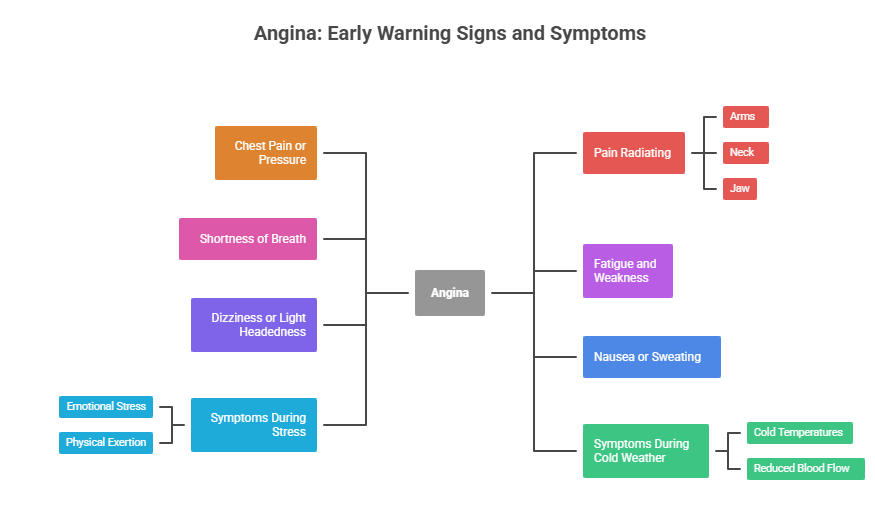
1. Chest Pain or Pressure
Chest pain or pressure is the most common and noticeable symptom of angina. Many patients describe it as a heavy, squeezing, or tight feeling rather than sharp pain.
This discomfort often happens when you’re exercising, feeling stressed, or working hard, and it usually gets better when you rest.
If you keep having chest pressure, it could be a sign that your heart isn’t getting enough blood. Getting checked early can help avoid serious heart problems and sudden heart issues.
2. Pain Radiating to Arms, Neck, or Jaw
Angina related pain does not always stay limited to the chest. It may spread to the left arm, shoulder, neck, jaw, or upper back. This radiating pain occurs because heart related pain signals travel through shared nerve pathways.
Many people think it’s just muscle pain or a tooth problem. But if the pain keeps coming back and spreads, especially if you also feel chest discomfort, you should see a cardiologist right away. It’s important not to ignore these symptoms.
3. Shortness of Breath
Shortness of breath is a common angina symptom caused by reduced oxygen supply to the heart. Patients may feel breathless during mild activities such as walking, climbing stairs, or even at rest.
This symptom is often mistaken for poor fitness, aging, or lung problems. Persistent or unexplained breathlessness can signal underlying heart disease and should be medically evaluated to avoid worsening cardiac conditions or emergencies.
4. Fatigue and Weakness
Unusual tiredness and lack of energy could be early signs of angina, especially in women and older people. When the heart doesn’t get enough blood, it can’t work properly, which makes the body feel weak and tired even when you’re not doing anything.
Some people don’t take this symptom seriously and think it’s just from stress or not sleeping well. But if you feel tired a lot, it’s important to pay attention, because it might mean there’s something wrong with your heart.
5. Dizziness or Light Headedness
Angina can reduce blood flow not only to the heart but also to the brain, leading to dizziness or light headedness. Patients may feel faint, unsteady, or experience sudden weakness. These symptoms are more concerning when they occur along with chest discomfort or breathlessness.
Dizziness that might be connected to heart issues needs to be checked right away because it can lead to falling, losing consciousness, or more severe heart problems.
6. Nausea or Sweating
Some people experiencing angina may feel nauseous, sweat a lot without exercising, or have a sensation like they’re having indigestion. These signs are often mistaken for stomach problems, which can make someone wait too long to get the right care.
If someone starts sweating suddenly, especially along with chest pain or tiredness, it could be a sign that the heart is struggling. It’s important to notice these quiet symptoms because acting quickly can stop the heart condition from getting worse or lead to a heart attack.
7. Symptoms During Stress or Cold Weather
Angina symptoms often worsen during emotional stress, physical exertion, or cold weather. Cold temperatures cause blood vessels to constrict, increasing the heart’s workload and oxygen demand.
Emotional stress also raises heart rate and blood pressure, triggering symptoms. If chest discomfort or breathlessness appears during stress or winter months, it should not be ignored. Identifying these triggers early helps in managing angina and reducing future cardiac risks.
Types of Angina: Stable, Unstable and Variant
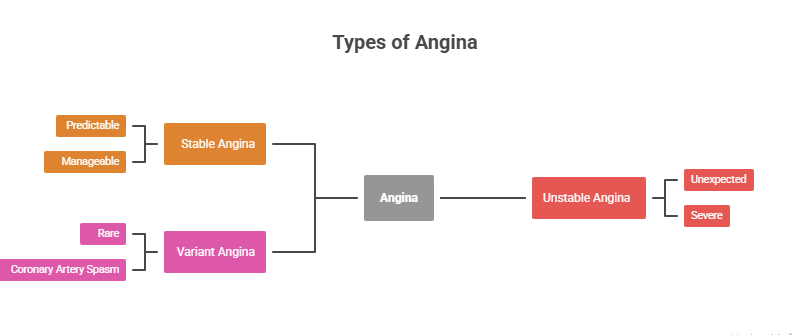
Angina is classified into different types based on what triggers chest discomfort and how the symptoms occur. The three main types are stable angina, unstable angina, and variant angina. Recognizing their differences can help people identify warning signs and seek appropriate medical care.
1. Stable Angina
Stable angina is the most common type. It usually occurs during physical activity, emotional stress, cold weather, or after a heavy meal when the heart needs more oxygen-rich blood. The discomfort often follows a predictable pattern and generally improves with rest or prescribed medication. If the symptoms become more frequent, severe, or occur with less activity than usual, seek immediate medical evaluation.
2. Unstable Angina
Unstable angina is a serious medical emergency. It can occur unexpectedly, even while resting, and may feel more severe, last longer, or happen more frequently than previous episodes. The discomfort may not improve with rest or prescribed medication. Unstable angina can indicate a sudden reduction in blood flow to the heart and requires immediate emergency medical attention because it may be associated with an impending heart attack.
3. Variant Angina (Prinzmetal’s Angina)
Variant angina, also called Prinzmetal’s angina, is caused by a temporary spasm in a coronary artery that reduces blood flow to the heart. It often occurs at rest, sometimes during the night or early morning. The pain may be intense but typically occurs in episodes. Medical evaluation is important to confirm the cause and determine appropriate treatment.
Important: New, severe, persistent, or worsening chest pain, especially with shortness of breath, sweating, nausea, or faintness, may indicate a heart attack. Seek emergency medical help immediately rather than assuming it is angina.
Angina vs Heart Attack: What Is the Difference?
Angina and a heart attack can cause similar symptoms, including chest pain, pressure, and shortness of breath. However, angina usually occurs when the heart temporarily receives insufficient oxygen-rich blood, while a heart attack involves damage to the heart muscle due to reduced or blocked blood flow.
| Feature | Angina | Heart Attack |
|---|---|---|
| Meaning | Chest discomfort caused by reduced blood flow to the heart muscle. | A medical emergency in which reduced or blocked blood flow damages the heart muscle. |
| Common Causes | Often associated with narrowed coronary arteries or coronary artery spasms. | Usually caused by a sudden blockage in a coronary artery. |
| Chest Pain | May feel like pressure, tightness, squeezing, or heaviness. | May cause pressure, squeezing, heaviness, or severe chest discomfort. |
| Duration | Stable angina often lasts a few minutes and improves with rest or prescribed medication. | Discomfort may last longer or come and go, but symptoms can vary. |
| Triggers | Stable angina may occur during exercise, stress, or cold weather. | Can occur during activity or at rest. |
| Other Symptoms | May include breathlessness, fatigue, dizziness, or nausea. | May include breathlessness, sweating, nausea, light-headedness, or unusual fatigue. |
| Heart Muscle Damage | Stable angina does not usually cause permanent heart muscle damage. | Heart muscle damage occurs when blood flow is sufficiently reduced or blocked. |
| Medical Attention | New, worsening, or rest-related angina needs urgent emergency evaluation. | Requires immediate emergency medical attention. |
Important: It can be hard to tell the difference between angina and a heart attack just by looking at the symptoms.
If you feel new, serious, ongoing, or getting worse chest pain, or chest pain along with trouble breathing, sweating, feeling sick to your stomach, or becoming dizzy, you should get immediate emergency medical help. Do not wait to get care just to see if the symptoms get better.
Conclusion
Angina is a warning sign from your heart that there’s not enough blood flowing to it. You should never ignore it because it can lead to serious problems like a heart attack or lasting damage.
Getting diagnosed early, making healthy lifestyle changes, and receiving proper medical care can help prevent these issues.
If you or your loved one experiences chest pain, breathlessness, or unusual fatigue, consult the expert cardiologists at Rhythm Heart & Critical Care Hospital, a trusted heart hospital in Nagpur.
Book a heart check-up today and take the first step toward a healthier, safer future.
FAQs
1. What Is Angina?
Angina is chest pain or discomfort that occurs when the heart muscle does not receive enough oxygen-rich blood. It is often associated with coronary artery disease and may cause pressure, tightness, squeezing, or heaviness in the chest.
2. What Does Angina Feel Like?
Angina may feel like pressure, tightness, squeezing, or heaviness in the chest. The discomfort can spread to the arms, shoulders, neck, jaw, back, or upper abdomen. Some people may also experience breathlessness, nausea, or unusual fatigue.
3. What Causes Angina?
Angina is commonly caused by reduced blood flow to the heart muscle due to narrowed coronary arteries. Physical activity, emotional stress, cold weather, or heavy meals may trigger stable angina. In some cases, coronary artery spasms can also cause angina.
4. What Are the Warning Signs of Angina?
Common warning signs include chest pressure or discomfort, pain spreading to the arms or jaw, shortness of breath, dizziness, nausea, and unusual fatigue. Symptoms can vary from person to person. New, severe, or worsening chest discomfort requires immediate medical evaluation.
5. Is Angina Dangerous?
Angina can indicate an underlying heart condition and should not be ignored. Stable angina often follows a predictable pattern, but unstable angina is a medical emergency and may signal an increased risk of a heart attack. Seek emergency medical help for new, worsening, persistent, or rest-related chest pain.
6. Is Angina the Same as a Heart Attack?
No, angina and a heart attack are different. Angina occurs when the heart muscle receives insufficient oxygen-rich blood, usually without permanent heart muscle damage in stable angina. A heart attack occurs when reduced or blocked blood flow damages the heart muscle. Their symptoms can overlap, so emergency assessment is essential when a heart attack is suspected.
7. What Is Unstable Angina?
Unstable angina is a serious condition in which chest discomfort may occur unexpectedly, at rest, or become more frequent or severe than usual. It may not improve with rest or prescribed medication. It requires immediate emergency medical attention because it can indicate a serious problem with blood flow to the heart.
8. What Are the Symptoms of Angina in Women?
Women with angina may experience chest pressure or discomfort, shortness of breath, nausea, unusual fatigue, and pain in the back, neck, jaw, shoulders, or arms. Some women may have less obvious chest symptoms. New or concerning symptoms should be assessed promptly, and possible heart attack symptoms require emergency care.
9. Can Angina Occur at Rest?
Yes, angina can occur at rest. Unstable angina may develop unexpectedly while resting, while variant angina can occur due to a temporary spasm in a coronary artery. New or unexplained chest pain at rest should be treated as a medical emergency.
10. When Should You Seek Emergency Medical Help for Angina Symptoms?
Seek emergency medical help immediately if you experience new, severe, persistent, or worsening chest pain, particularly with shortness of breath, sweating, nausea, or faintness. Do not assume the symptoms are only angina or wait for them to disappear, as they may indicate a heart attack.
Reference: