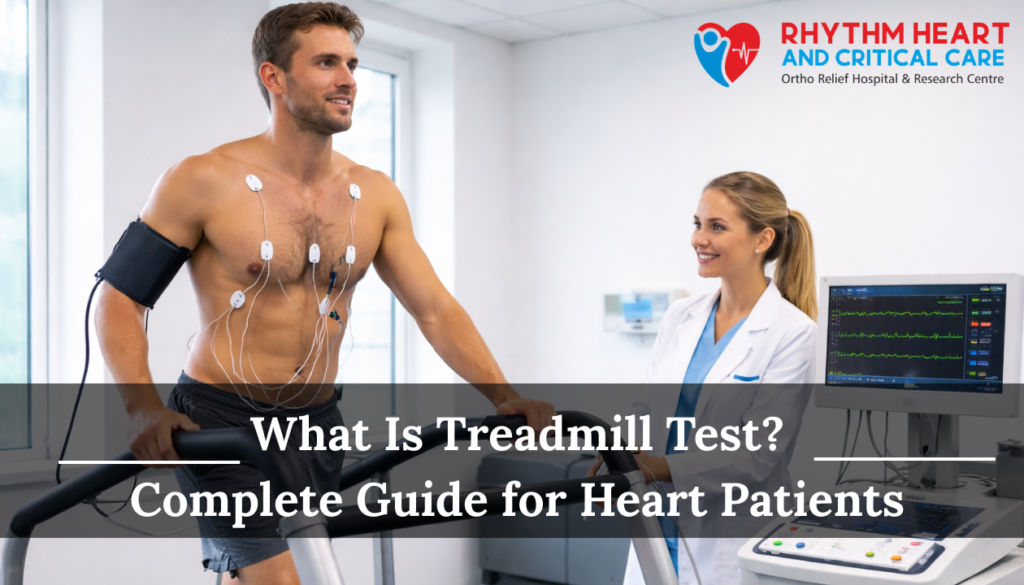
A treadmill test, also known as a cardiac stress test, is a common diagnostic procedure used to evaluate how well the heart functions during physical activity. Doctors recommend this test to detect blocked arteries, irregular heart rhythms, or reduced blood supply to the heart muscles.
At Rhythm Hospital, they use high tech equipment to monitor patients during the treadmill test, which helps doctors get precise results and keep patients safe.
Knowing what a treadmill test is helps patients understand why it’s important for finding heart problems early and making sure they get the right treatment on time.
Why Doctors Recommend a Treadmill Test
The treadmill test is often recommended for people who have chest pain, difficulty breathing, feel lightheaded, or experience tiredness without a clear reason. It helps cardiologists check how the heart works when it’s under stress, which isn’t always possible to see when the heart is at rest.
Knowing what happens during a treadmill test can help people understand their fitness, how their heart works during exercise, and how likely they are to have heart problems in the future.
How the Treadmill Test Procedure Works
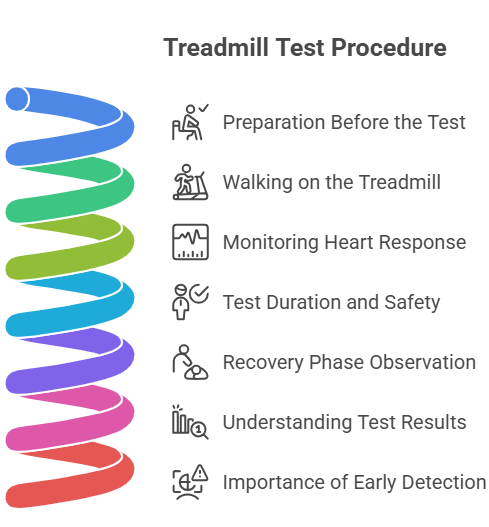
1. Preparation Before the Test
Before the treadmill test starts, small sticky patches are placed on the patient’s chest to keep track of their heart’s rhythm and electrical activity throughout the test. Blood pressure, pulse rate, and the initial ECG results are taken to check how they change during exercise.
Patients are usually advised to wear loose, comfortable clothing and walking shoes. Heavy meals, smoking, or caffeine should be avoided before the test to ensure accurate and safe heart performance assessment throughout the procedure.
2. Walking on the Treadmill
The test starts with slow, steady walking on a moving treadmill while medical staff closely observe the patient’s condition. Gradually, the treadmill’s speed and incline are increased to create controlled physical stress on the heart.
This helps doctors understand how the heart performs during exertion rather than rest. Continuous ECG monitoring records rhythm patterns and blood flow responses, allowing specialists to detect early warning signs of reduced oxygen supply or developing cardiac abnormalities.
3. Monitoring Heart Response
Throughout the treadmill test, cardiologists carefully monitor symptoms such as chest discomfort, breathlessness, dizziness, or unusual fatigue. At the same time, ECG patterns, pulse rate, and blood pressure changes are continuously evaluated.
If your heart beats irregularly or if there is a sudden change in pressure, it might mean that not enough blood is reaching the heart muscle or that the arteries supplying blood to the heart are too narrow.
Finding these early warning signs early helps doctors stop the test safely and suggest treatment on time to prevent serious problems from happening.
4. Test Duration and Safety
Most treadmill tests last around 10 to 15 minutes, depending on the patient’s age, stamina, medical history, and symptom response. The procedure is conducted under strict medical supervision using advanced monitoring equipment to ensure complete safety.
If the patient experiences significant discomfort, abnormal ECG changes, or unsafe blood pressure levels, the test is immediately stopped.
Emergency care and trained cardiac professionals remain available throughout, making the treadmill test a controlled and low-risk diagnostic procedure.
5. Recovery Phase Observation
After the exercise portion ends, the patient does not leave immediately. Doctors continue monitoring heart rhythm, pulse, and blood pressure for several minutes during the recovery phase.
This period is extremely important because some hidden heart abnormalities or rhythm disturbances appear only after physical stress stops. Observing how quickly the heart returns to its normal resting state helps cardiologists evaluate overall cardiac fitness and identify potential risks that may not be visible during exercise alone.
6. Understanding Test Results
Treadmill test results provide valuable insight into heart health and blood circulation efficiency. Normal findings usually indicate good oxygen supply to heart muscles and stable rhythm during physical stress.
However, unusual changes in the ECG, symptoms, or blood pressure could indicate problems like coronary artery disease, irregular heartbeats, or weakened heart function.
In these situations, doctors might suggest more tests like echocardiography, angiography, or other advanced heart imaging to make sure the diagnosis is correct and to help choose the best treatment options.
7. Importance of Early Detection
Knowing what a treadmill test is and getting screened at the right time can help lower the chance of having a sudden heart problem. Finding heart issues early, like poor blood flow, irregular heartbeats, or symptoms during exercise, helps doctors start treatment before serious heart damage happens.
Changing your lifestyle, taking medicine, or having the right heart treatments on time can really help keep your heart healthy for a long time. Regular check-ups and tests are very important for people who have diabetes, high blood pressure, obesity, or a family history of heart disease.
Who Should Take a Treadmill Test?
It is also useful before major surgery or for evaluating treatment effectiveness in heart patients. Regular cardiac screening at Rhythm Hospital ensures early detection and better recovery outcomes.
Conclusion
Knowing what a treadmill test is can help save lives by finding heart issues early before they turn into serious problems.
If you feel chest pain, have trouble breathing, or feel very tired, see the heart experts at Rhythm Hospital for a correct diagnosis and better heart treatment. Testing the heart early today can stop serious heart problems from happening tomorrow.
FAQ’s
1. What is a treadmill test?
A treadmill test is a cardiac stress test that evaluates how the heart performs during physical activity. It helps doctors detect blocked arteries, rhythm problems, and reduced blood flow to the heart muscle.
2. Why is a treadmill test recommended?
Doctors recommend this test to diagnose chest pain, breathlessness, suspected coronary artery disease, or to assess heart fitness before surgery or starting an exercise program.
3. Is the treadmill test painful?
No, the procedure is non-invasive and usually painless. Patients may feel tired due to walking or running, but medical staff closely monitor safety throughout the test.
4. How long does the treadmill test take?
The exercise portion generally lasts 10–15 minutes, followed by a short recovery monitoring phase. The complete process usually finishes within 30 minutes.
5. Who should undergo a treadmill test?
People with chest discomfort, diabetes, high blood pressure, family history of heart disease, or reduced exercise tolerance are often advised to take this test for early heart evaluation.
6. Are there any risks in a treadmill test?
The test is considered very safe because it is done under strict medical supervision. Serious complications are extremely rare, and the test is stopped immediately if symptoms appear.
7. What should I avoid before the test?
Patients should avoid heavy meals, smoking, alcohol, and caffeine for a few hours before the test. Comfortable clothing and walking shoes are also recommended.
8. What do abnormal treadmill test results mean?
Abnormal results may suggest coronary artery blockage, rhythm disorder, or reduced blood supply to the heart. Doctors may advise further tests like echo or angiography for confirmation.
9. Can women undergo a treadmill test safely?
Yes, the treadmill test is safe for both men and women. It is commonly used to evaluate unexplained fatigue, breathlessness, or suspected heart disease in women as well.
10. How often should a treadmill test be done?
Frequency depends on medical history and doctor’s advice. High-risk patients may need periodic testing, while healthy individuals usually require it only when symptoms appear.
Reference:
https://www.ncbi.nlm.nih.gov/books/NBK499903
https://www.ottawaheart.ca/test-procedure/treadmill-exercise-stress-test