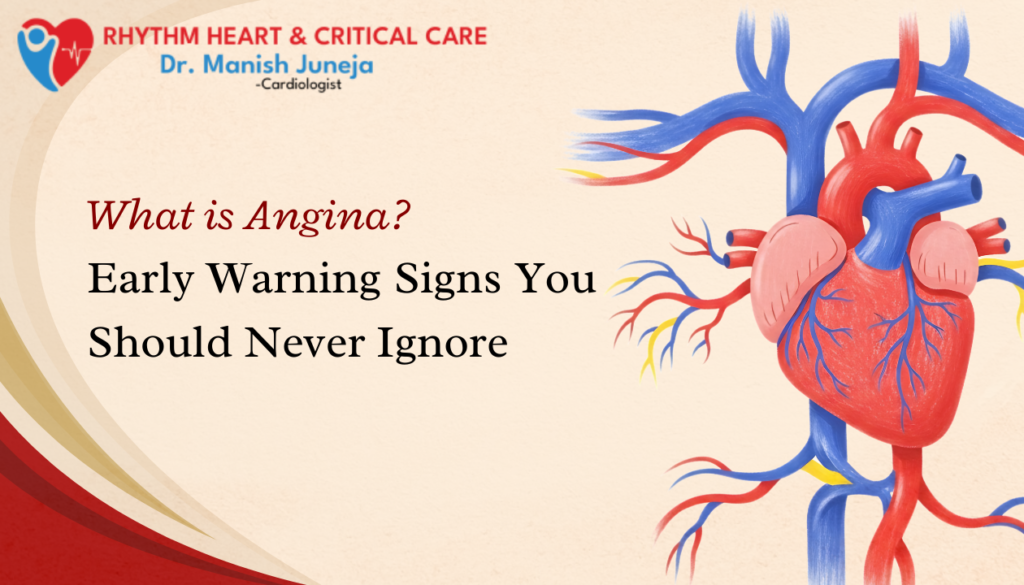
Angina is a signal that the heart isn’t getting enough blood that has oxygen in it. This usually happens when the arteries that carry blood to the heart become narrow or blocked. It’s important to know what angina is because some people don’t take early chest pain seriously and think it’s just gas or tiredness.
In reality, angina is often linked to underlying heart disease and can increase the risk of a heart attack if left untreated. At Rhythm Heart & Critical Care Hospital, a leading heart hospital in Nagpur, we frequently see patients who delayed treatment due to lack of awareness.
Angina pain can happen when you are exercising, feeling stressed, or even when you’re resting if the condition is severe. Getting an early diagnosis, making healthy lifestyle changes, and receiving care from a heart specialist can help avoid serious problems and keep your heart healthy in the long run.
Understanding What Is Angina and Why It Should Never Be Ignored
To clearly understand What Is Angina, it’s important to know that it is not a disease itself but a symptom of coronary artery disease. Angina occurs when heart muscles do not get enough blood flow due to narrowed arteries. This reduced circulation causes chest pain, pressure, or discomfort that may spread to the arms, neck, jaw, or back.
Ignoring angina can be dangerous, as it often signals a higher risk of heart attack. At Rhythm Heart & Critical Care Hospital, our cardiologists in Nagpur focus on early detection using ECG, stress tests, and angiography. Timely treatment helps patients avoid emergency cardiac events and improves quality of life.
What Is Angina – Early Warning Signs You Should Never Ignore
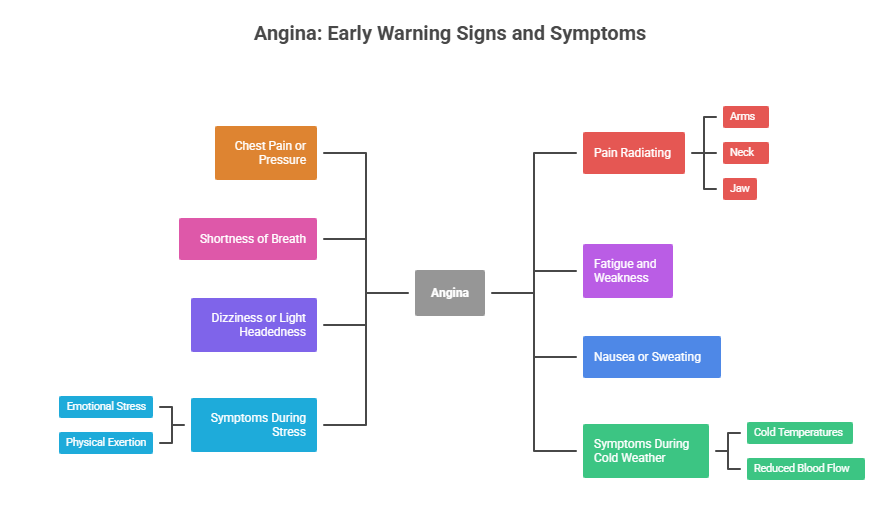
1. Chest Pain or Pressure
Chest pain or pressure is the most common and noticeable symptom of angina. Many patients describe it as a heavy, squeezing, or tight feeling rather than sharp pain.
This discomfort often happens when you’re exercising, feeling stressed, or working hard, and it usually gets better when you rest.
If you keep having chest pressure, it could be a sign that your heart isn’t getting enough blood. Getting checked early can help avoid serious heart problems and sudden heart issues.
2. Pain Radiating to Arms, Neck, or Jaw
Angina related pain does not always stay limited to the chest. It may spread to the left arm, shoulder, neck, jaw, or upper back. This radiating pain occurs because heart related pain signals travel through shared nerve pathways.
Many people think it’s just muscle pain or a tooth problem. But if the pain keeps coming back and spreads, especially if you also feel chest discomfort, you should see a cardiologist right away. It’s important not to ignore these symptoms.
3. Shortness of Breath
Shortness of breath is a common angina symptom caused by reduced oxygen supply to the heart. Patients may feel breathless during mild activities such as walking, climbing stairs, or even at rest.
This symptom is often mistaken for poor fitness, aging, or lung problems. Persistent or unexplained breathlessness can signal underlying heart disease and should be medically evaluated to avoid worsening cardiac conditions or emergencies.
4. Fatigue and Weakness
Unusual tiredness and lack of energy could be early signs of angina, especially in women and older people. When the heart doesn’t get enough blood, it can’t work properly, which makes the body feel weak and tired even when you’re not doing anything.
Some people don’t take this symptom seriously and think it’s just from stress or not sleeping well. But if you feel tired a lot, it’s important to pay attention, because it might mean there’s something wrong with your heart.
5. Dizziness or Light Headedness
Angina can reduce blood flow not only to the heart but also to the brain, leading to dizziness or light headedness. Patients may feel faint, unsteady, or experience sudden weakness. These symptoms are more concerning when they occur along with chest discomfort or breathlessness.
Dizziness that might be connected to heart issues needs to be checked right away because it can lead to falling, losing consciousness, or more severe heart problems.
6. Nausea or Sweating
Some people experiencing angina may feel nauseous, sweat a lot without exercising, or have a sensation like they’re having indigestion. These signs are often mistaken for stomach problems, which can make someone wait too long to get the right care.
If someone starts sweating suddenly, especially along with chest pain or tiredness, it could be a sign that the heart is struggling. It’s important to notice these quiet symptoms because acting quickly can stop the heart condition from getting worse or lead to a heart attack.
7. Symptoms During Stress or Cold Weather
Angina symptoms often worsen during emotional stress, physical exertion, or cold weather. Cold temperatures cause blood vessels to constrict, increasing the heart’s workload and oxygen demand.
Emotional stress also raises heart rate and blood pressure, triggering symptoms. If chest discomfort or breathlessness appears during stress or winter months, it should not be ignored. Identifying these triggers early helps in managing angina and reducing future cardiac risks.
Types of Angina and How They Differ
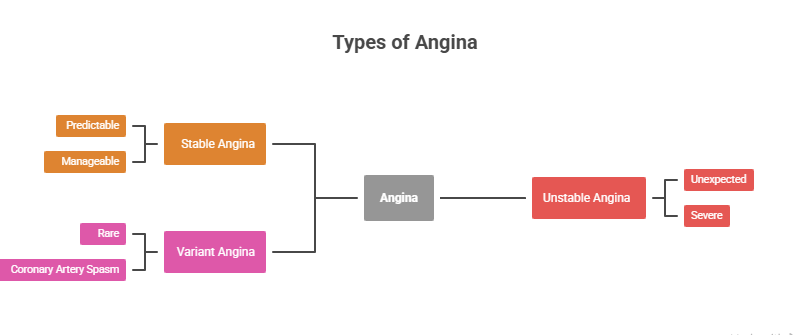
Angina is broadly classified into Stable Angina, Unstable Angina, and Variant (Prinzmetal’s) Angina.
Stable angina happens in a predictable way when someone is active, and it gets better when they rest or take medicine. Unstable angina is more serious because it can happen even when a person is not doing anything, it feels worse, and it may mean a heart attack is coming soon.
Variant angina is caused by spasms in the blood vessels that supply the heart, and it usually happens when a person is resting, especially at night or in the early morning.
At Rhythm Heart & Critical Care Hospital, advanced cardiac diagnostics help determine the type of angina so patients receive precise, life saving treatment.
Conclusion
Angina is a warning sign from your heart that there’s not enough blood flowing to it. You should never ignore it because it can lead to serious problems like a heart attack or lasting damage.
Getting diagnosed early, making healthy lifestyle changes, and receiving proper medical care can help prevent these issues.
If you or your loved one experiences chest pain, breathlessness, or unusual fatigue, consult the expert cardiologists at Rhythm Heart & Critical Care Hospital, a trusted heart hospital in Nagpur.
Book a heart check-up today and take the first step toward a healthier, safer future.
FAQs
1. Is angina the same as a heart attack?
No, angina is a warning symptom, while a heart attack causes permanent heart muscle damage.
2. Can young adults develop angina?
Yes, especially those with smoking habits, stress, obesity, or family history of heart disease.
3. How is angina diagnosed?
Doctors use ECG, stress tests, echocardiography, and coronary angiography.
4. Can angina be cured permanently?
Angina can be controlled effectively with medication, lifestyle changes, and procedures if needed.
5. Does angina always cause chest pain?
No, some patients experience breathlessness, fatigue, or jaw pain instead.
6. Is angina life-threatening?
If untreated, it can lead to serious complications like heart attack.
7. What lifestyle changes help manage angina?
Healthy diet, regular exercise, stress control, quitting smoking, and BP management.
8. Can women experience different angina symptoms?
Yes, women may have fatigue, nausea, or back pain instead of classic chest pain.
9. When should I see a cardiologist?
Immediately if chest discomfort or breathlessness occurs repeatedly or at rest.
10. Where can I get expert angina treatment in Nagpur?
At Rhythm Heart & Critical Care Hospital, offering advanced cardiac care and experienced specialists.
Reference:
https://en.wikipedia.org/wiki/Angina