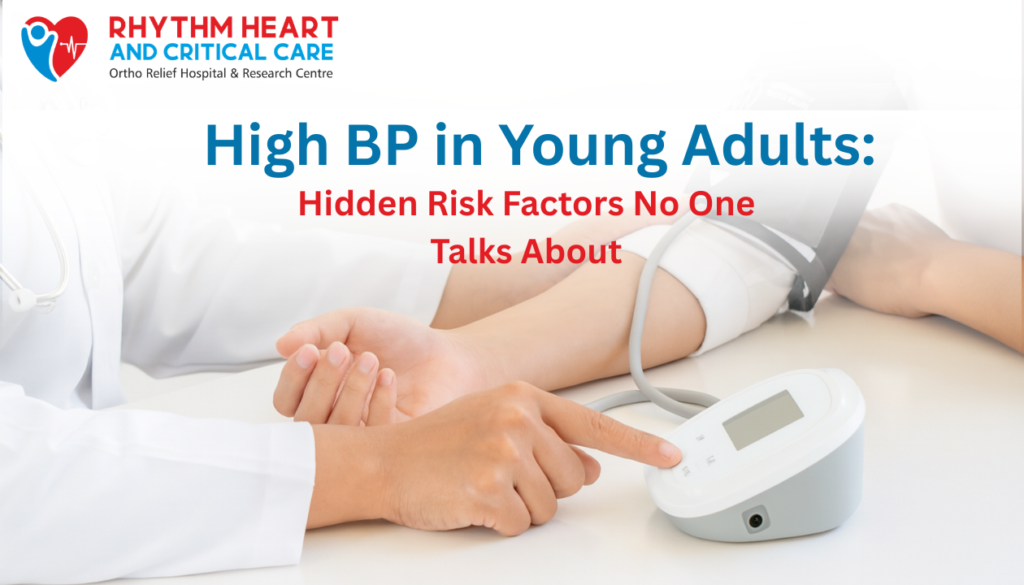
High BP in young adults is becoming a big health problem in India, especially for people between the ages of 20 and 40. A lot of young people don’t know they have high blood pressure because the symptoms don’t show up clearly.
Stressful lifestyles, poor eating habits, irregular sleep, and long screen time are sharply increasing early hypertension cases. Globally, HSBP-related deaths among young adults have increased by 36.11%, and DALYs have risen by 37.68%, showing how dangerous uncontrolled BP has become.
In 2021, the death rate was 4.29 per 100,000 people, and men were especially affected. At Rhythm Heart & Critical Care Hospital, we’re seeing more young patients with early signs of heart damage caused by high blood pressure that’s not properly managed, which shows how important it is to take action early to protect the heart in the long run.
Why Young Generation Is at High Risk
The way people live today has created silent factors that increase High BP in young adults without them even noticing. Excessive caffeine, high salt intake, lack of physical activity, constant stress, poor sleep, obesity, and family history all play a major role.
Many young individuals ignore early symptoms like persistent headaches, fatigue, and irritability, which gradually develop into hypertension.
At Rhythm Heart & Critical Care a trusted heart hospital in Nagpur, experts highlight how skipping routine check ups can lead to serious long-term complications.
High blood pressure in young adults carries hidden dangers that are often overlooked. Recognizing these signs early allows you to take timely action and protect your heart before it’s too late.
High BP in Young Adults: Hidden Risk Factors No One Talks About 7 Untold Causes
1. Chronic Stress & Work Pressure

Young adults today face continuous mental pressure from studies, jobs, and digital overload. Chronic stress causes the body to release hormones like cortisol, which increase blood pressure silently.
Many people overlook signs of stress, thinking it’s just part of life, but ongoing stress can make blood vessels narrow and put extra pressure on the heart. To lower this silent danger, it’s important to handle workloads wisely, take time off when needed, and try methods to relax.
2. High-Salt Fast Food & Processed Meals

Fast food, chips, instant noodles, and other packaged snacks have very high levels of salt. Many young adults often eat these foods without realizing how much salt they are taking in. Too much salt makes the body hold onto water, which increases the amount of blood in the body and can lead to high blood pressure.
Choosing home-cooked meals, reducing packaged food, and checking food labels can significantly lower the risk of early hypertension.
3. Excessive Caffeine & Energy Drinks

Coffee, soft drinks, and energy drinks are now part of daily life. Caffeine temporarily spikes BP and over time can contribute to chronic hypertension.
Youngsters often consume caffeine to stay awake during long work or study hours, increasing heart strain. Replacing these drinks with water, herbal teas, or fresh juices can protect the heart from long term damage.
4. Lack of Physical Activity
Most young adults spend long hours sitting, office work, online classes, or scrolling social media. A sedentary lifestyle slows metabolism, increases weight, and affects blood circulation, directly raising BP.
Simple activities like walking, stretching, or gym workouts for at least 30 minutes daily can dramatically reduce hypertension risk.
5. Poor Sleep & Late-Night Screen Time

Sleeping in a bad way can mess up the hormones that help control blood pressure. Staying up too late, watching a lot of shows, or using your phone a lot before bed can overwork your brain.
Not getting enough good sleep can make blood pressure go up and raise the risk of heart issues early on.
Keeping a regular sleep schedule and cutting down on screen time before bedtime can help keep blood pressure steady naturally.
6. Smoking, Alcohol & Vaping

Many young adults start smoking, drinking alcohol, or using vape products as part of a trendy lifestyle. These activities can hurt blood vessels, make the heart beat faster, and raise blood pressure.
Even using them once in a while can be bad for health.
Giving up these habits and making better lifestyle choices can greatly lower the risk of heart problems over time.
7. Family History & Ignoring Check-Ups

If hypertension runs in the family, young adults are at double the risk. Most ignore early medical screenings, which leads to late diagnosis.
Regular BP monitoring is essential, especially if you have a family history of heart disease. Early detection helps prevent heart attacks, stroke, and kidney damage later in life.
How Young Adults Can Control High BP Effectively
Managing high blood pressure at a young age is totally doable with small changes in your daily life.
Eating foods that are good for your heart, staying active with regular exercise, avoiding too much salt and caffeine, getting enough sleep, handling stress well, and having regular check-ups for your blood pressure can all help keep your heart healthy.
At Rhythm Heart & Critical Care Best Cardiologist hospital in Nagpur, we provide advanced cardiac care, BP monitoring, lifestyle counseling, and early-risk detection for young adults. Prioritizing your heart health today can prevent severe complications tomorrow.
Conclusion
Your heart health is your biggest investment, don’t wait for symptoms to appear. If you feel stress, fatigue, irregular heartbeat, or suspect high BP, visit Rhythm Heart & Critical Care Hospital for expert evaluation and personalized hypertension management.
Take control of your blood pressure now and secure a healthy future.
FAQ’s
1. Why is High BP becoming common in young adults?
High BP is increasing among young adults due to unhealthy lifestyles, stress, lack of sleep, excessive caffeine, and poor diet. Many people don’t get regular checkups, so the condition often goes unnoticed until symptoms worsen.
2. What are the hidden symptoms of High BP in young adults?
Most young people don’t feel noticeable symptoms. However, headaches, dizziness, fatigue, irritability, and blurred vision can indicate rising blood pressure. Because symptoms are subtle, regular monitoring is essential.
3. Can stress and work pressure increase BP in early age?
Yes. Chronic stress, long working hours, and irregular routines directly affect blood pressure. High cortisol levels make arteries tight and raise your BP levels faster than expected.
4. Is High BP reversible with lifestyle changes?
In most cases, yes. Regular exercise, reduced salt intake, hydration, weight control, and good sleep can help reverse early stage hypertension. Consistency matters more than strict routines.
5. Do gym supplements and energy drinks raise BP in young adults?
Yes, many pre-workouts, fat burners, and energy drinks contain stimulants that spike heart rate and raise blood pressure instantly. Using them daily increases long term risks.
6. How does obesity contribute to hypertension in youth?
Extra weight forces the heart to pump harder, increasing pressure on the arteries. Even a small weight reduction can lower BP significantly and reduce long-term heart risks.
7. Can high BP in young adults lead to serious heart issues later?
If left untreated, high BP damages arteries, leading to heart attack, stroke, kidney disease, and vision problems. Early awareness and treatment can prevent these severe complications.
8. Does late-night lifestyle affect blood pressure?
Yes. Poor sleeping habits, screen exposure, and irregular food timings disturb hormones and increase BP. Maintaining a proper sleep schedule is one of the simplest BP control methods.
9. When should a young adult get BP checked?
Anyone above 18 should check BP every 3 – 6 months, especially if there is stress, obesity, family history, or an unhealthy lifestyle. Regular monitoring prevents long-term complications.
10. Where can young adults get expert treatment for high BP in Nagpur?
For specialized evaluation and advanced care, young adults can consult cardiology experts at Rhythm Heart and Critical Care Hospital, one of the trusted names for High BP management and heart care in the region.