- 19, Opp. Ramkrishna Math, Rahate Colony Road, Dhantoli, Nagpur -12, +91 9413564868

24 Hour Holter
A 24-hour Holter monitor is a continuous electrocardiogram (ECG) recording device used to track heart activity over an extended period. Unlike a standard ECG, which records heart rhythms for a few seconds, the Holter monitor provides a more detailed analysis of heart function during daily activities. It helps detect irregular heartbeats, silent heart conditions, and other cardiac abnormalities that may not be captured in a short ECG test.
Uses of 24-Hour Holter Monitor
A doctor may recommend a Holter monitor for various reasons, including:
- Detecting Irregular Heart Rhythms (Arrhythmias): Identifies abnormal heartbeats that may not appear in a standard ECG.
- Evaluating Unexplained Symptoms: Monitors heart activity in patients experiencing dizziness, palpitations, fainting, or chest pain.
- Assessing Heart Health After a Heart Attack: Helps evaluate the heart’s function and risk of future complications.
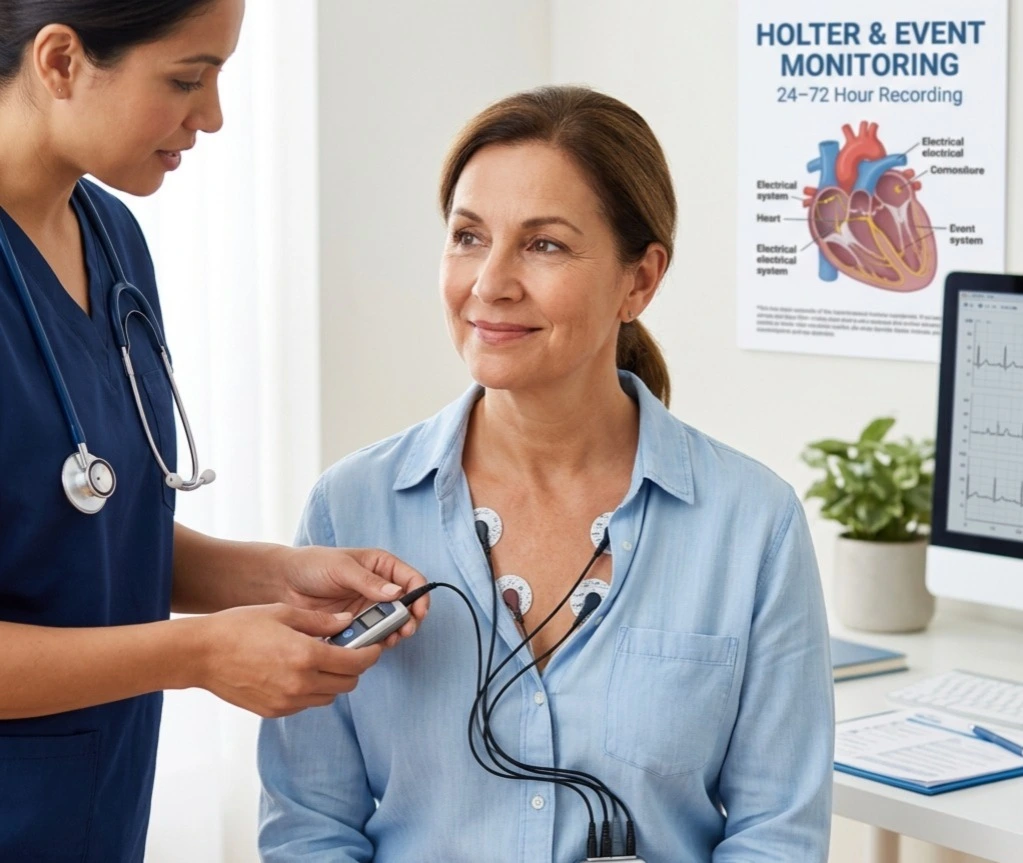
How is a 24-Hour Holter Monitor Test Performed?
1. Preparation:
- The patient may need to avoid using lotions or creams on the chest to help electrodes stick properly.
- Loose, comfortable clothing is recommended for easy placement of electrodes.
- The doctor will explain how to wear and use the device properly.
2. Attaching the Monitor:
- Electrodes (small adhesive patches) are placed on the chest and connected to a small recording device worn on a belt or strap.
- The device continuously records heart activity for 24 hours or longer, depending on the doctor’s recommendation.
3. Daily Activities:
- The patient is advised to continue normal daily activities (except bathing or swimming) to capture heart rhythms in real-life conditions.
- A diary may be provided to note any symptoms (e.g., dizziness, palpitations) and the time they occur for comparison with ECG readings.
4. Removing the Monitor:
- After 24 hours, the monitor is returned to the clinic for data analysis.
- The recorded information is reviewed by a cardiologist to identify any abnormalities.
What Happens After the Test?
- The doctor analyzes the recorded heart activity and compares it with the symptoms logged by the patient.
- If abnormal rhythms or other heart issues are detected, further tests or treatments may be recommended.
- If the results are normal but symptoms persist, the doctor may suggest an extended Holter monitor (48-72 hours) or an event recorder for longer monitoring.
Risks and Precautions
- The test is non-invasive and safe, with no risks involved.
- Some patients may experience mild skin irritation from the adhesive electrodes.
- Care should be taken to avoid wetting the device and to ensure electrodes remain securely in place.
Precautions After a 24-Hour Holter Monitor Test
Resume Normal Activities
Once the monitor is removed, you can return to your regular routine, including bathing and physical activities.
Check for Skin Irritation
Some patients may experience mild redness or irritation from the electrode adhesive. Apply a soothing lotion if needed.
Follow Up with Your Doctor
Schedule an appointment to review the test results and discuss any further tests or treatments if abnormalities are found.
Monitor Symptoms
Continue to note any irregular heartbeats, dizziness, or chest discomfort and report them to your doctor.
Avoid Self-Diagnosis:
Do not attempt to interpret the test results yourself; wait for the cardiologist’s analysis and recommendations.
Adhere to Medical Advice
If your doctor prescribes medications or lifestyle changes based on the results, follow them diligently to maintain heart health.
Holter Monitoring (24–72 Hr) ± Event Recorder
Holter monitoring (24–72 hours) and event recorders are advanced heart rhythm monitoring tests used to detect irregular heartbeats and intermittent cardiac abnormalities that may not appear during a standard ECG or 24-hour recording.
While Holter monitoring continuously records the heart’s electrical activity for 24 to 72 hours during daily activities, an event recorder is recommended for symptoms that occur less frequently and records heart activity when symptoms arise or abnormalities are detected.
These tests help diagnose arrhythmias, evaluate unexplained dizziness or palpitations, and support accurate cardiac diagnosis and treatment planning.