- 19, Opp. Ramkrishna Math, Rahate Colony Road, Dhantoli, Nagpur -12, +91 9413564868

Percutaneous Coronary Intervention (PCI) in Nagpur
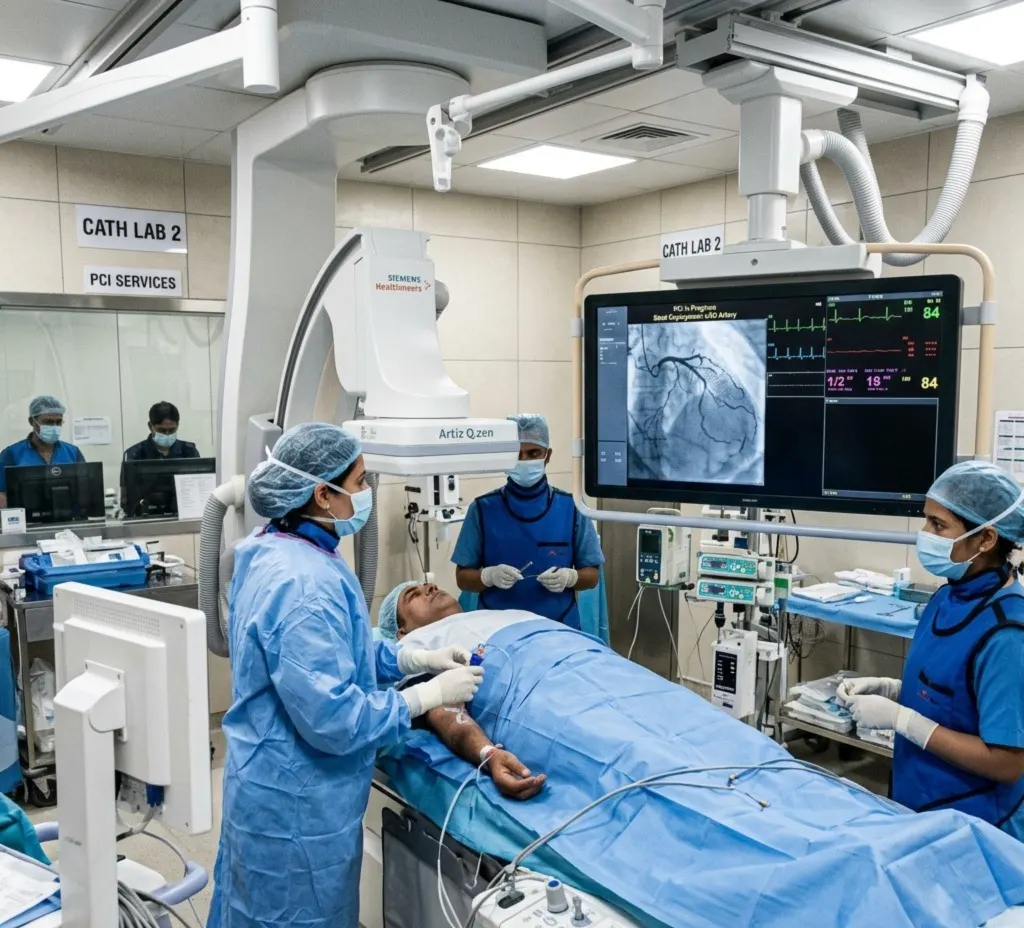
Percutaneous Coronary Intervention (PCI), commonly known as coronary angioplasty with stent placement, is an advanced minimally invasive procedure used to treat narrowed or blocked coronary arteries. It helps restore normal blood flow to the heart, relieving symptoms such as chest pain (angina), shortness of breath, and reducing the risk of heart attacks. PCI plays a crucial role in the treatment of coronary artery disease and is often performed as an emergency procedure during acute heart attacks.
At Rhythm Heart & Critical Care Hospital, Nagpur, PCI procedures are performed by Dr. Manish Juneja, an experienced Interventional Cardiologist specializing in coronary angioplasty, complex coronary interventions, and emergency cardiac care. Using state-of-the-art Cath Lab technology and advanced stent systems, Dr. Juneja ensures accurate diagnosis, effective treatment, and optimal patient outcomes. Our dedicated cardiac team is committed to providing world-class heart care with a focus on patient safety, comfort, and long-term heart health.
What is Percutaneous Coronary Intervention (PCI)?
Percutaneous Coronary Intervention (PCI) is a non-surgical procedure used to open blocked or narrowed coronary arteries that supply blood to the heart muscle. The procedure involves inserting a thin catheter through an artery in the wrist or groin and guiding it to the affected coronary artery. A small balloon is then inflated to widen the narrowed artery, and a stent is usually placed to keep the artery open and maintain healthy blood flow.
PCI is considered one of the most effective treatments for coronary artery disease and is widely performed to improve blood circulation to the heart while reducing the risk of future cardiac events.
PCI is Commonly Used To:
- Treat coronary artery disease (CAD)
- Open blocked heart arteries
- Restore blood flow to the heart muscle
- Relieve chest pain and angina
- Treat heart attack patients
- Improve heart function
- Reduce the risk of future cardiac complications
- Enhance overall quality of life
Symptoms That May Indicate Coronary Artery Blockage
Chest Pain or Pressure
Chest pain, also known as angina, is one of the most common symptoms of coronary artery blockage. Patients may experience pressure, heaviness, squeezing, or discomfort in the chest, particularly during physical activity or emotional stress.
Tightness in the Chest
A sensation of tightness or constriction in the chest may occur when the heart muscle is not receiving sufficient oxygen-rich blood. This symptom often worsens with physical exertion.
Pain Radiating to the Arm, Neck, Jaw, or Back
Pain caused by coronary artery blockage can spread beyond the chest to the arms, shoulders, neck, jaw, or upper back. This is a common warning sign of reduced blood flow to the heart.
Breathlessness
Shortness of breath may develop when the heart struggles to pump blood effectively due to narrowed arteries. Patients often notice difficulty breathing during routine activities or exercise.
Fatigue During Exertion
Persistent tiredness or reduced stamina during daily activities may indicate inadequate oxygen supply to the heart muscle caused by coronary artery disease.
Dizziness or Fainting
Blocked coronary arteries can sometimes reduce blood flow to vital organs, resulting in dizziness, lightheadedness, or fainting episodes.
Sweating Without Physical Activity
Sudden cold sweats or excessive sweating without exertion may be associated with a serious heart condition and should be evaluated by a cardiologist immediately.
When is PCI Recommended?
Percutaneous Coronary Intervention (PCI) is recommended for patients with significant coronary artery blockage causing persistent chest pain, shortness of breath, or reduced blood flow to the heart. It is commonly performed during a heart attack, following abnormal stress test results, or in patients with high-risk coronary artery disease to restore healthy circulation and prevent serious cardiovascular complications.
Risks and Complications of PCI
Although PCI is considered a safe and highly effective procedure, potential risks may include:
- Bleeding at the catheter insertion site
- Blood vessel injury
- Allergic reaction to contrast dye
- Irregular heartbeat (Arrhythmia)
- Blood clot formation
- Stent thrombosis
- Re-narrowing of the artery (Restenosis)
- Rare risk of heart attack or stroke
Our experienced cardiac specialists take every precaution to minimize these risks and ensure the highest standards of patient safety.
Recovery After PCI
Recovery after PCI is generally quick compared to open-heart surgery. Most patients can resume normal activities within a few days while following their cardiologist’s instructions regarding medications, diet, exercise, and lifestyle modifications. Regular follow-up visits help ensure long-term heart health and successful treatment outcomes.
How is the PCI Procedure Performed?
Local Anesthesia
The procedure begins with local anesthesia to numb the access site, usually the wrist or groin, ensuring patient comfort throughout the treatment.
Catheter Insertion
A thin catheter is carefully inserted into an artery and guided through the blood vessels to reach the coronary arteries.
Coronary Angiography
Contrast dye is injected through the catheter, allowing the cardiologist to visualize the coronary arteries and identify the exact location and severity of the blockage.
Balloon Angioplasty
A small balloon attached to the catheter is inflated at the blockage site to widen the narrowed artery and improve blood flow.
Stent Placement
In most PCI procedures, a stent is placed at the blockage site. The stent acts as a small mesh tube that supports the artery walls and helps keep the artery open, reducing the risk of future narrowing.
Recovery and Monitoring
After successful stent placement, the catheter is removed and the insertion site is sealed. The patient is monitored for a few hours to ensure stability, and most patients can resume normal activities within a few days following the procedure.