- 19, Opp. Ramkrishna Math, Rahate Colony Road, Dhantoli, Nagpur -12, +91 9413564868

MitraClip / TEER in Nagpur
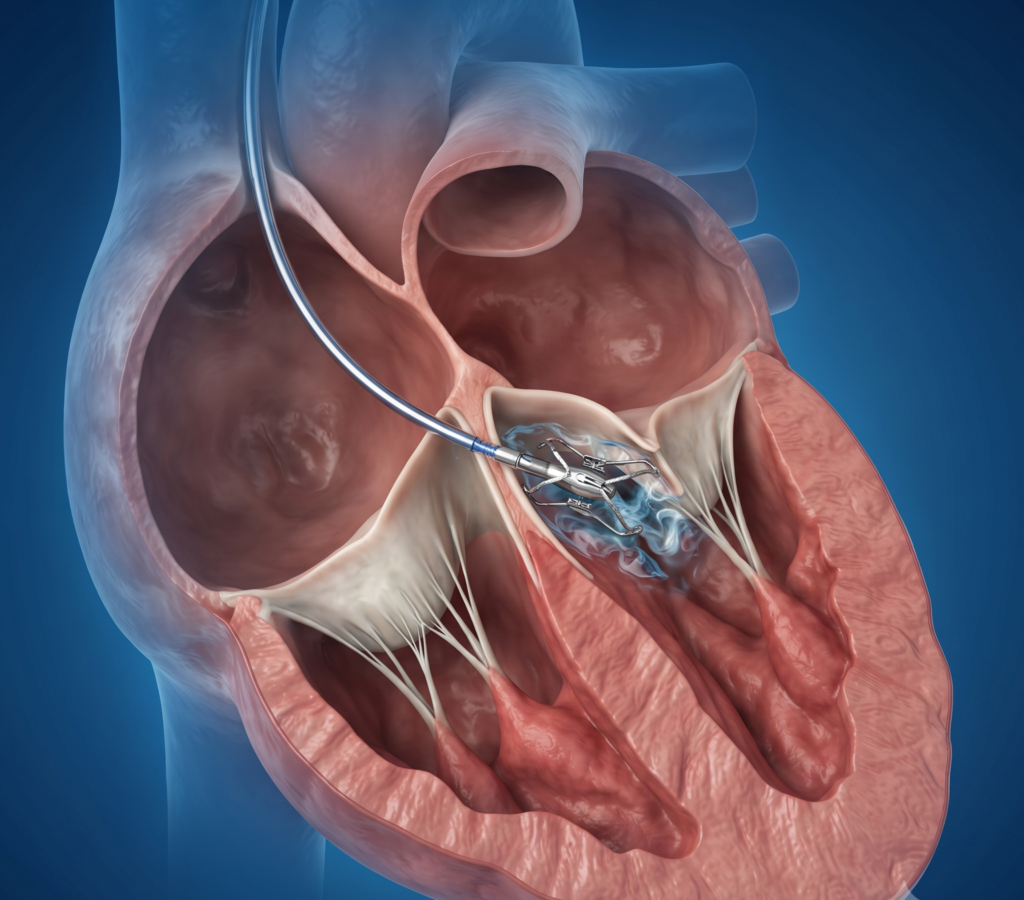
MitraClip / Transcatheter Edge-to-Edge Repair (TEER) is a minimally invasive treatment for selected patients with significant mitral regurgitation (MR). Instead of replacing the mitral valve through open-heart surgery, a small clip is delivered through a catheter to bring the mitral valve leaflets closer together and reduce abnormal blood leakage.
For suitable patients, TEER may be considered when symptoms continue despite medical treatment or when conventional mitral valve surgery carries a high risk. A detailed evaluation by the cardiac team is necessary to determine whether the procedure is appropriate.
What is MitraClip / TEER?
Transcatheter Edge-to-Edge Repair (TEER) is a catheter-based mitral valve repair procedure. The MitraClip device grasps the mitral valve leaflets and helps reduce the amount of blood flowing backward through the valve.
Unlike traditional mitral valve surgery, TEER is performed through a catheter and is therefore a less invasive treatment option for selected patients.
Who May Need MitraClip / TEER?
TEER may be considered for selected patients with:
- Significant or severe mitral regurgitation
- Persistent symptoms despite appropriate medical treatment
- Heart failure associated with secondary mitral regurgitation
- High or prohibitive surgical risk in suitable cases
- Mitral valve anatomy suitable for clip-based repair
The final decision depends on valve anatomy, severity of regurgitation, heart function, symptoms, and overall health.
How is the MitraClip Procedure Performed?
Before TEER, detailed cardiac imaging is performed to assess the mitral valve and determine whether the anatomy is suitable. During the procedure, a catheter is guided to the heart and the clip is positioned on the mitral valve leaflets.
The clip brings the valve leaflets together and helps reduce mitral regurgitation. After the procedure, the patient is monitored for heart rhythm, valve function, and possible complications.
Benefits of MitraClip / TEER
For appropriately selected patients, TEER can:
- Reduce mitral valve leakage
- Help improve symptoms related to mitral regurgitation
- Provide a minimally invasive treatment option
- Avoid conventional open-heart valve surgery in selected patients
- Support improved daily activity and quality of life
Individual results can vary, and the expected benefits depend on the patient’s condition.
Precautions Before and After MitraClip / TEER
Precautions Before MitraClip / TEER
Before MitraClip or TEER, complete all recommended cardiac imaging and investigations. Inform the medical team about allergies, health conditions, and current medicines. Discuss blood-thinning medicines with your cardiologist before treatment. Report fever, infection, or recent health changes promptly. Follow hospital fasting instructions carefully before the procedure. Keep previous cardiac reports and treatment history available to help the medical team plan the procedure safely and appropriately according to your individual condition.
Precautions After MitraClip / TEER
After MitraClip or TEER, take all prescribed medicines regularly and follow your cardiologist’s instructions. Avoid strenuous activity until recovery progresses. Keep the catheter-access area clean and watch for bleeding or swelling. Report chest pain, breathlessness, dizziness, or unusual weakness promptly. Attend scheduled follow-ups to monitor valve function and heart health, and maintain the recommended diet, physical activity, and lifestyle habits for long-term cardiac care.