- 19, Opp. Ramkrishna Math, Rahate Colony Road, Dhantoli, Nagpur -12, +91 9413564868

Diagnostic Electrophysiology Studies (EPS) in Nagpur
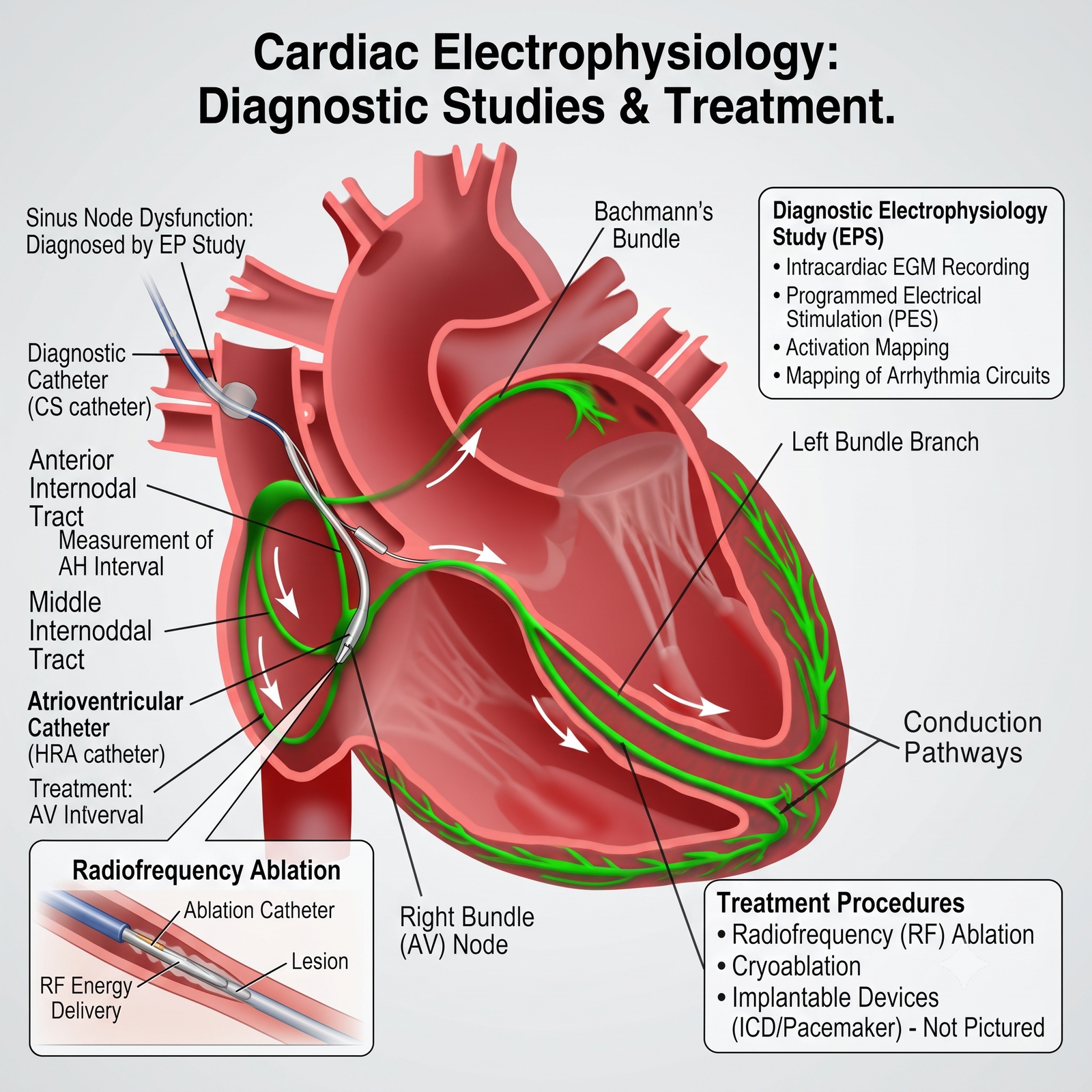
Diagnostic Electrophysiology Study (EPS) is a specialized cardiac test used to understand the electrical activity and rhythm of the heart. While a routine ECG records the heart’s electrical activity from the body surface, an EPS allows the cardiologist to study the heart’s electrical signals from inside using thin electrode catheters.
EPS can help identify the type and location of certain abnormal heart rhythms (arrhythmias) and assist the cardiologist in deciding the most appropriate treatment.
What Is an Electrophysiology Study (EPS)?
An Electrophysiology Study is a minimally invasive procedure performed in a specialized cardiac catheterization laboratory. Small electrode catheters are guided through a blood vessel into the heart.
These catheters record the heart’s electrical signals and, when required, allow the cardiologist to carefully stimulate the heart to understand how an abnormal rhythm starts and travels.
When Is EPS Recommended?
A cardiologist may recommend an EPS for selected patients with:
- Unexplained rapid or irregular heartbeat
- Recurrent palpitations
- Unexplained fainting or dizziness
- Suspected abnormal heart rhythms
- Certain conduction or rhythm disorders
- Arrhythmias requiring further evaluation before treatment
EPS may also help determine whether a patient could benefit from a procedure such as catheter ablation.
How Is a Diagnostic EPS Performed?
1. Preparation
The patient is evaluated before the procedure, including medical history, medications, and relevant cardiac test reports. Instructions regarding fasting and medicines are provided according to the individual case.
2. Catheter Insertion
After local anesthesia, thin electrode catheters are introduced through a blood vessel, commonly in the groin, and carefully guided toward the heart.
3. Electrical Recording
The catheters record electrical signals from different areas of the heart. The cardiologist studies these signals to understand the heart’s rhythm and electrical conduction.
4. Rhythm Evaluation
In selected cases, controlled electrical stimulation may be used to reproduce or identify an abnormal rhythm under close medical monitoring.
5. Treatment Planning
The findings help the cardiologist determine the nature of the arrhythmia and decide whether further treatment, such as medication, catheter ablation, or another cardiac procedure, may be appropriate.
Benefits of Electrophysiology Study
- Helps identify certain abnormal heart rhythms
- Provides detailed information about cardiac electrical activity
- Can help locate the source of an arrhythmia
- Supports accurate treatment planning
- May help determine suitability for catheter ablation
- Provides information that may not be obtained from a routine ECG or Holter monitor
Is EPS Safe?
EPS is an invasive procedure and is generally performed with continuous cardiac monitoring by a trained medical team. Like other catheter-based procedures, it can have potential risks such as bleeding or bruising at the catheter site, infection, blood vessel complications, or abnormal heart rhythms.
Your cardiologist will discuss the expected benefits and potential risks before recommending the procedure.
Precautions Before and After EPS
1. Follow Fasting Instructions
Follow the hospital’s instructions regarding food and fluids before the procedure.
2. Inform Your Doctor About Medicines
Tell your cardiologist about all medicines and supplements you take. Do not stop any medication unless specifically instructed.
3. Keep the Catheter Site Clean
After the procedure, follow instructions for caring for the catheter insertion area and watch for unusual bleeding or swelling.
4. Avoid Strenuous Activity Initially
Avoid heavy lifting and strenuous exercise for the period advised by your doctor.
5. Watch for Warning Symptoms
Report severe chest discomfort, breathing difficulty, persistent bleeding, significant swelling, or fainting promptly.
6. Attend Follow-Up
Attend your scheduled follow-up so your cardiologist can review the EPS findings and discuss further treatment if required.
Conclusion
Diagnostic Electrophysiology Study (EPS) in Nagpur is an advanced test that provides detailed information about the heart’s electrical system and can help investigate certain abnormal heart rhythms. It may be particularly useful for patients with unexplained palpitations, fainting, or suspected arrhythmias when routine tests are inconclusive. The decision to perform EPS depends on the patient’s symptoms, medical history, and previous cardiac investigations.
If your cardiologist has recommended an EPS test, consult the cardiac team at Rhythm Heart & Critical Care Hospital for appropriate evaluation and personalized treatment planning.