- 19, Opp. Ramkrishna Math, Rahate Colony Road, Dhantoli, Nagpur -12, +91 9413564868

24 Hour Holter
Catheter ablation is a minimally invasive treatment used for certain abnormal heart rhythms, or arrhythmias. The procedure identifies the electrical area responsible for the abnormal rhythm and uses controlled energy to treat it.
It may be considered for selected patients with Atrial Fibrillation (AF), Supraventricular Tachycardia (SVT), or Ventricular Tachycardia (VT), depending on their symptoms, heart condition, and previous treatment.
What Is Catheter Ablation?
During catheter ablation, thin flexible tubes called catheters are guided through a blood vessel into the heart. Special equipment records electrical signals and helps the cardiologist locate the source of the abnormal rhythm.
Once the responsible area is identified, controlled energy such as heat or cold may be used to modify the tissue and prevent abnormal electrical signals from continuing.
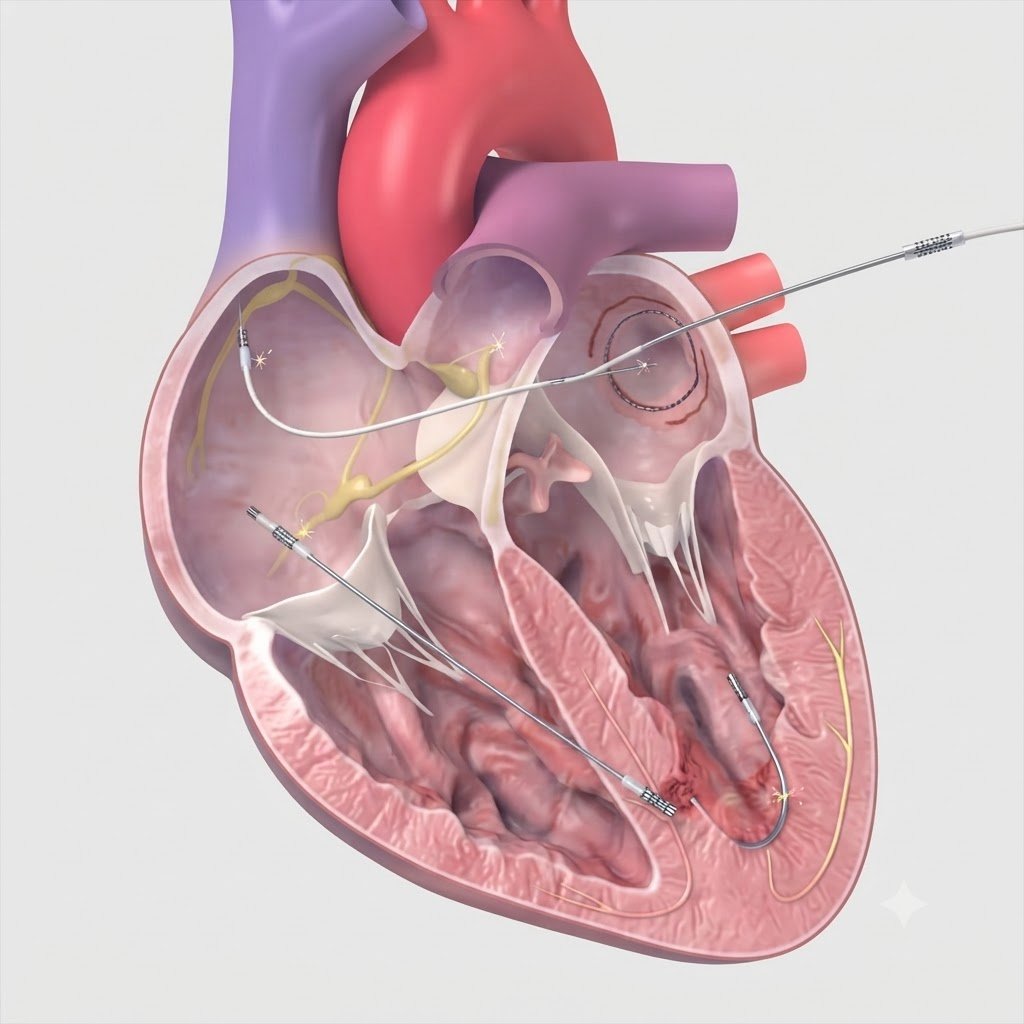
Types of Arrhythmias Treated
Atrial Fibrillation (AF)
AF causes an irregular and often rapid heartbeat. In selected patients, catheter ablation can be used as part of a rhythm-control strategy to reduce recurrent episodes and related symptoms.
Supraventricular Tachycardia (SVT)
SVT causes episodes of an unusually fast heartbeat. When a specific abnormal electrical pathway is responsible, catheter ablation can target that pathway and may provide long-term rhythm control.
Ventricular Tachycardia (VT)
VT originates from the lower chambers of the heart and can sometimes be serious. In appropriately selected patients, ablation may help reduce recurrent VT episodes as part of comprehensive rhythm management.
When May Catheter Ablation Be Considered?
Your cardiologist may consider ablation when you have:
- Repeated episodes of abnormal heartbeat
- Palpitations affecting daily activities
- Arrhythmia despite appropriate medication
- Side effects or limitations from rhythm medicines
- A specific arrhythmia that is suitable for catheter ablation
- Recurrent VT requiring specialist rhythm management
A detailed cardiac evaluation is important before deciding on the procedure.
How Is Catheter Ablation Performed?
1. Pre-Procedure Evaluation
Your ECG, Holter or other rhythm-monitoring reports, medical history, and previous cardiac investigations are reviewed.
2. Catheter Placement
After appropriate anesthesia, thin catheters are introduced through a blood vessel and guided into the heart.
3. Electrical Mapping
The catheters record electrical signals to help locate the area generating or maintaining the abnormal rhythm.
4. Ablation
Once the target is identified, controlled energy is delivered to the selected area to interrupt the abnormal electrical pathway.
5. Rhythm Check
The cardiac rhythm is reassessed after treatment to evaluate the immediate result.
Benefits of Catheter Ablation
For suitable patients, catheter ablation may help:
- Reduce recurrent arrhythmia episodes
- Relieve palpitations and related symptoms
- Improve rhythm control
- Improve day-to-day quality of life
- Reduce the need for certain rhythm medicines in selected cases
The results can vary depending on the type of arrhythmia and the patient’s individual condition.
Risks and Safety
Catheter ablation is minimally invasive but, like any cardiac procedure, can have potential complications. These may include bleeding or bruising at the catheter insertion site, blood-vessel complications, infection, or other complications specific to the type of ablation performed.
Your cardiologist will explain the expected benefits and possible risks before treatment.
Precautions Before and After Catheter Ablation
1. Follow Your Medication Instructions
Tell your cardiologist about all medicines you take. Some medicines may need specific instructions before or after the procedure, so do not change them yourself.
2. Follow Fasting Instructions
Follow the hospital’s instructions regarding food and fluids before the procedure.
3. Take Care of the Access Site
After the procedure, keep the catheter insertion area clean and monitor it for bleeding, swelling, or increasing discomfort.
4. Give Yourself Recovery Time
Avoid strenuous exercise and heavy lifting until your cardiologist advises that normal physical activity can be resumed.
5. Keep Track of Symptoms
Occasional rhythm changes can occur during recovery. Report persistent palpitations, worsening symptoms, or anything unusual to your doctor.
6. Do Not Skip Follow-Up
Regular follow-up helps the cardiologist assess your heart rhythm, review medications, and decide whether further monitoring is needed.
Why Choose Rhythm Heart & Critical Care for Catheter Ablation in Nagpur?
Rhythm Heart & Critical Care provides comprehensive cardiac and interventional services in Nagpur, with a dedicated Cath Lab supporting diagnostic and interventional cardiac procedures. The hospital’s published information also lists electrophysiology studies for the diagnosis and treatment of irregular heart rhythms.
The hospital focuses on combining cardiac diagnostics, specialist evaluation, procedural care, and follow-up according to each patient’s condition.