- 19, Opp. Ramkrishna Math, Rahate Colony Road, Dhantoli, Nagpur -12, +91 9413564868

Left Atrial Appendage Closure in Nagpur
Left Atrial Appendage Closure (LAAC) is a minimally invasive procedure used for selected patients with atrial fibrillation (AF) who have an increased risk of stroke and may not be suitable for long-term blood-thinning medicines. The procedure seals the left atrial appendage, where blood clots can form in some patients with AF. Treatment suitability depends on individual cardiac evaluation.
What is Left Atrial Appendage Closure?
The left atrial appendage (LAA) is a small pouch in the upper left chamber of the heart. In some people with non-valvular atrial fibrillation, blood can collect in this area and contribute to clot formation.
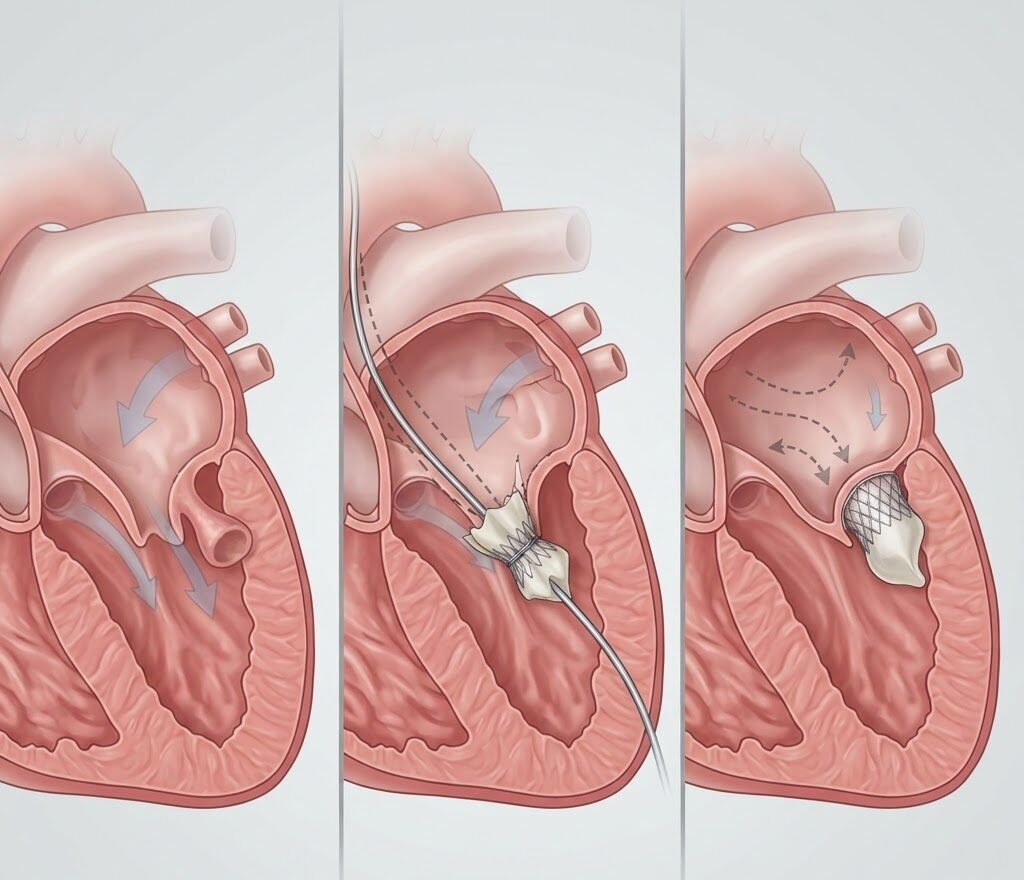
During LAA closure, a specially designed device is guided through a catheter and positioned inside the appendage to seal it. Imaging is used to confirm the device position.
Who May Need LAA Closure?
LAA closure may be considered for selected patients with atrial fibrillation who:
- Have an increased risk of stroke
- Have difficulty taking long-term anticoagulant medicines
- Have experienced complications related to blood thinners
- Have a suitable left atrial appendage anatomy
A detailed cardiac assessment is required before deciding whether the procedure is appropriate.
How is the Procedure Performed?
A thin catheter is introduced through a blood vessel and guided toward the heart. The closure device is then positioned inside the left atrial appendage. Echocardiography and other imaging techniques help the cardiologist assess the device placement before it is released.
Benefits of Left Atrial Appendage Closure
- Minimally invasive catheter-based procedure
- Seals the left atrial appendage
- May reduce the risk of clot formation in selected AF patients
- Can be an alternative for selected patients who have challenges with long-term anticoagulation
- Requires regular follow-up after the procedure
Precautions Before Left Atrial Appendage Closure
Complete Recommended Tests
Complete echocardiography, blood tests, and other cardiac investigations advised by your doctor.
Share Medical History
Inform your cardiologist about existing conditions, allergies, and all medicines you take.
Discuss Blood Thinners
Follow your doctor’s instructions regarding anticoagulant or antiplatelet medicines.
Report Recent Illness
Inform the medical team about fever, infection, or any recent health changes.
Follow Fasting Instructions
Follow the hospital’s instructions about eating and drinking before the procedure.
Keep Previous Reports Ready
Bring previous cardiac reports, prescriptions, and investigation records for evaluation.
Precautions After Left Atrial Appendage Closure
After Left Atrial Appendage Closure, take all prescribed medicines as directed and follow your cardiologist’s instructions. Keep the catheter insertion area clean and monitor for bleeding, swelling, or discomfort. Avoid heavy lifting and strenuous activities until medically permitted. Report chest pain, breathlessness, dizziness, fainting, or unusual weakness promptly. Attend scheduled follow-up appointments and recommended imaging to check the closure device. Continue the advised medicines, diet, physical activity, and lifestyle measures for ongoing heart care.
Why Choose Rhythm Heart & Critical Care?
Rhythm Heart & Critical Care provides comprehensive cardiac care with advanced diagnostic and interventional facilities in Nagpur. The hospital offers evaluation and treatment for various congenital heart conditions, including ASD, VSD, and PDA. Dr. Manish Juneja has experience in pediatric cardiac interventions and device closure procedures.
Patients receive personalized evaluation, appropriate treatment planning, and regular follow-up care based on their heart condition, age, medical history, and individual treatment requirements.