- 19, Opp. Ramkrishna Math, Rahate Colony Road, Dhantoli, Nagpur -12, +91 9413564868

Transcatheter Aortic Valve Implantation in Nagpur
Transcatheter Aortic Valve Implantation (TAVI) is a minimally invasive procedure used to replace a diseased aortic valve, mainly in patients with significant aortic stenosis. Instead of conventional open-heart surgery, a replacement valve is delivered through a catheter and positioned inside the damaged valve.
At Rhythm Heart & Critical Care, patients undergo detailed cardiac evaluation to determine whether TAVI is an appropriate treatment option based on valve condition, heart function, age, overall health, and other medical factors.
What is TAVI?
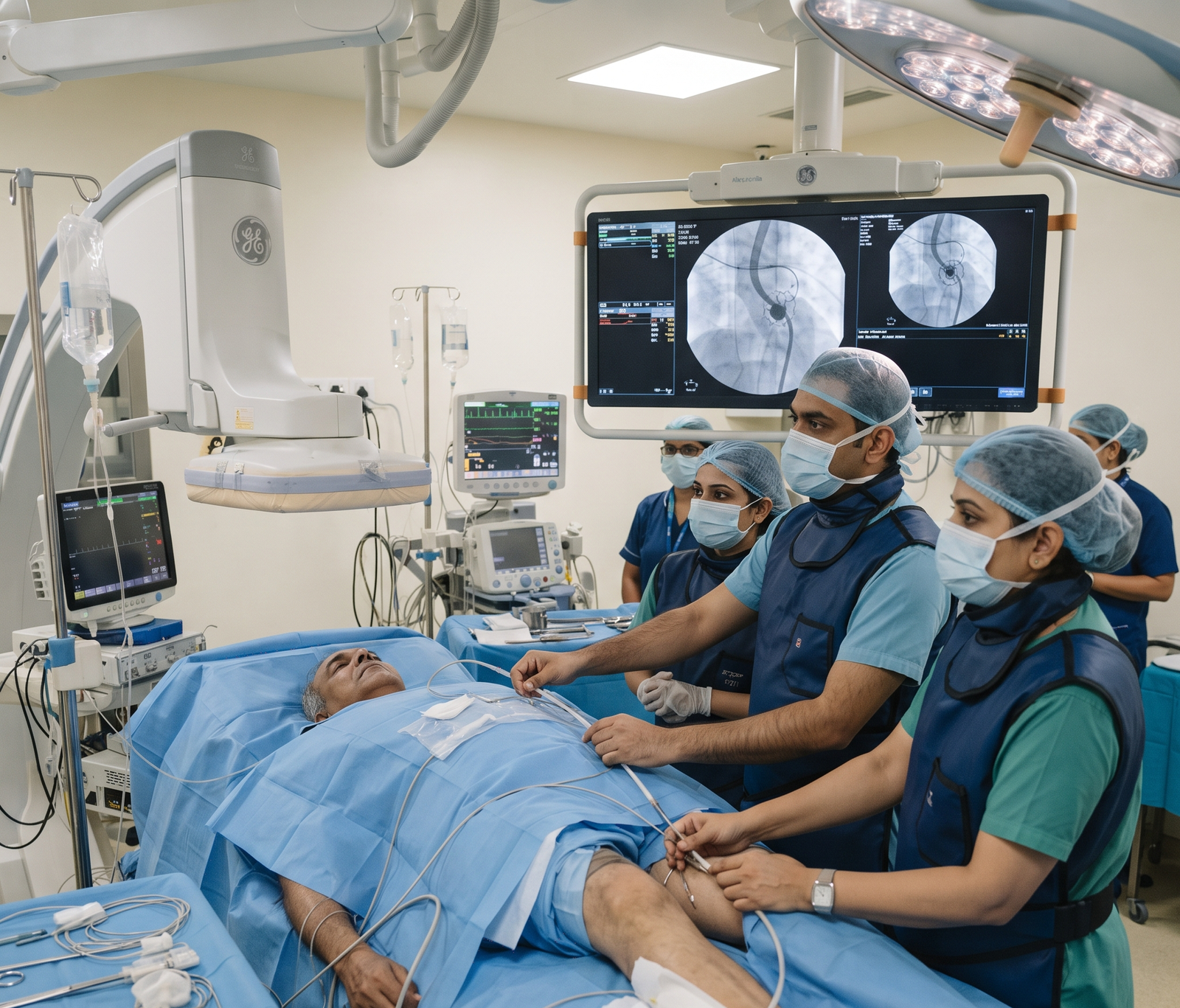
TAVI is a catheter-based aortic valve replacement procedure. A replacement valve is usually introduced through a blood vessel, commonly from the groin, and guided to the heart. The new valve is positioned within the diseased aortic valve to improve blood flow.
TAVI may offer a less invasive alternative to traditional surgical aortic valve replacement for appropriately selected patients.
Who May Need TAVI?
TAVI may be considered for selected patients with severe aortic stenosis, particularly when symptoms or other cardiac findings indicate the need for valve replacement.
Factors considered during evaluation include:
- Severity of aortic valve narrowing
- Age and overall health
- Heart function
- Other medical conditions
- Surgical risk
- Heart and blood vessel anatomy
TAVI is not suitable for every patient, so individual assessment is essential.
Common Symptoms of Severe Aortic Stenosis
Severe aortic stenosis can affect the heart’s ability to pump blood efficiently. Common symptoms include:
- Breathlessness during activity
- Chest discomfort
- Dizziness or fainting
- Unusual tiredness
- Reduced exercise capacity
- Swelling in the legs
Persistent or worsening symptoms should be evaluated by a cardiologist.
How is TAVI Performed?
Before TAVI, the cardiac team evaluates the aortic valve, heart function, blood vessels, and overall health. During the procedure, a catheter is guided through a blood vessel to the heart. The replacement valve is then positioned inside the diseased aortic valve.
After valve placement, the patient is monitored to assess heart rhythm, valve function, and recovery.
Benefits of TAVI
TAVI may provide several benefits for appropriately selected patients:
- Less invasive than traditional open-heart valve surgery
- Helps improve blood flow through the aortic valve
- May reduce symptoms caused by severe aortic stenosis
- Usually requires a smaller access site
- Can support faster recovery in suitable patients
The expected benefits depend on the patient’s individual condition and treatment plan.
Precautions Before TAVI
Before TAVI, complete all recommended cardiac imaging and investigations. Inform your medical team about kidney problems, allergies, current medicines, or recent infections. Follow fasting instructions carefully and discuss blood-thinning medicines with your cardiologist. Report any fever or health changes, and follow all hospital instructions before admission and the procedure.
Precautions After TAVI
Keep the Access Site Clean
Keep the catheter insertion area clean and dry, and watch for redness, swelling, or bleeding.
Take Medicines as Prescribed
Follow the prescribed medication schedule carefully and do not stop blood-thinning medicines without medical advice.
Avoid Heavy Physical Activity
Avoid heavy lifting and strenuous exercise during the initial recovery period as advised by your cardiologist.
Monitor Your Symptoms
Watch for chest pain, unusual breathlessness, dizziness, fainting, or changes in heartbeat and report them promptly.
Attend Follow-Up Appointments
Regular follow-up visits help your doctor check valve function, heart rhythm, and overall recovery after TAVI.
6. Follow Your Doctor’s Advice
Follow recommended diet, activity, medication, and lifestyle instructions to support long-term heart health after TAVI.