- 19, Opp. Ramkrishna Math, Rahate Colony Road, Dhantoli, Nagpur -12, +91 9413564868
Cardiac Resynchronization Therapy (CRT) in Nagpur
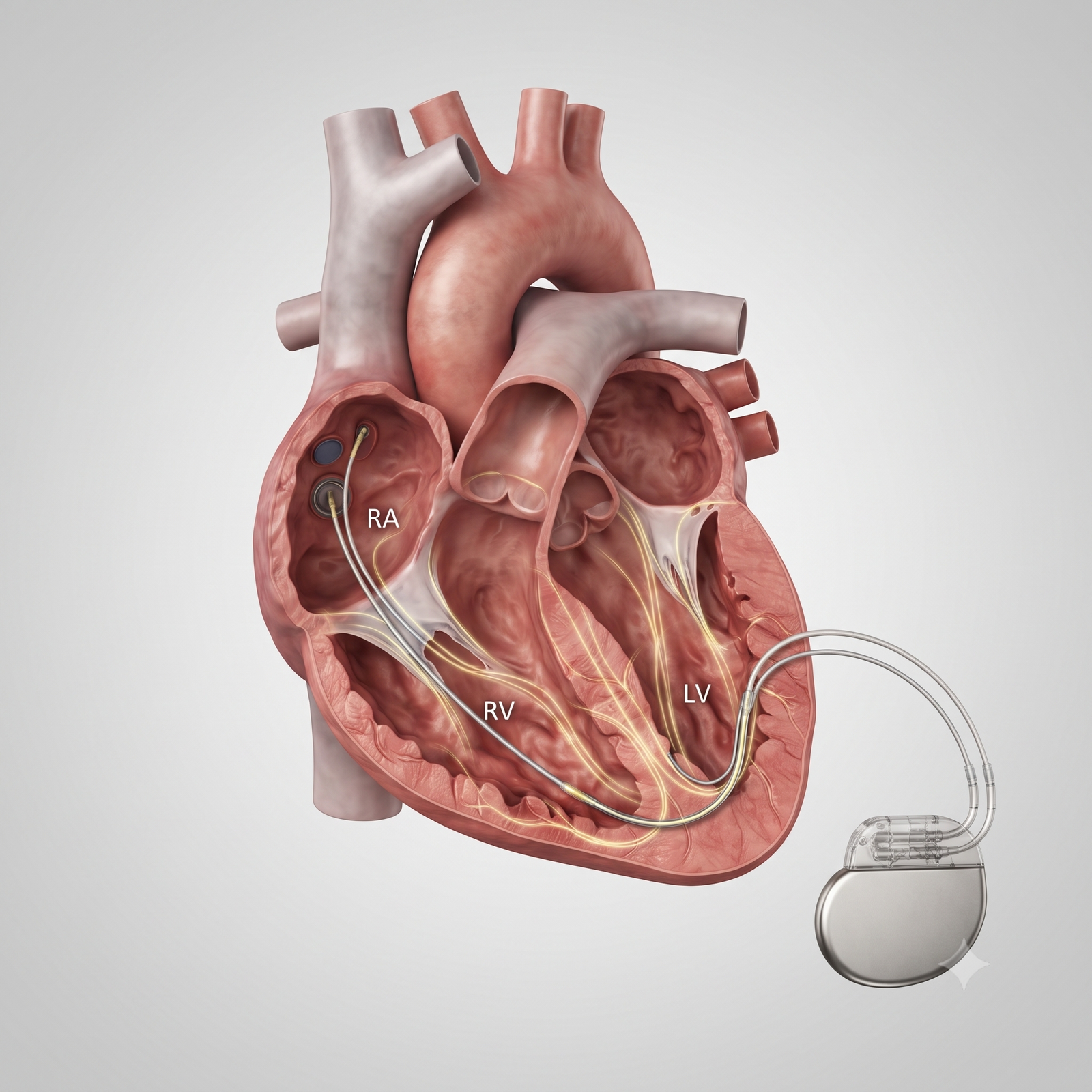
Cardiac Resynchronization Therapy (CRT) is an advanced treatment used for selected patients with heart failure and abnormal electrical conduction of the heart. In some patients, the ventricles do not contract together, which can reduce the efficiency of the heart’s pumping action. CRT uses a specialized cardiac device to help coordinate the contractions of the heart chambers.
At Rhythm Heart & Critical Care Hospital, Nagpur, CRT is part of advanced cardiac device and heart-failure care. The hospital’s published service information lists biventricular pacemakers/CRT for selected heart-failure patients.
Who May Benefit From CRT?
CRT may be considered for selected patients with:
- Heart failure with reduced pumping function
- Certain electrical conduction abnormalities
- A wide QRS complex on ECG
- Persistent heart-failure symptoms despite appropriate medical treatment
- Certain patients who require coordinated ventricular pacing.
The decision is based on ECG, echocardiography, symptoms, heart function, and the patient’s overall cardiac condition.
How Does CRT Work?
A CRT device sends carefully timed electrical impulses to help the heart’s ventricles contract in a more coordinated manner. Depending on the device and patient’s condition, CRT may be provided as:
- CRT-P: Provides resynchronization pacing.
- CRT-D: Combines resynchronization therapy with a defibrillator function for selected patients at risk of dangerous ventricular arrhythmias.
How Is CRT Implanted?
1. Cardiac Evaluation
The cardiologist reviews ECG, echocardiography, heart-failure symptoms, medications, and other investigations.
2. Lead Placement
Thin leads are guided through a vein toward the appropriate areas of the heart.
3. Device Placement
The CRT device is placed beneath the skin, generally below the collarbone, and connected to the leads.
4. Device Programming
The device is programmed according to the patient’s heart rhythm and clinical requirements.
5. Follow-Up
Regular device checks help assess the device settings, lead function, battery status, and the patient’s response to therapy.
Potential Benefits of CRT
For appropriately selected patients, CRT may help:
- Improve coordination of heart contractions
- Improve symptoms of heart failure
- Support better pumping efficiency
- Improve exercise tolerance and daily functioning
- Reduce hospitalizations related to heart failure in suitable patients
The response to CRT differs from person to person and depends on the underlying heart condition.
Precautions After CRT Implantation
1. Protect the Implant Area
Follow the wound-care instructions provided by your medical team and watch for redness, swelling, discharge, or increasing pain.
2. Follow Activity Restrictions
Avoid heavy lifting and strenuous upper-body activity during the initial healing period, as advised by your cardiologist.
3. Continue Heart-Failure Medicines
CRT does not replace prescribed heart-failure medicines. Continue your medications as directed unless your doctor changes them.
4. Keep Your Device Follow-Ups
Regular checks are important to monitor device performance, battery status, lead function, and heart rhythm.
5. Inform Healthcare Professionals
Always tell doctors and other healthcare providers that you have a CRT device before undergoing medical or diagnostic procedures.
6. Report New Symptoms
Contact your medical team if you develop worsening breathlessness, fainting, persistent chest discomfort, swelling, or problems around the device site.
Possible Risks
CRT implantation is a minimally invasive procedure, but potential complications can include bleeding, infection, blood-vessel problems, lead displacement, or device-related complications. Your cardiologist will discuss the expected benefits and individual risks before implantation.
Why Choose Rhythm Heart & Critical Care for CRT in Nagpur?
Rhythm Heart & Critical Care provides comprehensive cardiac and heart-failure care in Nagpur. Its published services include pacemaker implantation, biventricular pacemakers/CRT, heart-failure management, and advanced cardiac interventions.
The hospital’s approach is to evaluate the patient’s heart function and electrical conduction before deciding whether CRT or another treatment option is appropriate.