- 19, Opp. Ramkrishna Math, Rahate Colony Road, Dhantoli, Nagpur -12, +91 9413564868

Implantable Cardioverter-Defibrillator (ICD) in Nagpur
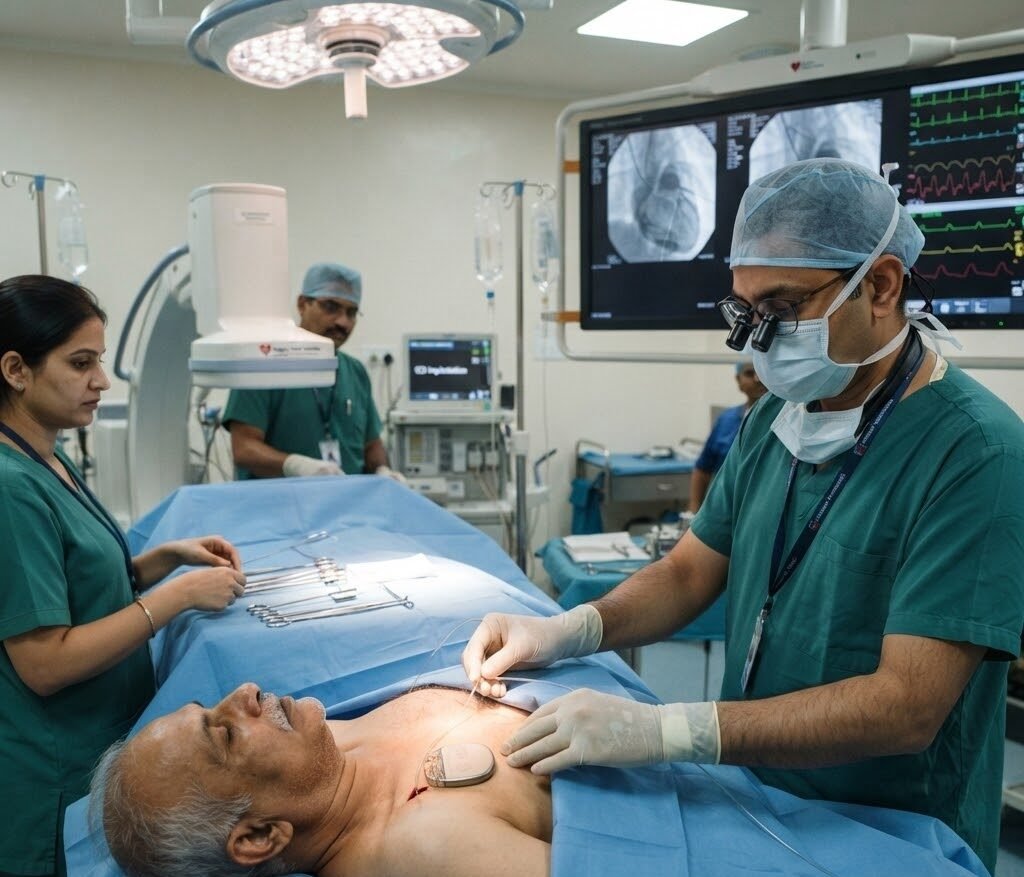
An Implantable Cardioverter-Defibrillator (ICD) is a small electronic device placed inside the body to continuously monitor the heart rhythm and respond to certain dangerous abnormal heart rhythms.
If the heart develops a life-threatening rhythm such as ventricular tachycardia (VT) or ventricular fibrillation (VF), the ICD can deliver an electrical shock or pacing therapy to help restore a safer rhythm.
An ICD is different from a regular pacemaker. While a pacemaker primarily helps manage slow heart rhythms, an ICD is designed to detect and treat potentially dangerous fast rhythms. Rhythm Heart & Critical Care provides advanced cardiac and device-based care in Nagpur.
When May an ICD Be Recommended?
An ICD may be considered for selected patients who have:
- A history of life-threatening ventricular arrhythmia
- Certain patients who have survived cardiac arrest
- Increased risk of sudden cardiac death
- Certain types of cardiomyopathy or heart failure
- Significantly reduced heart-pumping function in appropriate cases
The decision depends on the patient’s heart function, rhythm history, medical condition, and overall risk.
How Is an ICD Implanted?
1. Pre-Procedure Evaluation
The cardiologist reviews ECG, echocardiography, rhythm-monitoring reports, medications, and other relevant investigations.
2. Device Placement
After appropriate anesthesia, a small incision is generally made below the collarbone. The ICD leads are guided through a blood vessel into the heart.
3. Connecting the Device
The leads are connected to the ICD generator, which is positioned beneath the skin.
4. Device Programming
The ICD is programmed according to the patient’s heart rhythm and individual clinical requirements.
5. Follow-Up Monitoring
Regular device checks are required to assess battery status, lead function, and recorded heart-rhythm events.
How Does an ICD Work?
The ICD continuously monitors the heart’s electrical activity. If it detects a dangerous rhythm, it can respond through:
- Anti-tachycardia pacing: Small electrical impulses may help stop certain fast rhythms.
- Cardioversion: A controlled electrical shock can be delivered for certain abnormal rhythms.
- Defibrillation: A stronger shock may be delivered when a life-threatening rhythm requires immediate correction.
Benefits of ICD Implantation
For appropriately selected patients, an ICD can:
- Continuously monitor heart rhythm
- Detect potentially dangerous ventricular arrhythmias
- Provide automatic treatment when required
- Help protect patients at increased risk of sudden cardiac death
- Provide important rhythm information during follow-up
Possible Risks
ICD implantation is generally performed through a minimally invasive procedure, but possible complications include bleeding, infection, blood-vessel injury, lead displacement, or device-related problems. The cardiologist will explain the individual risks and expected benefits before implantation.
Precautions After ICD Implantation
1. Protect the Implant Site
Keep the incision clean and follow the wound-care instructions provided by your medical team. Report increasing redness, swelling, discharge, or pain.
2. Avoid Heavy Activity Initially
Avoid heavy lifting and strenuous exercise for the period recommended by your cardiologist, particularly during the initial healing period.
3. Take Medicines as Prescribed
Continue your prescribed medicines and do not change or stop them without discussing it with your doctor.
4. Attend Regular Device Checks
Periodic ICD check-ups are important to monitor battery life, lead function, and any abnormal rhythms detected by the device.
5. Strong Magnetic Fields
Inform healthcare professionals that you have an ICD before undergoing medical procedures. Follow the specific guidance provided for your device regarding MRI and other sources of electromagnetic interference.
6. Carry Your ICD Identification
Keep your device identification card with you and inform medical professionals about your ICD whenever you receive medical care.
Why Choose Rhythm Heart & Critical Care for ICD Care in Nagpur?
Rhythm Heart & Critical Care Hospital provides comprehensive cardiac care in Nagpur, including advanced cardiac procedures, critical care, arrhythmia management, and pacemaker-related services. The hospital has a modern Cath Lab and dedicated cardiac facilities for diagnosis and treatment.
The cardiac team evaluates each patient’s condition before recommending the appropriate device or treatment strategy.