- 19, Opp. Ramkrishna Math, Rahate Colony Road, Dhantoli, Nagpur -12, +91 9413564868

Fractional Flow Reserve (FFR) / (iFR)
Fractional Flow Reserve (FFR) and Instantaneous Wave-Free Ratio (iFR) are advanced diagnostic procedures used during coronary angiography to determine whether a coronary artery blockage is significantly reducing blood flow to the heart muscle.
These specialized physiological assessments help cardiologists accurately identify which blockages require treatment and which can be safely managed with medications. FFR and iFR provide valuable information beyond what is visible on angiography alone, helping avoid unnecessary angioplasty and stent procedures while ensuring that significant blockages receive appropriate treatment.
Fractional Flow Reserve (FFR) / iFR
At Rhythm Heart and Critical Care, advanced FFR and iFR assessment is performed using modern cardiac catheterization technology to evaluate coronary artery disease with greater precision. Our experienced interventional cardiologists use these advanced techniques to measure blood flow and pressure within the coronary arteries, allowing for accurate diagnosis and personalized treatment planning.
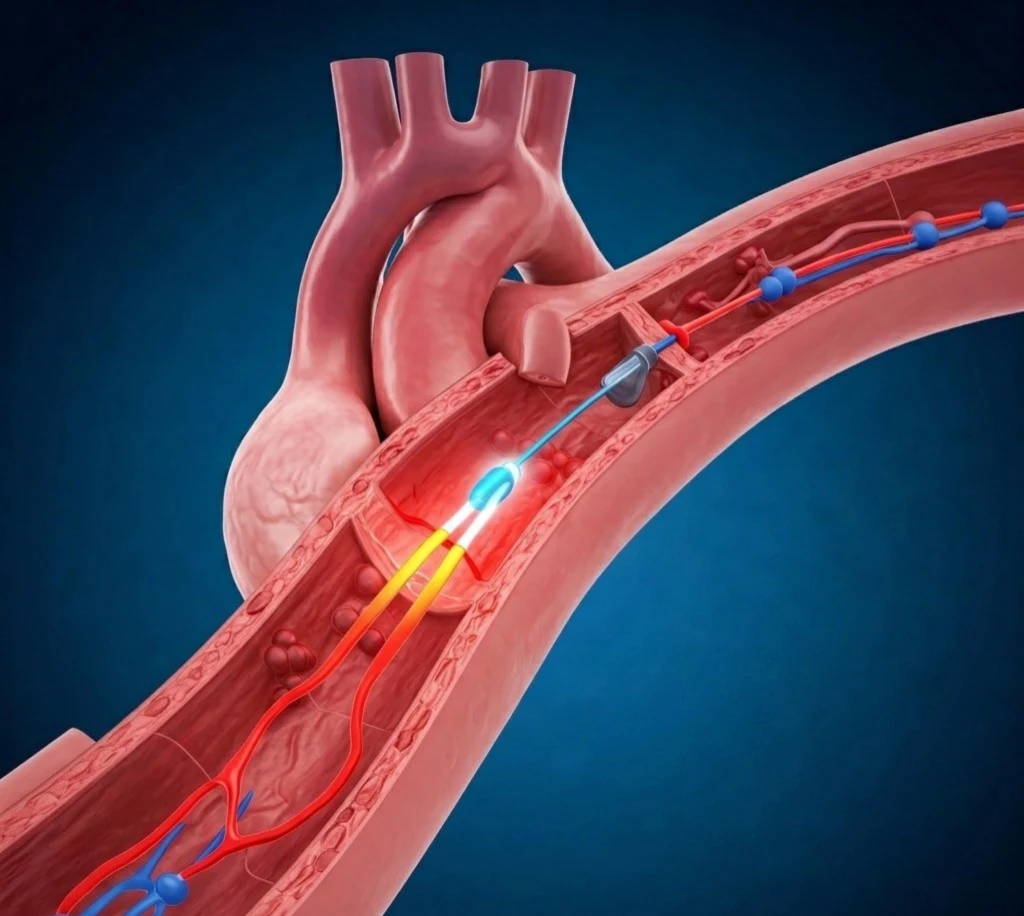
What are FFR and iFR?
Coronary angiography provides detailed images of the coronary arteries and helps identify areas of narrowing or blockage. However, angiography alone may not always determine whether a blockage is significantly affecting blood flow to the heart.
FFR and iFR are specialized pressure-based measurements performed during coronary angiography. A thin pressure-sensitive guidewire is passed across the narrowed artery to measure blood pressure before and after the blockage.
FFR measures blood flow under maximum blood vessel dilation, while iFR measures blood flow during a specific resting phase of the cardiac cycle without requiring additional medication. Both methods help determine whether a coronary blockage is functionally significant and requires treatment.
When is FFR / iFR Recommended?
FFR and iFR are recommended when coronary angiography shows a blockage but additional information is needed to determine its impact on blood flow. These tests help cardiologists make more accurate treatment decisions and avoid unnecessary interventions.
Your cardiologist may recommend FFR or iFR if:
- Coronary angiography shows moderate artery narrowing
- The severity of blockage is uncertain
- Chest pain symptoms do not match angiography findings
- Multiple coronary artery blockages are present
- Further evaluation is required before angioplasty
- Coronary artery disease is suspected despite unclear imaging results
- Treatment planning requires precise blood flow assessment
Symptoms That May Require FFR / iFR Evaluation
Chest Pain (Angina)
Persistent chest pain, pressure, or discomfort during physical activity may indicate reduced blood flow to the heart due to coronary artery disease.
Shortness of Breath
Difficulty breathing during exercise or routine daily activities can occur when the heart muscle is not receiving adequate oxygen-rich blood.
Fatigue During Physical Activity
Unexplained tiredness, reduced stamina, and exercise intolerance may be signs of impaired coronary circulation.
Abnormal Stress Test Results
Patients with positive, borderline, or inconclusive stress test findings may benefit from FFR or iFR evaluation for a more accurate assessment of coronary artery disease.
Ongoing Cardiac Symptoms
Individuals who continue to experience symptoms despite medical treatment may require further investigation of coronary blood flow.
Multiple Coronary Artery Blockages
FFR and iFR help identify which blockages are actually restricting blood flow and require angioplasty or stent placement.
Recovery After FFR / iFR
Recovery following FFR or iFR assessment is usually quick because the procedure is performed during coronary angiography. Most patients can resume normal activities within a day, depending on their overall condition and whether additional treatment such as angioplasty is performed.
How is the FFR / iFR Procedure Performed?
Coronary Angiography
The procedure begins with coronary angiography to identify narrowing or blockages within the coronary arteries.
Pressure Wire Placement
A specialized pressure-sensing guidewire is carefully advanced across the suspected coronary blockage.
Blood Flow Measurement
Pressure measurements are recorded on both sides of the blockage to evaluate its impact on blood flow to the heart muscle.
FFR or iFR Assessment
The collected pressure data is analyzed in real time to determine whether the blockage is functionally significant.
Treatment Planning
Based on the results, the cardiologist decides whether medical therapy, angioplasty, or stent placement is the most appropriate treatment option.
Completion of Procedure
The guidewire and catheter are removed, and the patient is monitored for a short period before discharge.